

Boston Focus, 11.14.25
Some of the best stuff happening in Boston schools is just a tunnel away

Yesterday, the Bradley won the Edvestors School on the Move Prize. The East Boston elementary school was the 20th Boston school to take home the annual $100,000 prize (you can read a retrospective here).

The Bradley’s academic performance is very, very impressive. There are very few schools that post high proficiency across subjects and grade levels. There are even fewer schools that do that and post significant academic growth for students. There are even fewer schools that do both of those things for all of their student groups, including those that are historically marginalized.
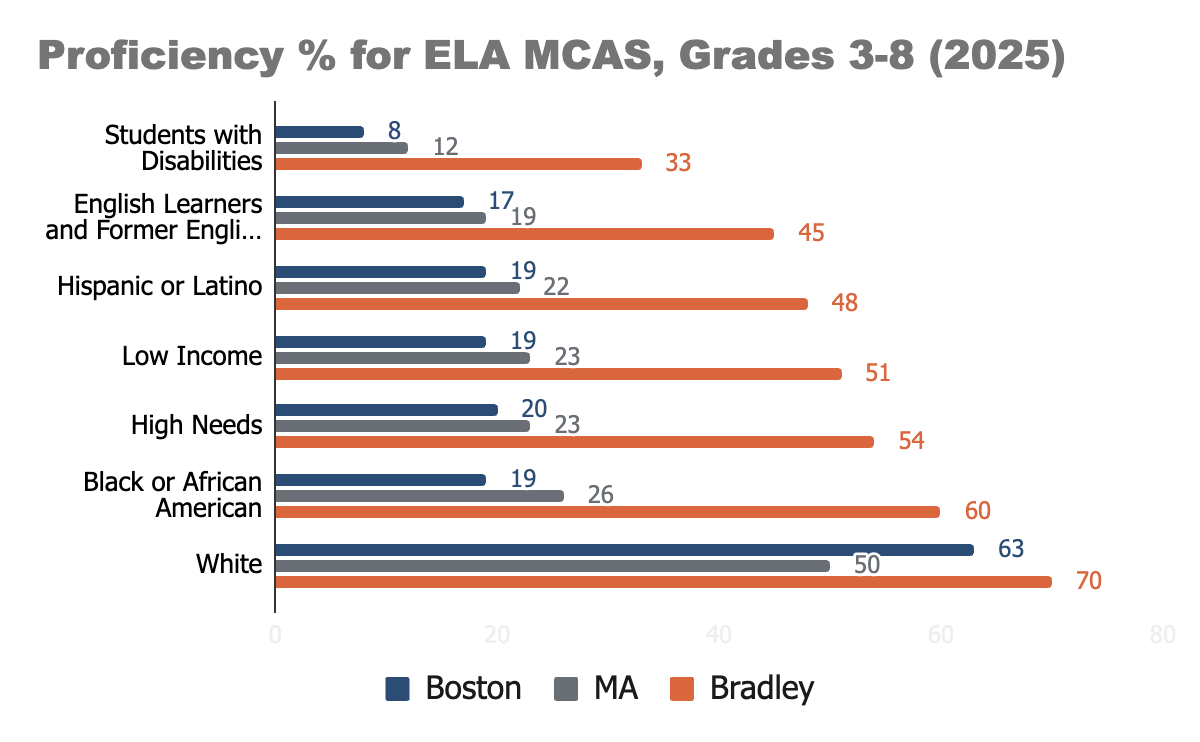
Just one example, but you would see the same trend in math and across other grade levels.
Urban schools have two dominant tropes. There is one characterized by dysfunction. Real shortcomings of schools and systems and a conflict-ready media combine to write a familiar, negative narrative. This obscures the examples and lessons of the Bradley and many other schools in Boston.
Another is characterized by asterisks, affixed to high-performing schools. I have sat in far too many meetings and school site visits when someone will explain away a school’s success rather than seek to understand and emulate it.
“They don’t serve as many English learners as that school…The families at this school just seem more engaged...That school has a new leader, it needs time…This school is smaller, so it’s just different…That is only because you are focused on test scores…We can’t do that.”
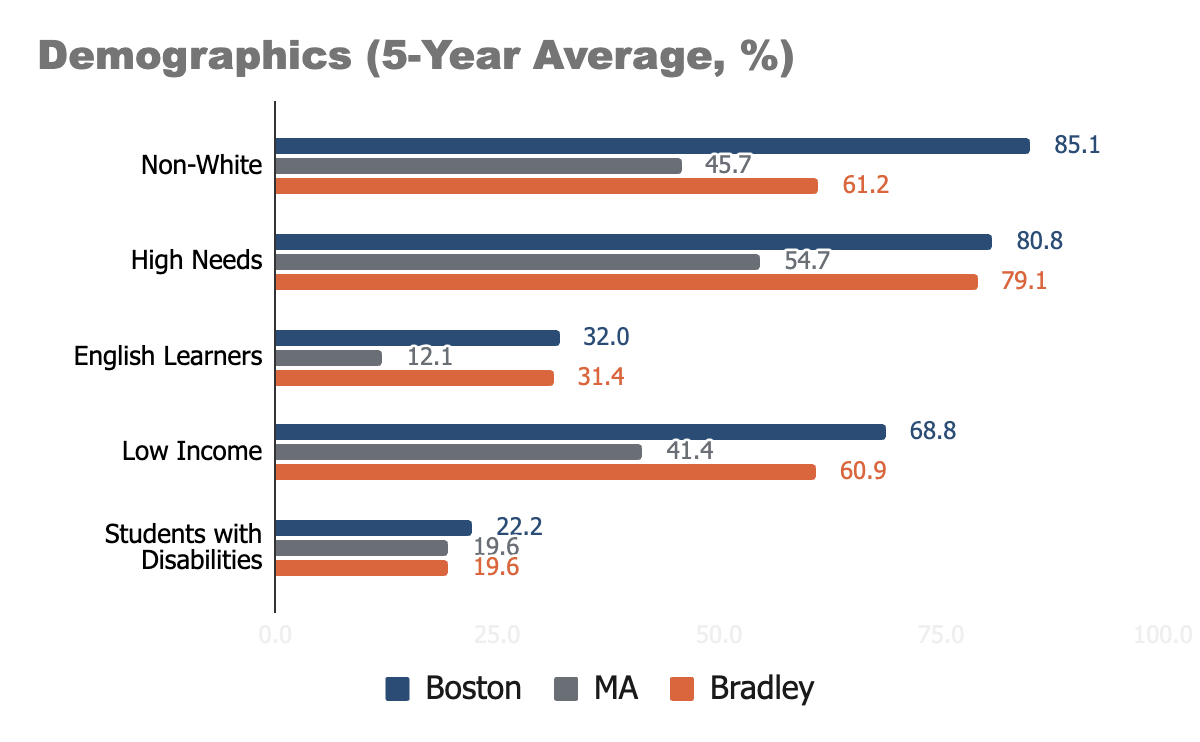
A scan of the Bradley’s demographics sets at least some of these arguments aside.
Since 2017, nine of the School on the Move finalists and four of the winners have been schools in East Boston. This is a reflection of great educators and leaders, a collaborative, long-tenured group of principals led by a committed and talented assistant superintendent.
East Boston is unique in that, aside from Allston-Brighton, it is the only area of the city where neighborhood schools have been created by an accident of geography. The current student assignment system allows for some family choice. But, surrounded by water, Logan, and Chelsea, East Boston families basically only send their kids to East Boston schools. Families get proximity and consistency; schools get clarity for enrollment, budgeting, and school operations. There are opportunities for efficiencies in specialized programs and transportation, and really deep community partnerships and wraparound care for kids.
It is difficult to measure, but East Boston and its schools play a role in the Bradley’s success, and vice versa. East Boston is the one place in the city where virtually every student has access to a high-quality school, PK through 12.
Time to replicate this natural experiment and reintroduce neighborhood schools in other parts of the city.
We may end up with a few more Bradleys as a result.
Schools
Exclusive from Seth Daniel at the Dorchester Reporter: when the state publishes enrollment data next month, Boston Public Schools projects a +3% decline from last year. Story here.
Northeastern is upping its payments in lieu of taxes (PILOT) to Boston, directed towards public education.
Secretary of Education Pat Tutwiler was on the record this week.
Larger Massachusetts districts often face a tough choice: who gets a new school building and who doesn’t?
Bans on book bans may join cell phone bans, the right to read, or a host of other bills in a potential MA legislative compromise in 2026.
A new study indicates that ICE enforcement in schools last spring negatively impacted test scores, for all students.
An analysis of +3 million messages results in simple guidance for schools trying to stem chronic absenteeism: use text messaging, early and without jargon.
This week’s AI round-up. An experiment in a UMass economics showed use of AI in class did not improve grades. AI’s greatest boost may be for cheating and teaching assistance (tutoring not so clear yet). Massachusetts teachers’ experiences seem to validate the former.
A summary of the recent contraction of higher education in Massachusetts and New England.
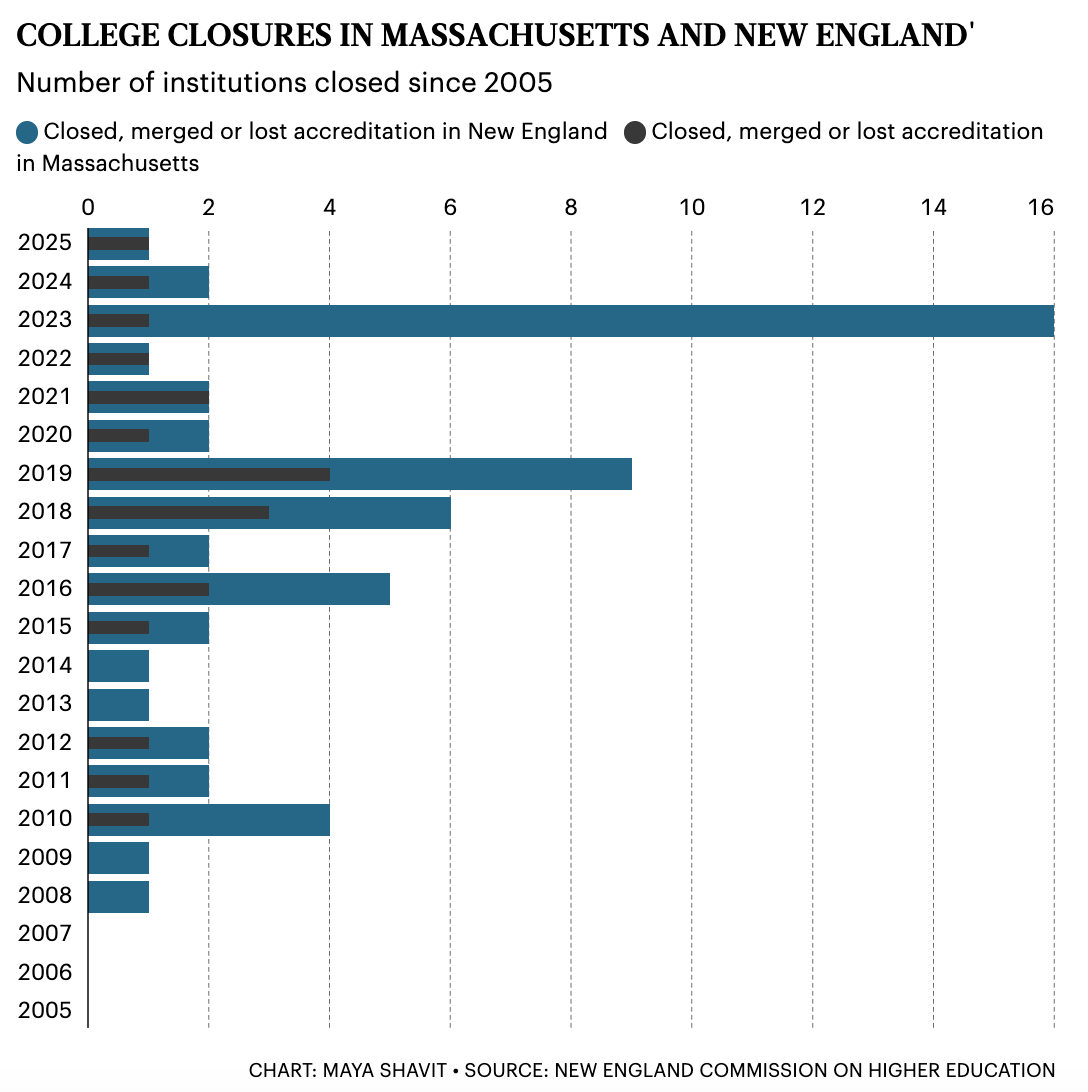
Current federal policy certainly isn’t helping.
How to stem the tide? A new report from the EdTrust advocates for a larger share of Fair Share Tax revenue to invest in public higher education and reduce its cost, particularly for low–income students.
Another potential selling point for higher ed: it’s easy to get an “A.”
Other Matters
A baby doom loop?
A wild finding from a new research paper indicates that high housing prices depress fertility rates.
Birth rates started to decline in Massachusetts and Boston ~20 years ago, right when housing prices began to skyrocket. The median age for first-time ownership is now 40, a full decade later than the median age for first-time parents.
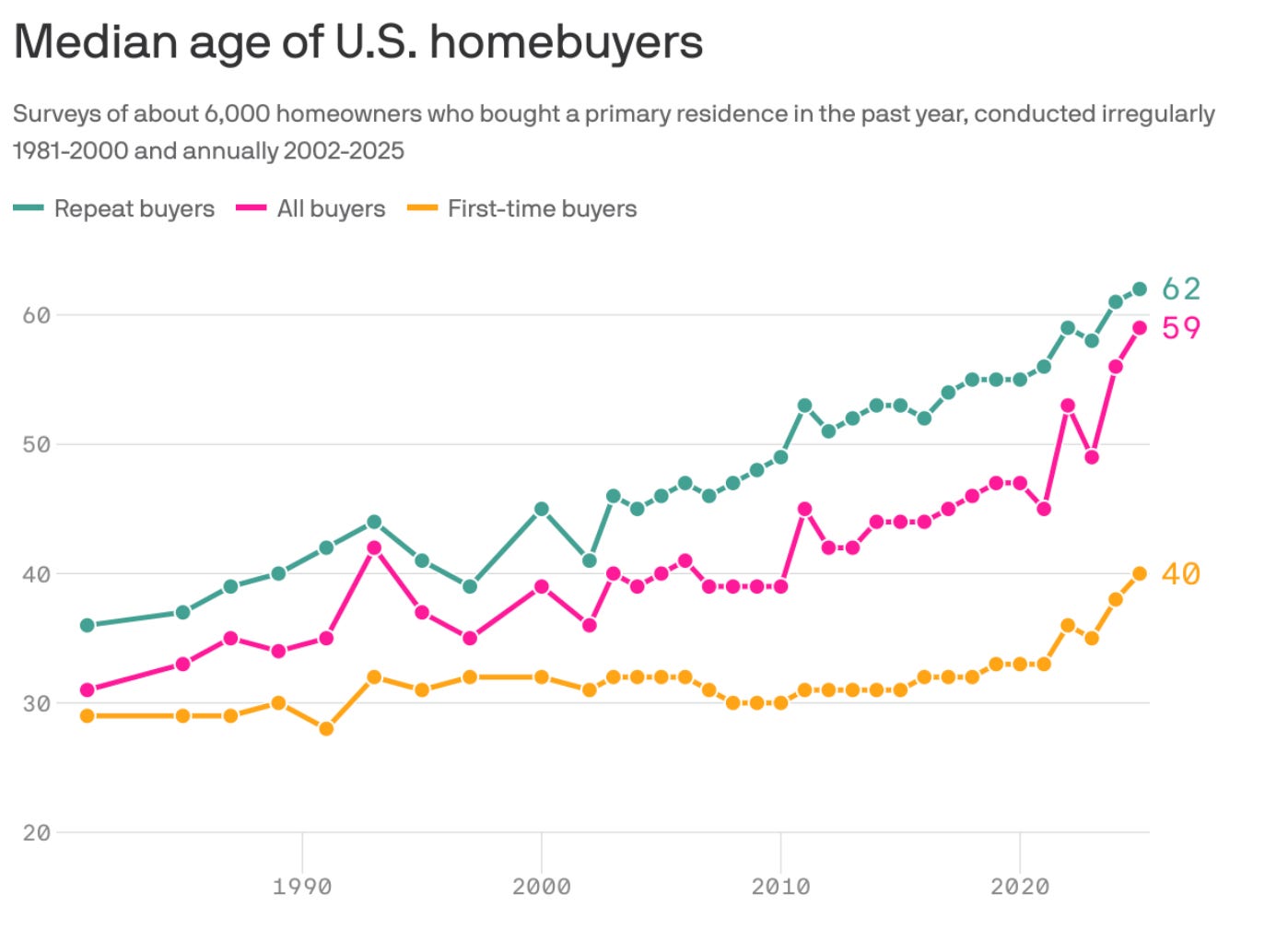
If the cost of housing continues to grow, cities won’t.
The cost of housing - along with child care and health care - is creating an economic squeeze that has graduated to a political moniker: “affordability.” It was the foundation of Zohran Mamdani’s mayoral win in New York City; now he has to do something about.
Back in Boston, the Boston Foundation’s annual housing report (summary here) lays out a ton of data, ranging from population trends to rental vacancies.
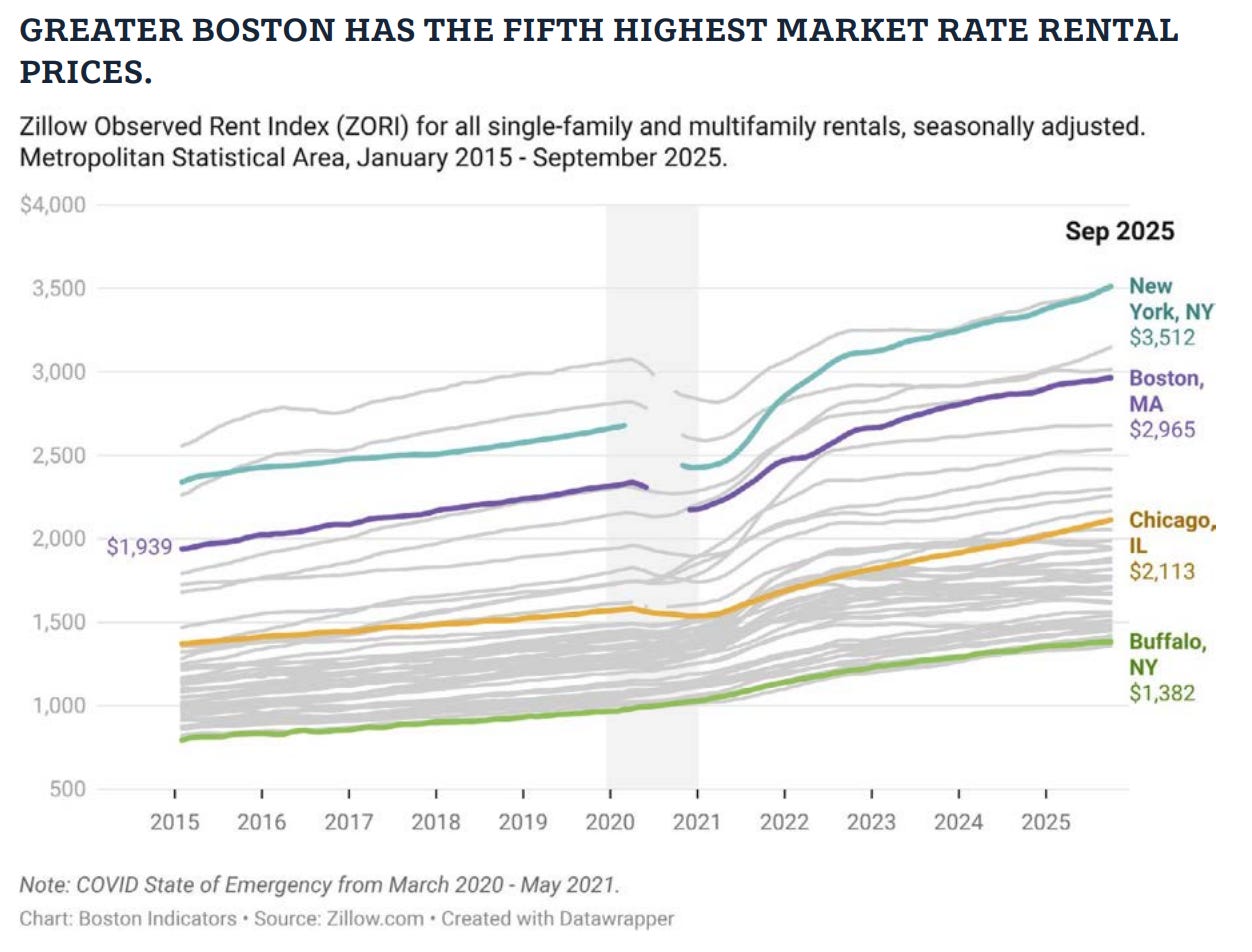
And signals an alarm.
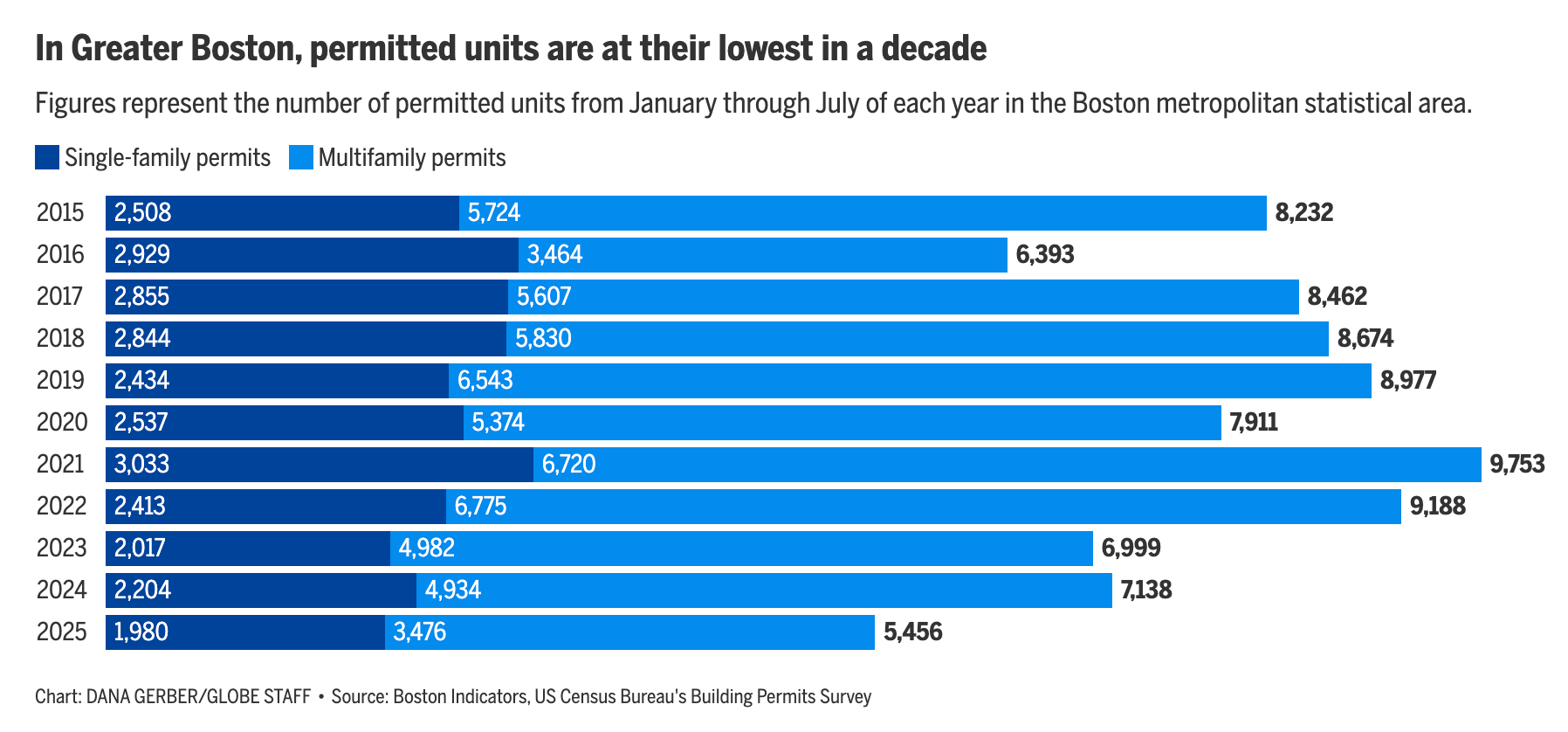
There does seems to be consensus on the solution being “more housing,”
Just not much of a consensus on how to do it.
Thanks for amplifying the East Boston "experiment". Regarding BPS enrollment, where would the number be if not for a heavy dose of immigrant arrivals the past couple years?