Boston Focus, 11.15.24
Some things I have read through recently...

Over the past decade, one of the most dramatic and consistent changes in Massachusetts education has been in student discipline.
In response to research about the negative effects of school discipline and suspensions and a revised state law in 2012, suspensions dramatically declined across the Commonwealth and in Boston.
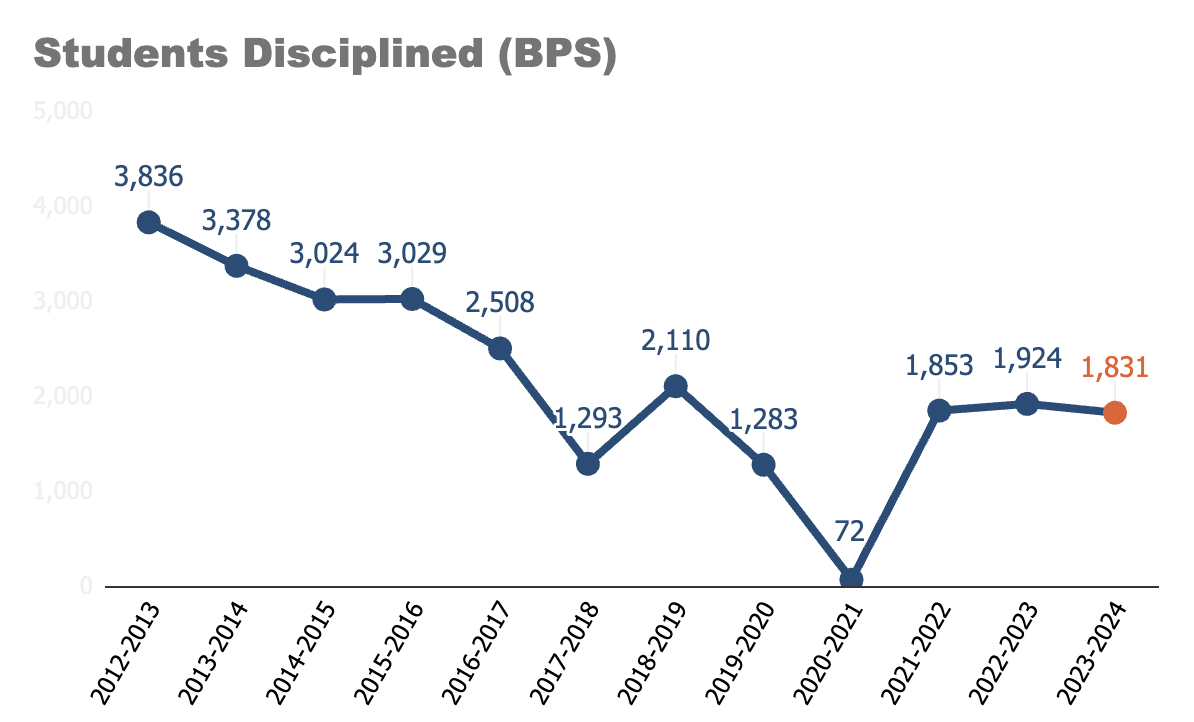
The data both confirms and belies the impacts of the pandemic. For instance, 2020-2021 reflects Boston students attending school remotely for nearly the entire school-year. But for all of the negative reports and public narrative about post-pandemic student behavior in schools, this data does not reflect that. There is no accounting for more minor misbehavior or major incidents that go unreported, but suspension rates - as a reflection of extreme misbehavior or dysregulation - are below the pre-pandemic years’ average.
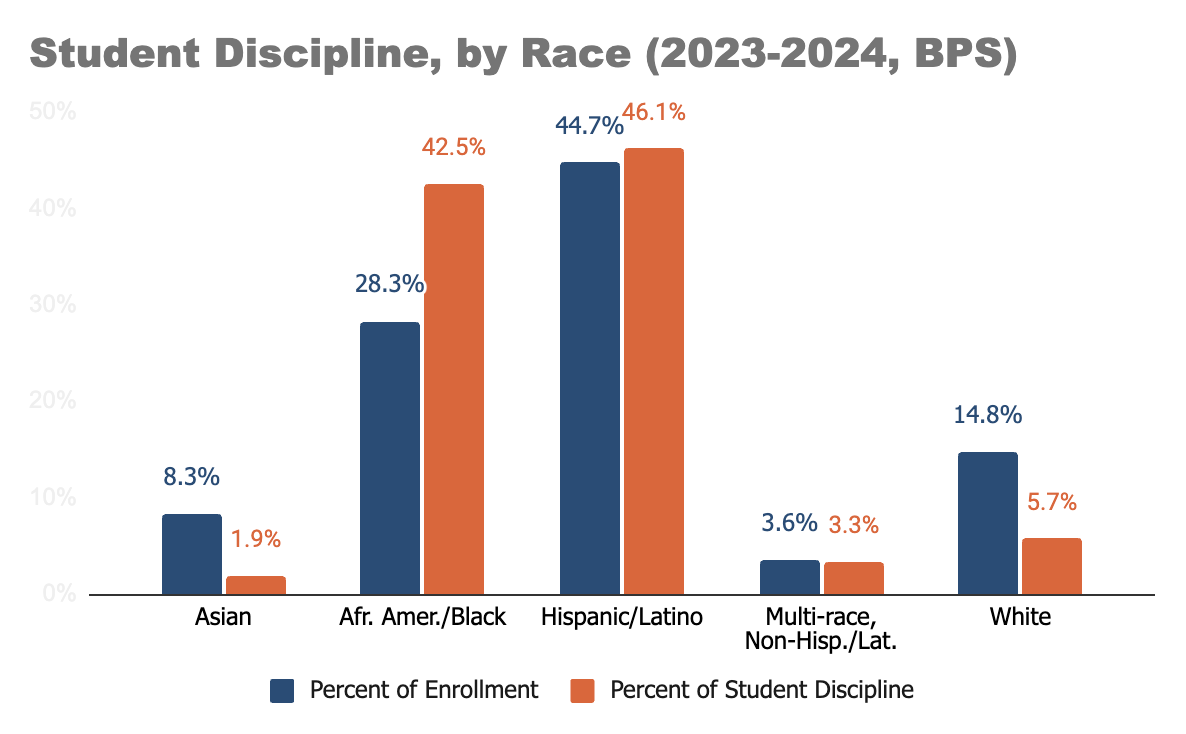
Despite these falling rates, one trend remains unchanged. As seen in national data, Boston’s Black students are more likely to be suspended relative to their peers.
This data applies to individuals, but it does not track at the school level. In Boston, there is virtually no correlation between suspension rates and the percentage of Black students in a school (0.17).
Nor does there appear to be a broader connection to student achievement. There is a weak correlation between student achievement results and suspension rates in Boston schools (-0.34). This is another indicator that these policy changes have “worked,” reducing the potential harmful impacts of suspensions across all schools.
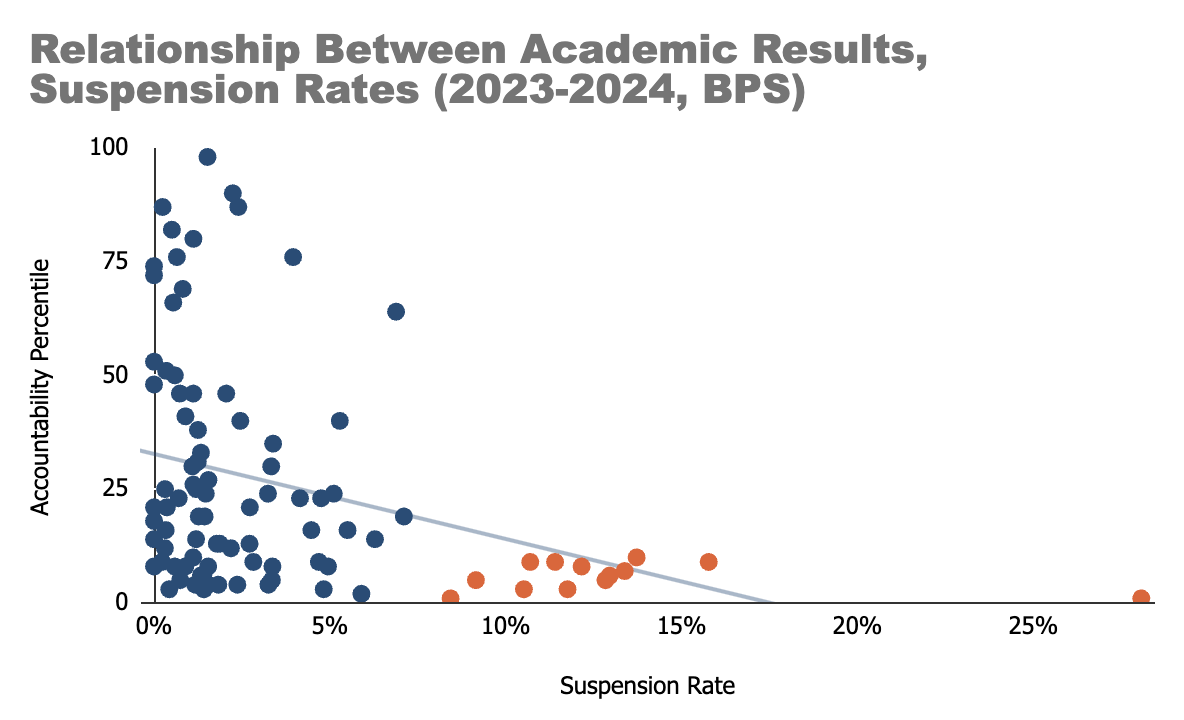
You see this on the left. The sheer randomness of blue plots up and down the axes sever any connection one may have assumed.
Until you look to the right. By contrast, the orange plots reflect a clear connection between high suspension rates and low student achievement. Combined, these schools are responsible for ~⅔ of all BPS suspensions. This group is different from the vast majority of other BPS schools, but alike as a group in one way: all but one are open enrollment high schools.
As Boston families begin the annual rite of fall - applying for exam schools - once again we have new data for an old problem: the quality of Boston’s other high schools.
Schools
MIT researchers, led by a Nobel Prize winner, are urging Boston to consider ending busing students. METCO has a different take on the need for a different type of busing.
Boston’s Chittick Elementary has the city’s first Community Schoolyard.
Question 2 only eliminated the MCAS high school graduation requirement; it did not replace it with anything else. So, what comes next? New assessments? Expect this to be a topic of discussion at the legislature.
Fines! Football playoffs in jeopardy! Spying! The three North shore teacher strikes are evolving into an episode of Vice Principals, except not very funny given what it is costing families and students.
In a complete break from typical adolescent/teenage behavior, students are resisting rules and trying to work around cell phone bans. Massachusetts students received racist text messages on their phones during school last week. I spoke at this event on Tuesday about limiting cell phones in schools, and here is a well-articulated counterpoint. I will be discussing this and other education topics on Boston Public Radio on WBGH next Wednesday at 1 PM.
The Board of Elementary and Secondary Education is queued up to meet three times in a week. Agendas here. Vocational school admissions will be the big topic.
The Secretary of Education role has not yet made the roster for the dystopian gym-class draft of cabinet appointments. What could federal policy look like for the next four years? Continued culture wars and it will cost a lot of Massachusetts adults - not kids - money.
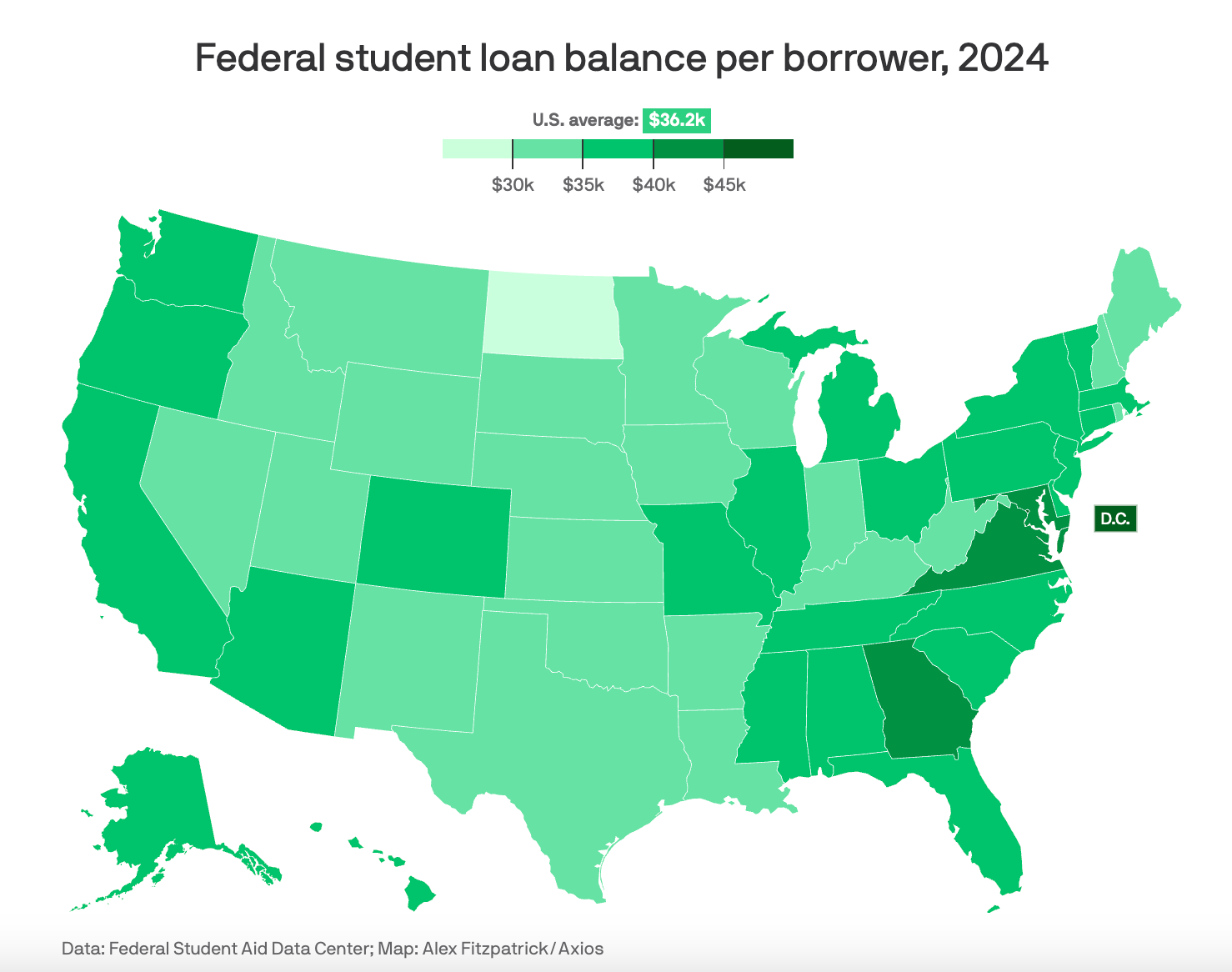
Smaller private colleges navigate the new financial realities of higher education.
Other Matters
We are hosting a webinar at noon on Monday for Boston Schools Fund’s final report. Sign up here. The BSF website is now archived, including our most important content and a newsletter archive.
Chris Lovett’s analysis of Boston election results is a must-read.
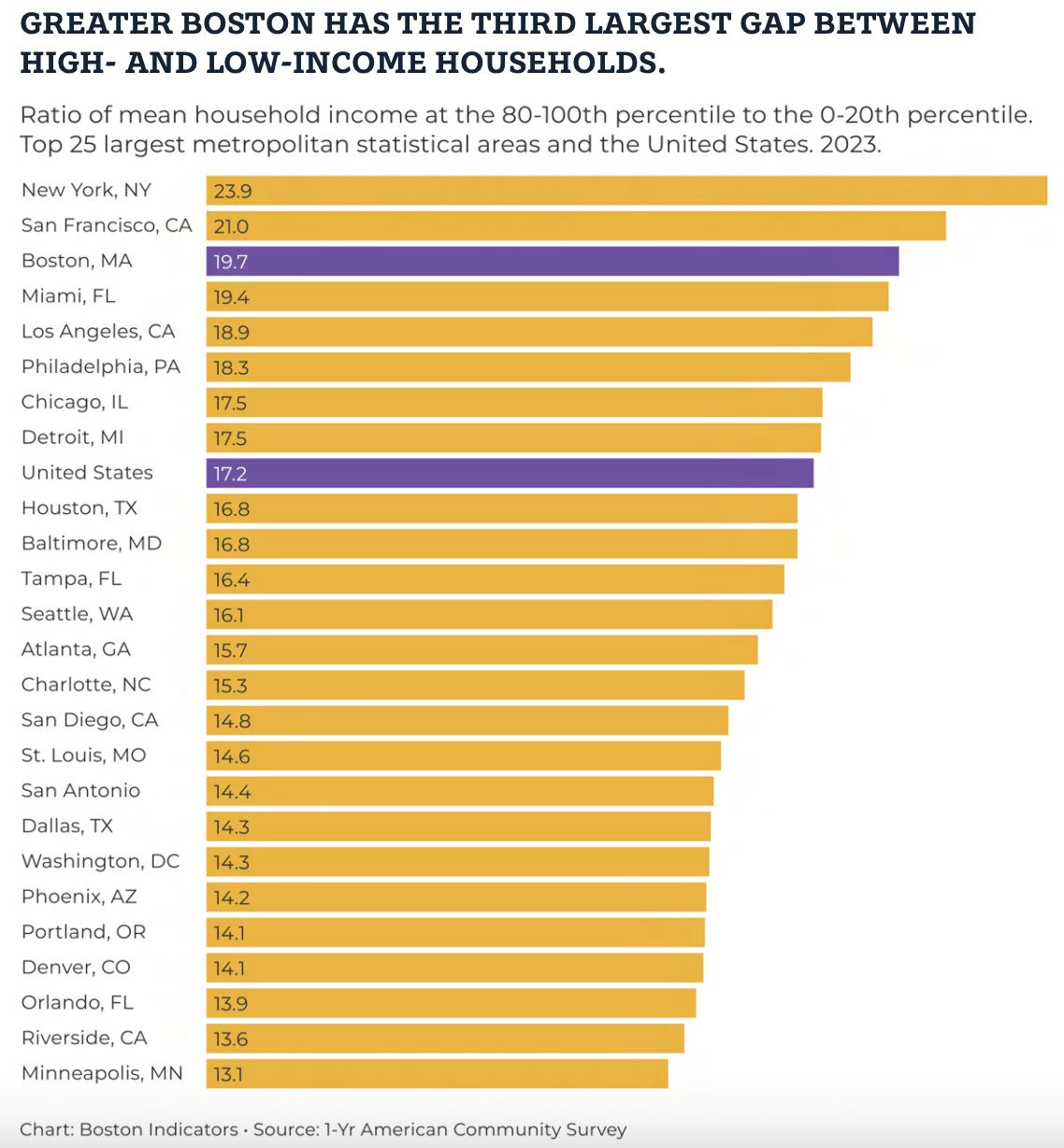
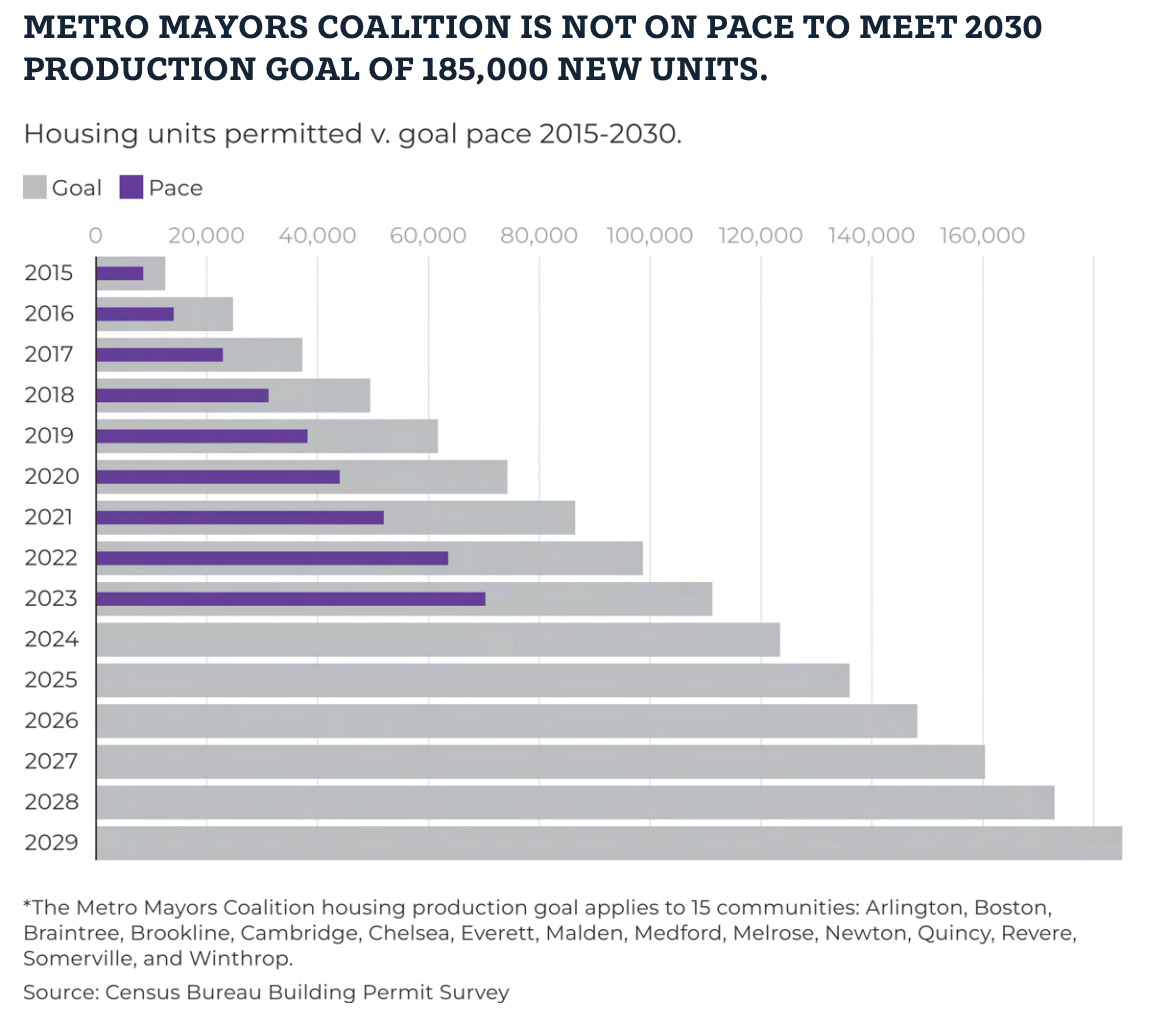
The Boston Foundation’s annual housing report card in three acts:
Inequality skews demand.
Supply is lagging.
Cities and towns are sitting on public land that could create tons of housing.
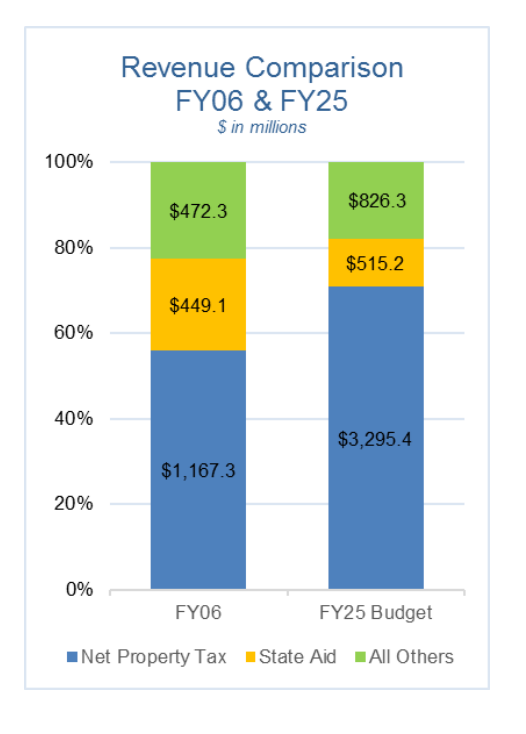
The Massachusetts legislature returned to formal session to pass economic and climate bills, but has yet to take up Boston’s home-rule petition to temporarily increase commercial property tax rates. A new BMRB report outlines some alternatives given how increasingly reliant the city has become on property taxes for revenue.