

Boston Focus, 12.20.24
Some things I have read through recently...

Last post until 2025. Keeping my word to only do this once per year, short and sweet: please consider subscribing to support this work. Many of you have already - thank you!
Thank you for reading and engaging. Happy Holidays and best wishes for the new year.
Massachusetts teacher data begins to trickle out every December. A few clear trends stand out in our future public school workforce.
Teacher preparation programs are largely concentrated. Of the 74 colleges, universities, or teacher prep programs in Massachusetts, 50% of all preparing educators attended one of these 10 schools.
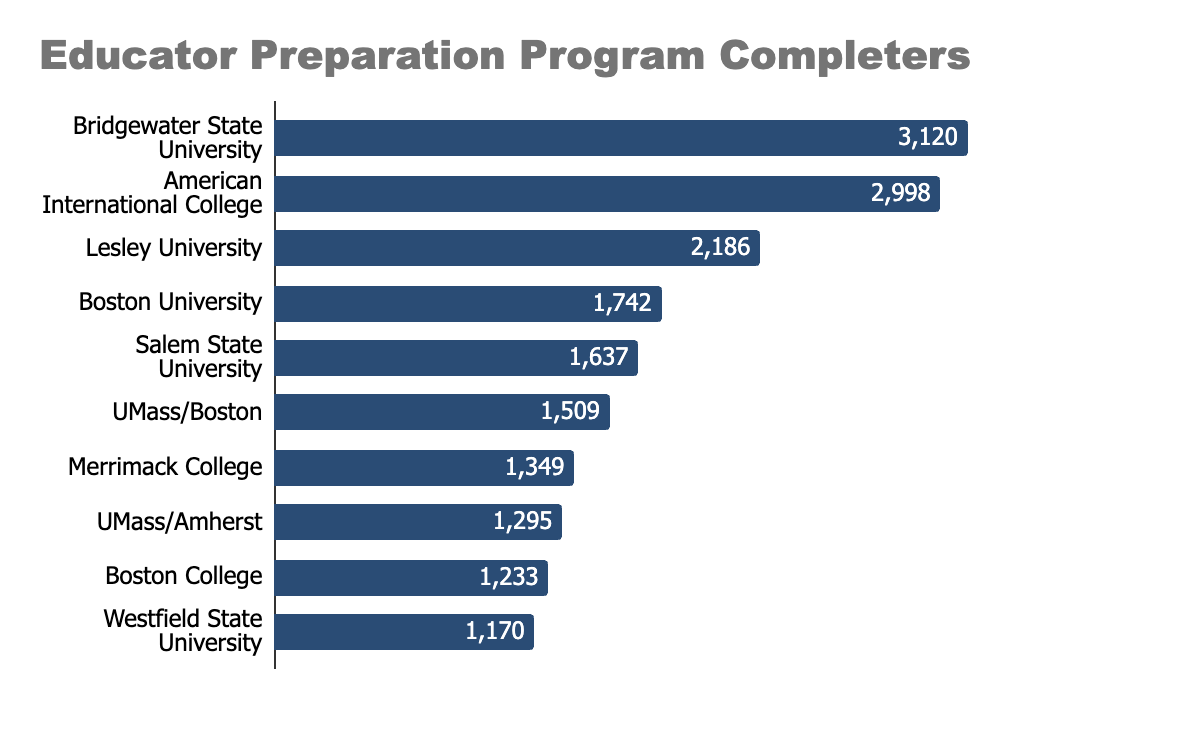
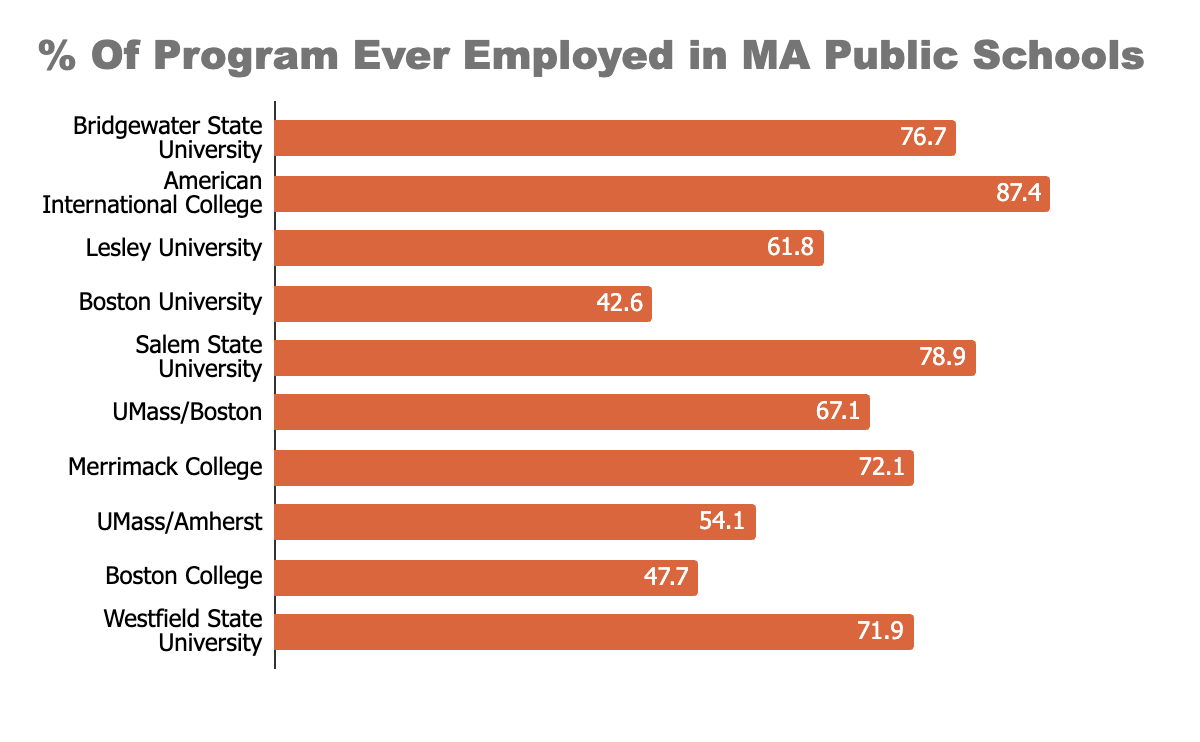
Enrollment doesn’t match employment. Only ~64% of those enrolled in teacher preparation programs actually end up graduating and teaching in Massachusetts public schools. The previous top ten list gives a view into the variance you see in this sector.
The teacher pipeline does not reflect the student body. Preparing Massachusetts educators are disproportionately white and female (data self-reported).
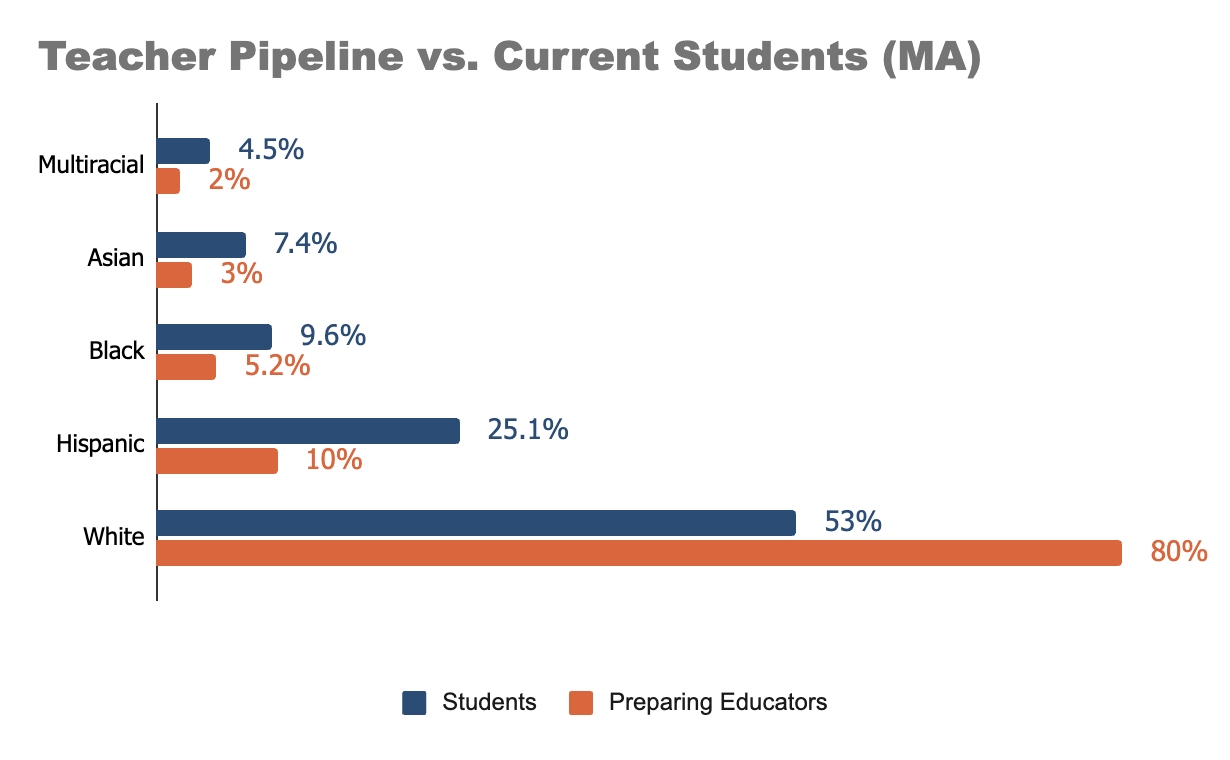
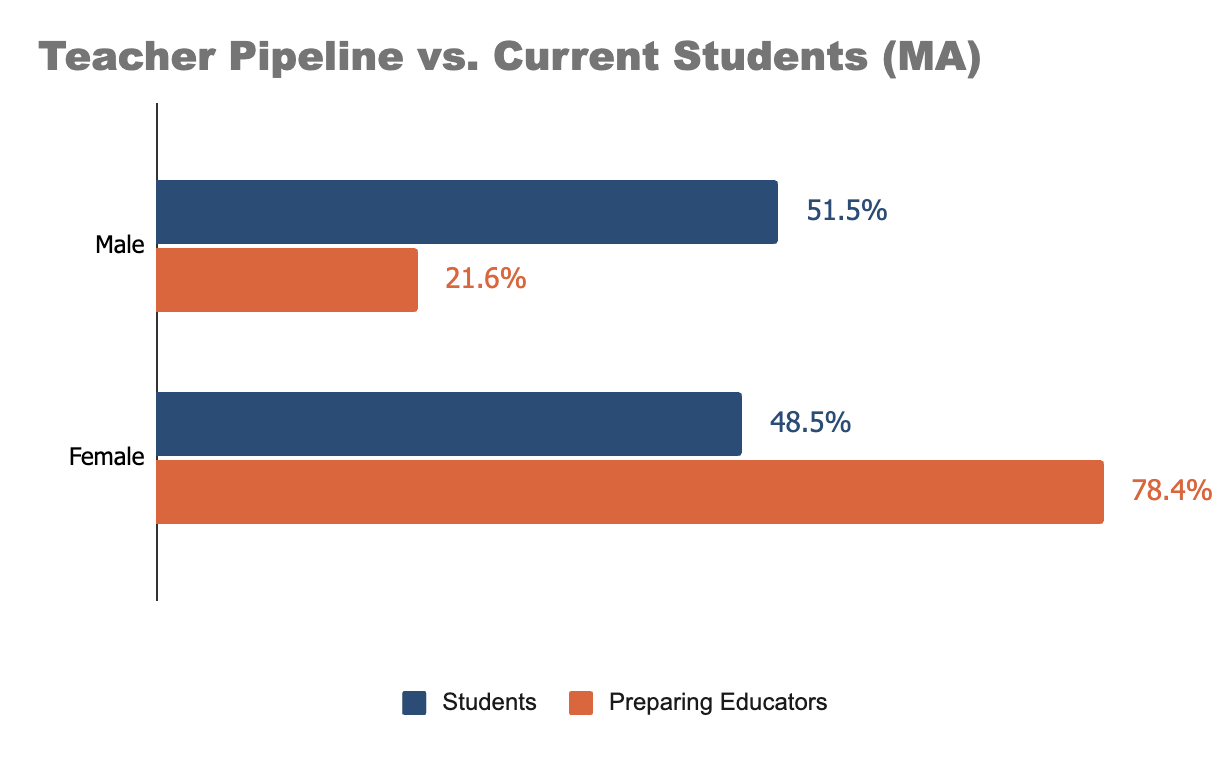
It is established research that teacher diversity is tied to stronger student outcomes. With average salaries 30% greater than the Massachusetts median, health benefits, and job security, teaching in Massachusetts public schools is one of the most widely available paths to the middle class.
Teacher diversity is a win-win for racial equity, which may be partially why there has been steady improvement in this area and Massachusetts just passed a new Educator Diversity Act. Given the historical gaps in passing the Massachusetts Test for Educator Licensure (MTEL), it makes sense that the act targets alternatives for certification.
But why wait until the end to address the issue? In all, nearly 4 out of 10 people aspiring to be a Massachusetts public school educator attend a state university. Recruitment, admissions, and retention for these institutions is the Commonwealth’s most direct and perhaps most underutilized lever in diversifying the field. For example, only ~one-quarter of the students at Bridgewater State, the Commonwealth’s largest teacher producer, are non-white.
To say nothing of best practices. Massachusetts could buck the national trend and ensure its future educators are trained in the science of reading. The nearly 10,000 future educators-in-training could be gaining valuable instructional hours and addressing learning loss by fueling high-dosage tutoring. We could be recruiting and training to account for our increasingly multilingual student population.
The macro trends are not on our side. Perceptions of the field are down, teachers have internalized that, and self-reported stress and dissatisfaction is up. Other professional fields now offer far more flexible working conditions than educators typically have.
Without planning and intervention, it may become increasingly harder to find the teachers we need for our schools.
Schools
Boston School Committee met on Wednesday. Materials here. The Committee approved a new bus drivers contract that requires an additional $6.6M this year, reviewed financial statements that show the district currently projecting a deficit, and discussed another revision to exam school admissions policies.
The proposed renovation of White Stadium is now the most expensive and most talked about current BPS facilities project. The Massachusetts School Building Authority (MSBA) kept Boston in the running to receive state funding to renovate Ruth Batson Academy.
Confusion abounds in the wake of Question 2’s elimination of the MCAS high school graduation requirement. No one is quite sure what students need to do to graduate now, but students who did not graduate in the past may get their diplomas retroactively. What if districts ended up just using the MCAS anyways? Michael Jonas has the state of play, with a summary of this week’s state Board meeting.
Materials from that meeting here. The bigger news was that interim Commissioner Russell Johnson will not apply to hold the position permanently, opening only the second search for that position in the past sixteen years.
At least they didn’t lose winter break: North shore students who missed days due to teacher strikes will lose future Saturdays and February break to make up the time.
A fight - fueled by cell phone videos - at Revere High is chronicled in the New York Times.
Benjamin Banneker, the Cambridge elementary charter school that posts the highest Black student achievement in the state, has purchased a recently closed Catholic school building.
Methuen schools have a real-life Nutcracker problem to manage.
Why does Moody’s have a negative outlook for public education in 2025? Continued - but ignored - financial pressures.
These Arizona charter school founders clearly have not watched the Terminator or Matrix series.
TikTok is headed to the Supreme Court.
A lawsuit uncovers the email and paper trails for unqualified, but wealthy college applicants.
The Trump Administration holds one direct pressure point in education: student loans (and colleges they deem to loan too much).
Other Matters
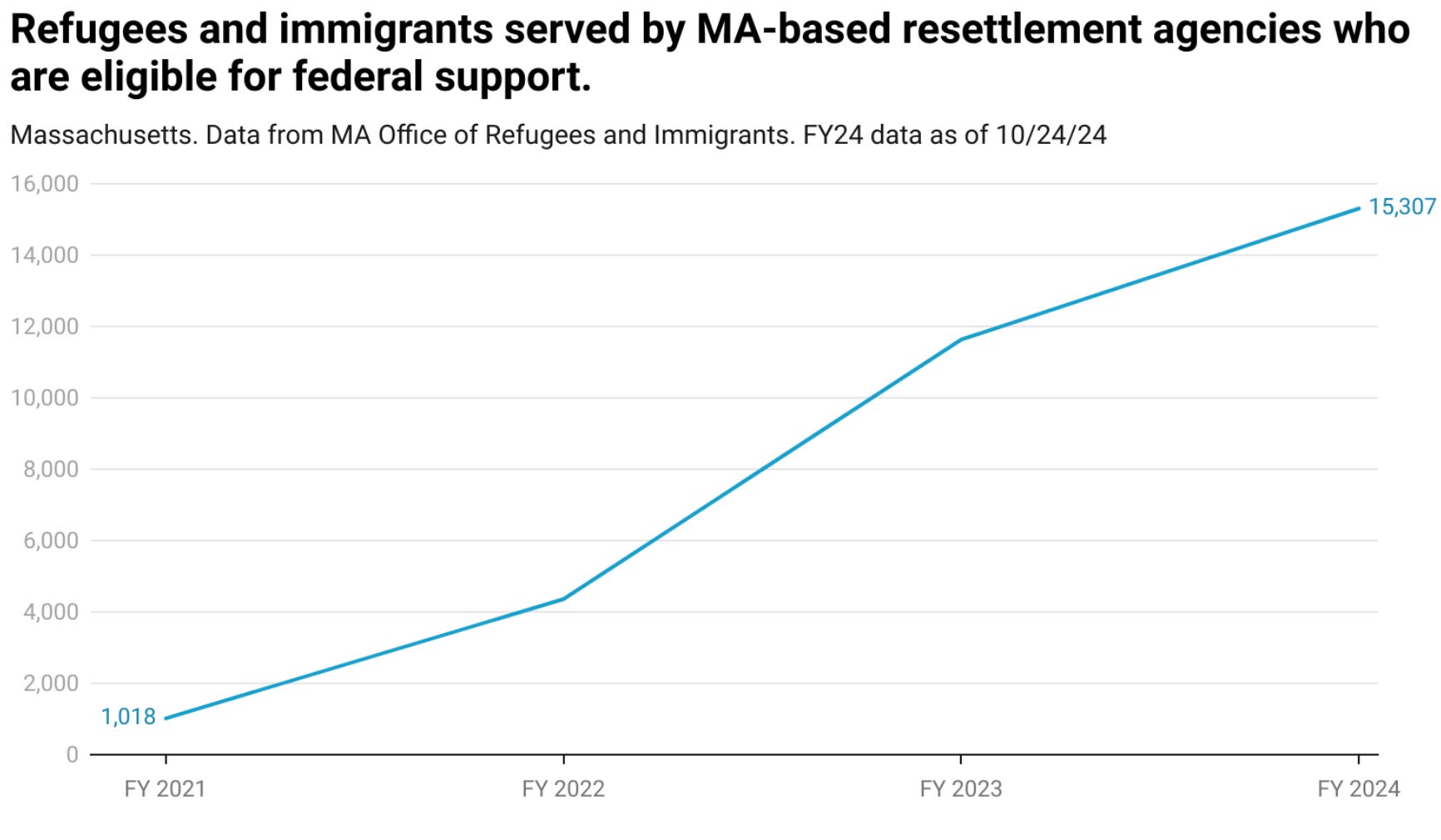
Boston Indicators put recent immigration in clear relief: up 14x in three years.
In Massachusetts, the idea of green energy is really popular. Siting the actual infrastructure for energy, not so much. Elements of the recent climate bill seek to address that.