

Boston Focus, 3.13.26

Taking a page from last week’s Advancement Placement headline flurry, Boston’s new high school graduation data led local education news last week.

This is good news and represents real progress. Since 2008, there have been significant improvements, most notably amongst students with disabilities.
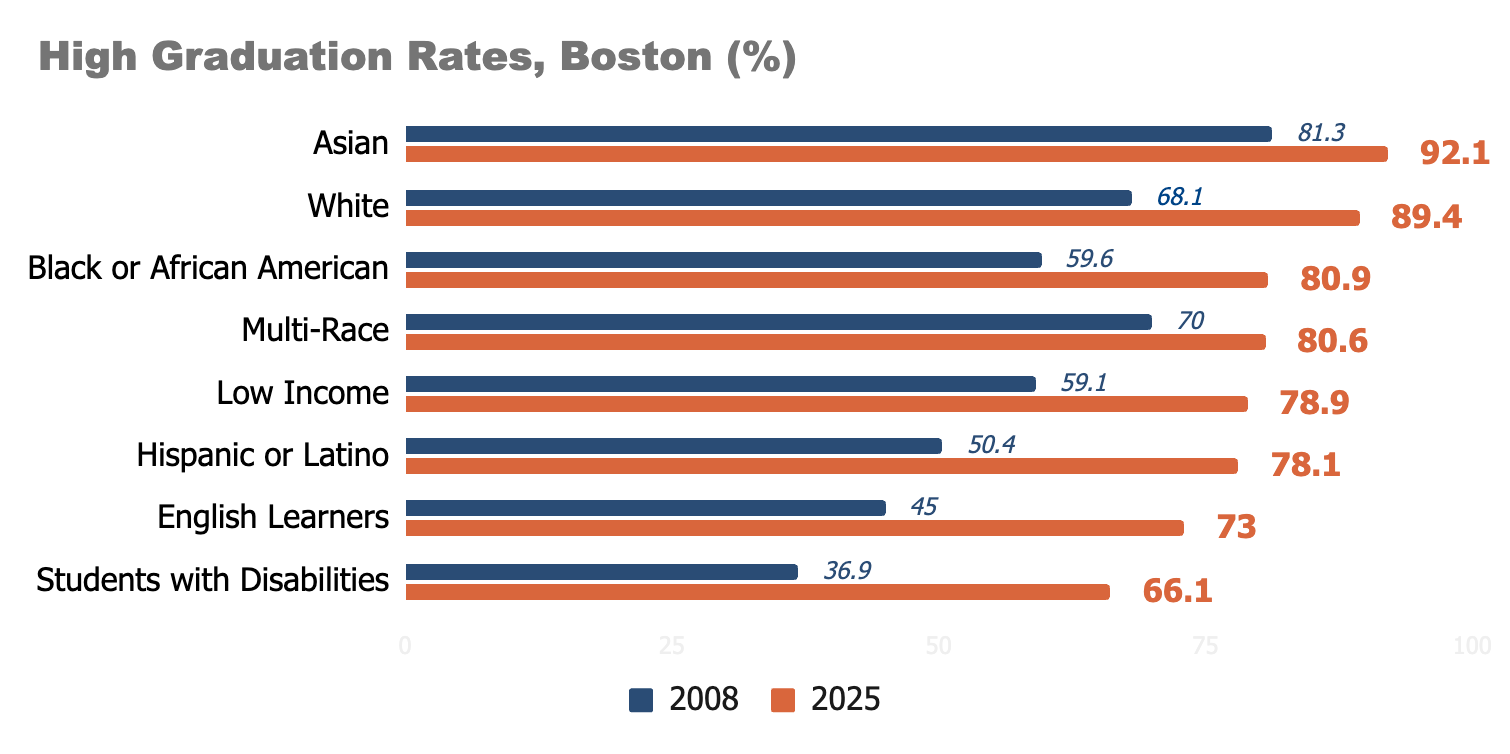
The result is not only an all-time high of 81.3%, but also a meaningful closing of variance and the gaps between subgroups.
There is a reason why the Obama Administration went so hard at high school graduation rates, initiating the trend we can see today. A high school diploma is likely one of the most effective policy interventions we have: high school diplomas boost incomes, extend life expectancy, mitigate incarceration, and save taxpayers hundreds of billions of dollars in social services each year.
This is probably also why the metric is so popular. In developing Boston School Finder, it consistently rose to the top in surveys and focus groups when families shared thoughts on school quality. Public polls (like this one from last year) consistently report high school graduation rates as a valued/sticky accomplishment for voters.
But in today’s world, high school graduation is a floor, not ceiling. A high school diploma does grant access to a subset of jobs and careers, but most politicians and policymakers have adopted “a college and career readiness” platform. The diploma is a means to that end.
Data from Massachusetts and its longitudinal data system (E2C Hub) indicate that Boston’s high school diplomas are not yet translating to college and career success.
Despite the record-high graduation rate this year, postsecondary enrollment actually declined in Boston.
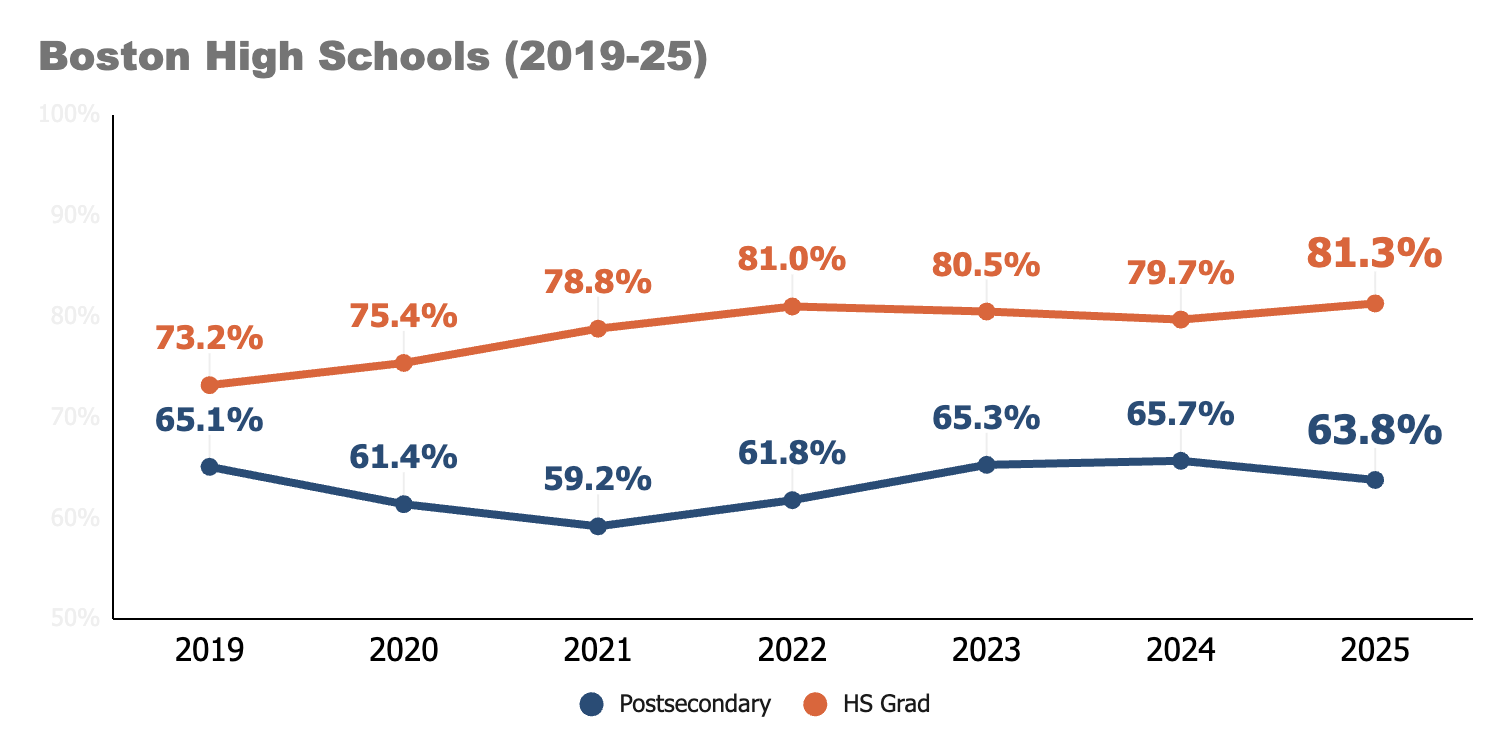
A lot of noise, but the rates have barely budged over the past two decades. Postsecondary rates are lower today than they were in 2008.
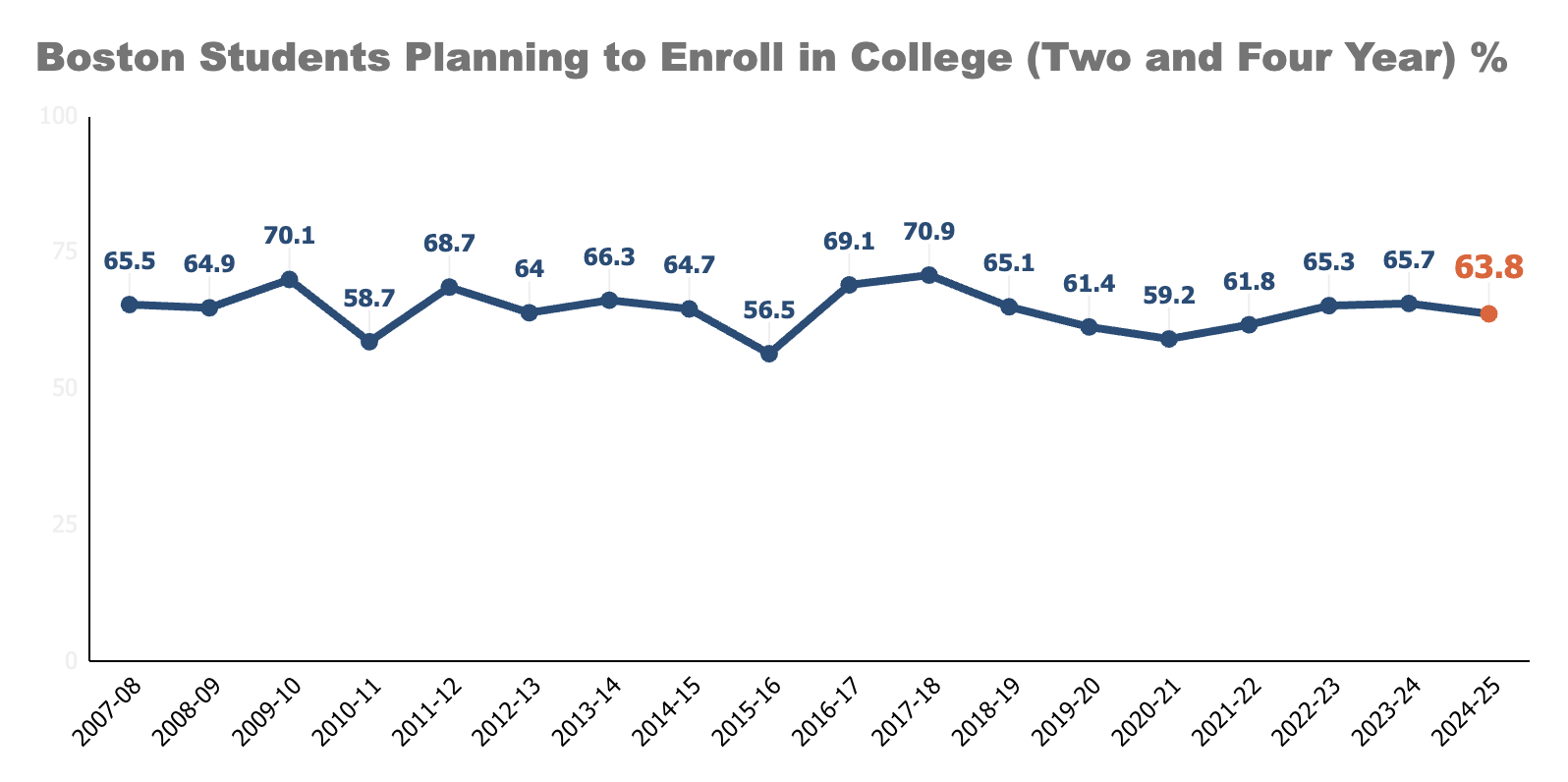
For years, postsecondary enrollment was a proxy for lots of good outcomes that policymakers and researchers could not yet measure. The notion that postsecondary enrollment provides more advanced skills, gainful employment, and therefore more income can now be validated though actual data. Massachusetts residents’ incomes can be tracked back to their Massachusetts public school enrollment.
For the eight graduating classes for which we have data, Boston high school graduates earn a lot less than their fellow Boston and Massachusetts residents.
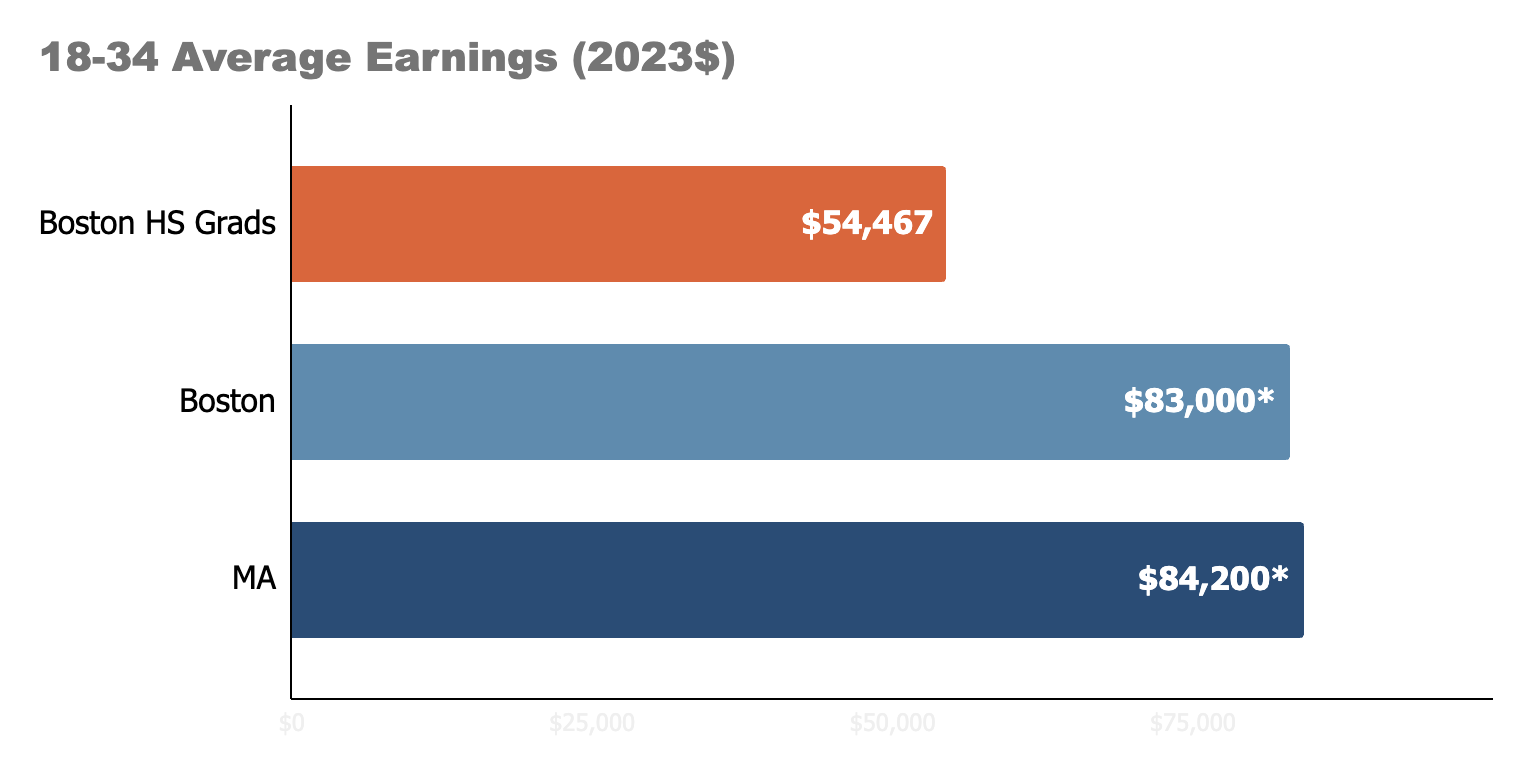
*This is an estimate given that federal wage and Census data is cut by ages 18-24, and then 25-44.
There is a lot of complexity here. Different numbers of years in the workforce, comparison to workers who came from elsewhere, higher income backgrounds, etc. To control for that, let’s use the same moment in time: six years after high school graduation, which is the agreed standard to allow for postsecondary completion and entering the workforce.
Boston high school graduates still lag.
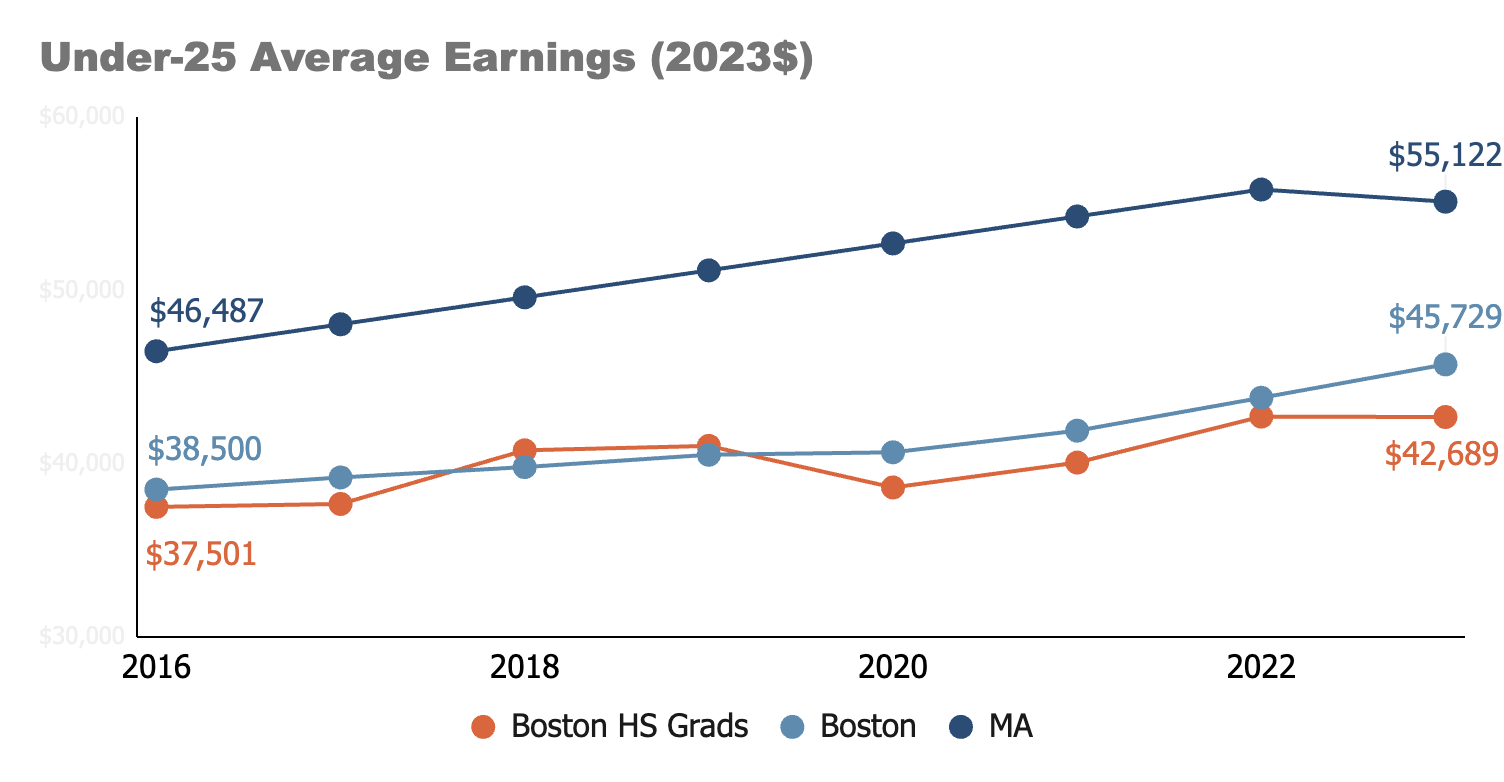
And, over time, Boston high school graduates’ wages lose ground compared to their peers, too.
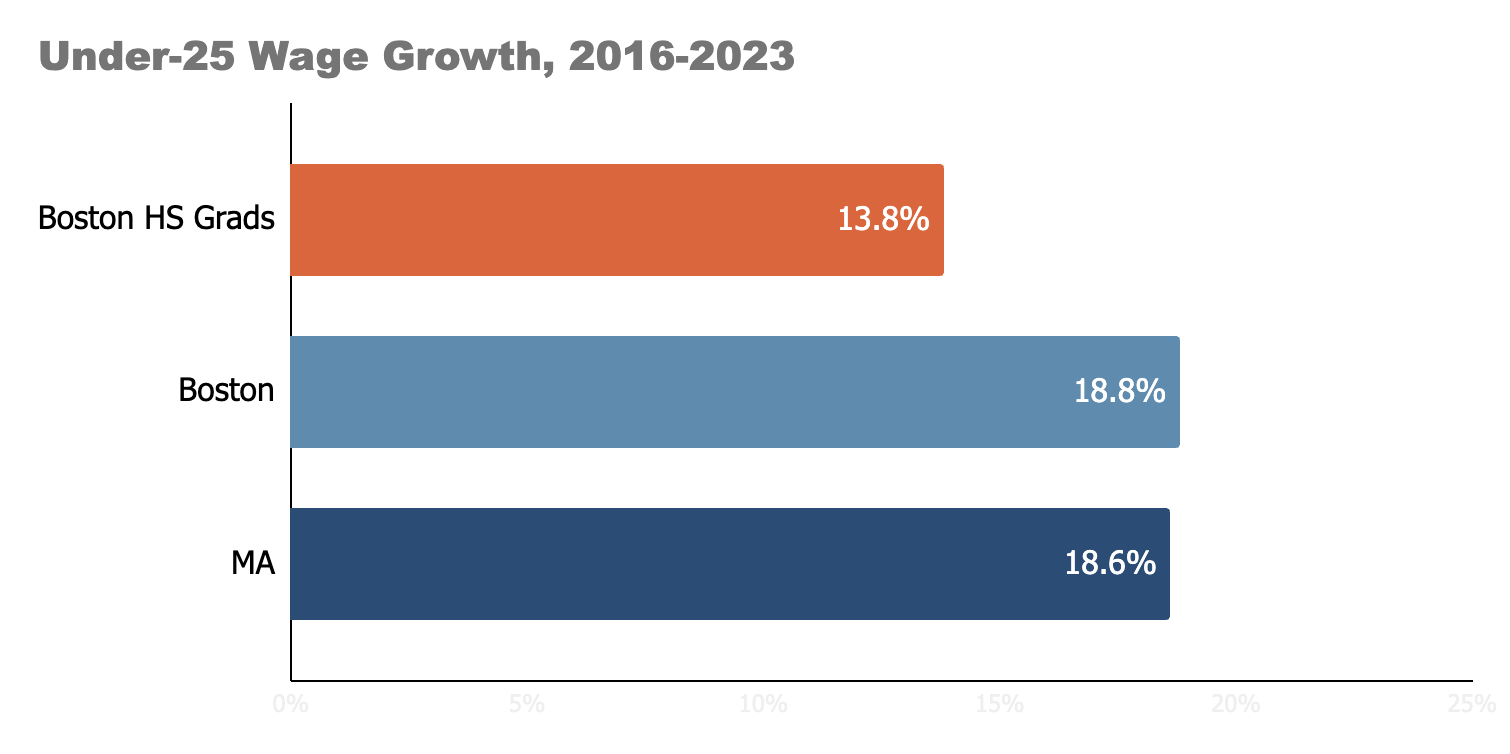
Over the past two decades, policymakers and educators have done the important work of raising graduation rates. With that expectation set, it is now time to raise the bar. As the Governor’s council considers standard high school graduation requirements across the state and BPS assesses the rigor of its high school curriculum, higher graduation rates sound good, but they also have to translate into higher postsecondary access and incomes.
Walking across a graduation stage isn’t enough. You need to be going somewhere.
Schools
City and district leaders met yesterday at TechBoston to highlight, among other things, Advanced Placement’s (AP) role in BPS. Referenced in last week’s Substack, but exam schools have outsized impact on this data. Those three schools are responsible for three-fourths of all AP exams in the city, leaving only 580 passed AP exams in the other 22 schools combined.
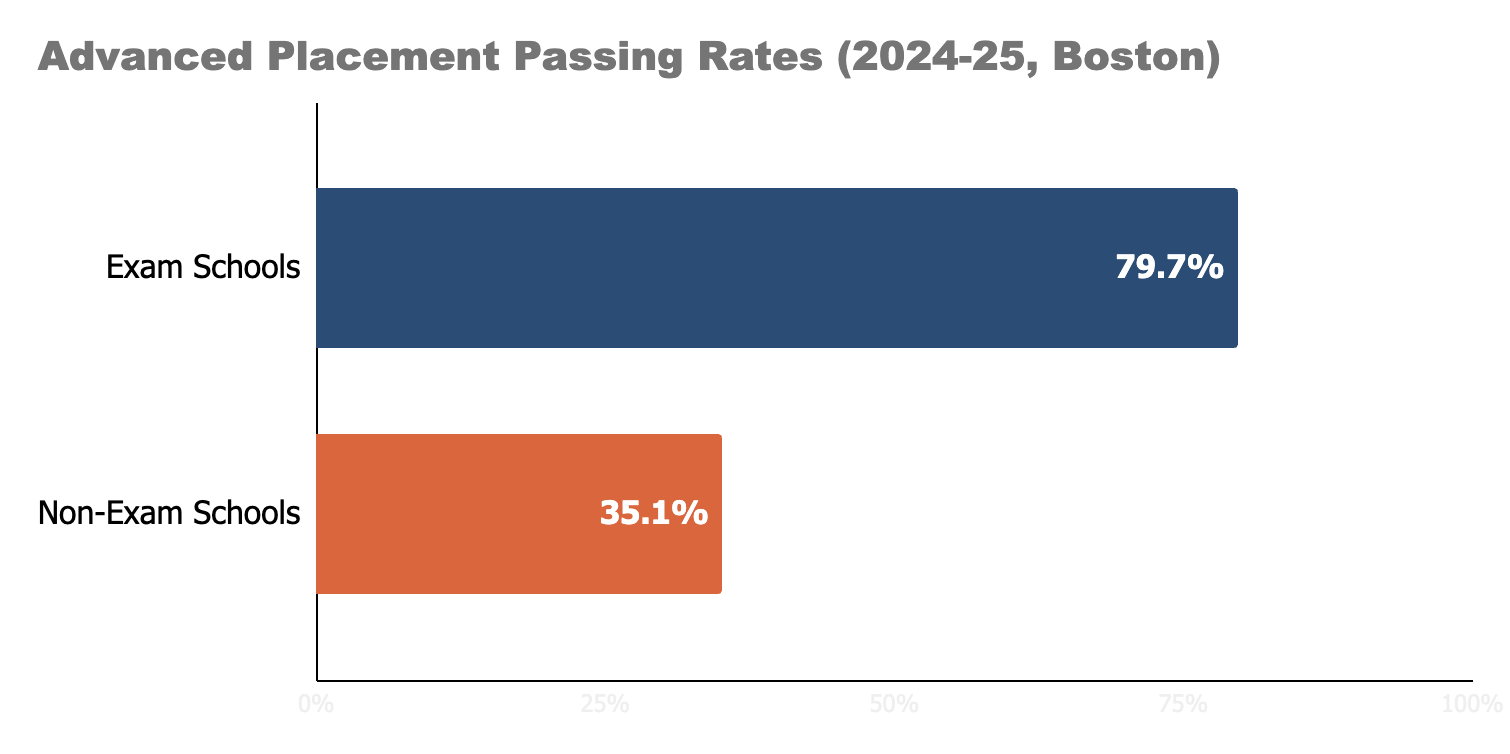
Non exam school BPS passing rates are significantly higher than other high needs districts (12.3%), signaling progress.
A Medford Catholic elementary school is closing. Public school enrollment in the city has dropped 7% in the past decade.
An interview with Massachusetts education Commissioner Pedro Martinez.
Charter schools are public schools, and subject to public records laws according to a Massachusetts Supreme Judicial Court ruling this week.
I have been concerned for some time that there is too much screentime within classrooms now. Learning how much time their kids are spending on iPads and Chromebooks during the day, parents are increasingly requesting less technology during instruction.
Parental intuition is being born out by the data. With a provocative argument and a lot of supporting evidence, neuroscientist Jared Horvath argues that the declines in the National Assessment of Educational Progress (NAEP) strongly correlate with a state’s commitment to universal classroom technology (“lock-in”).
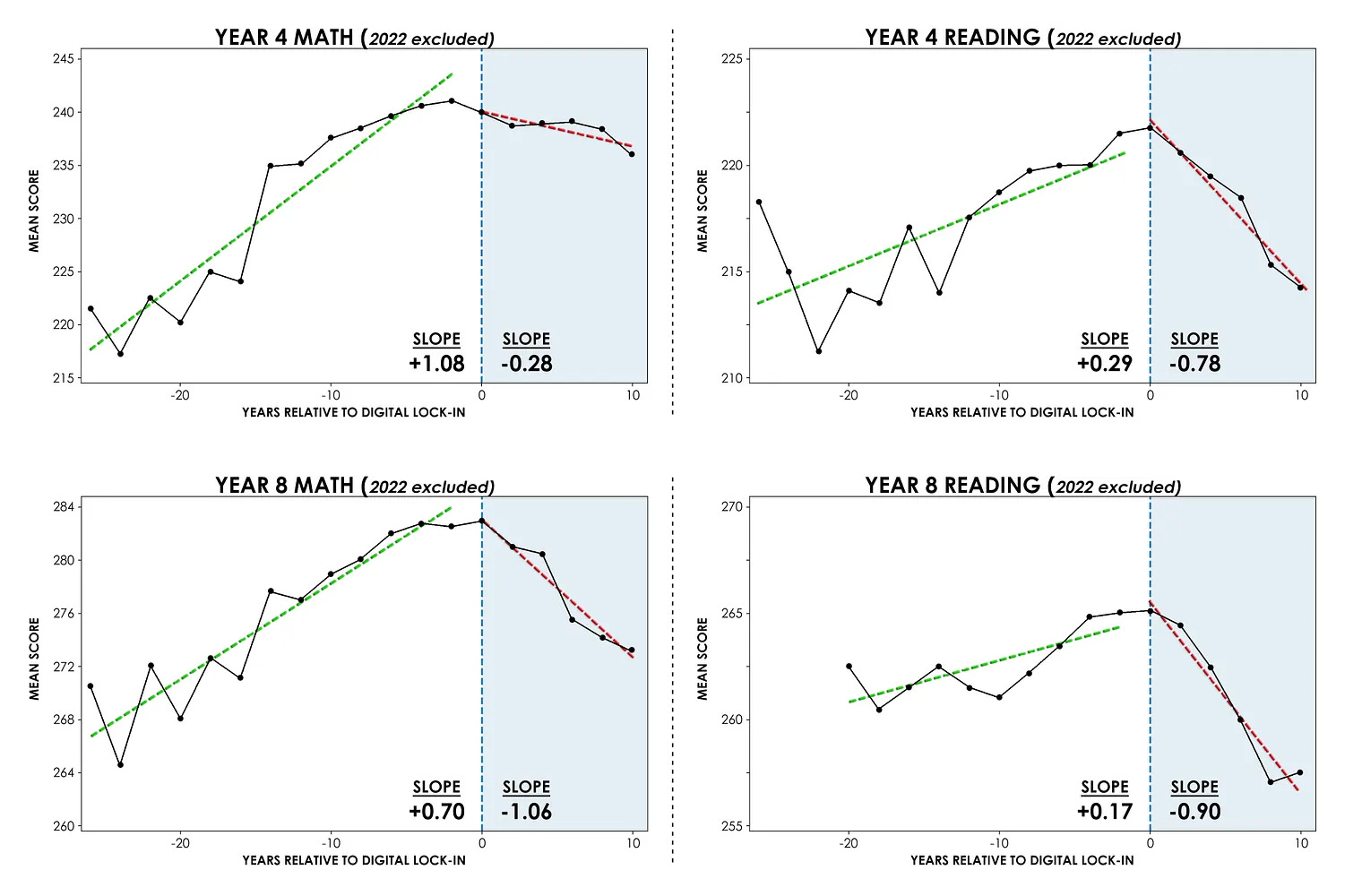
Checks out in Massachusetts. At the exact moment when more Chromebooks were needed in every elementary school - in part to support assessments newly moved online - the Commonwealth began to lose its lead on other states on a variety of NAEP metrics.
What kids are not doing outside school may also be a contributing factor. Kids don’t sleep enough. The story’s headline related to screen time not being a factor is not supported by the data. The impact of cell phone use on sleep hinges on when kids are on their phones (late, past bedtime), not the amount of time.
Other Matters
Thanks in part to many calls and emails, a Senate committee has favorably reported out a substantial bill to limit, regulate, and tax online sports gambling.
If you want to further educate yourself on the issue and be slightly horrified in the process, read this long-form piece in the Atlantic. A journalist who was morally and religiously opposed to gambling was given a year and a free $10,000 to gamble. He quickly became addicted, ending the year $10,000 down.
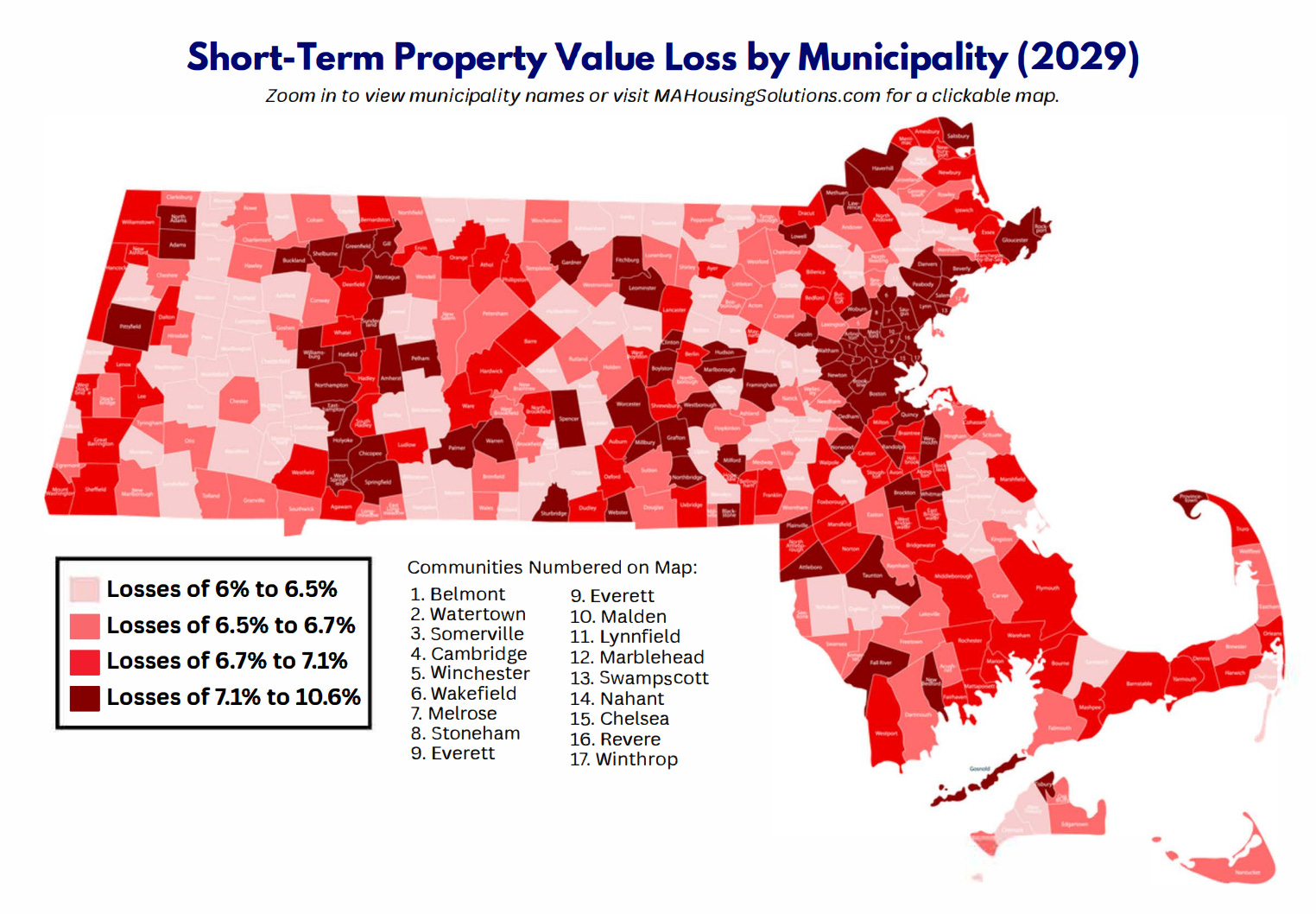
An MIT economist is raising serious concerns about the potential ballot initiative to reinstate rent control in Massachusetts: “it [rent control] was a bad idea, and it continues to be a bad idea.” It could get worse. A think tank at Tufts modeled how badly cities and town budgets could be hit if rent control pushes down the housing supply (which it does), and revenue with it.
Gruber, the MIT economist, rightly notes the need to do something about high housing prices from an economic and political perspective. Just how unpopular are high housing prices and how incentivized are politicians to propose anything to be seen doing something?
The United States Senate passed a housing bill this week by a vote of 89-10.