

Boston Focus, 4.10.26
A few billion doesn't buy what it used to

While the city’s operations - and cuts at BPS - dominated the discussion of Boston’s budget release on Wednesday, the city also proposed $4.4B in its adjoining capital plan.
More than one-quarter of that is allocated to Boston Public Schools (BPS).
Nearly four years ago, Mayor Wu announced the Green New Deal (GND) for Boston Public Schools. It checked policy boxes: something had to be done about the stubborn fact that Boston had too many school buildings, most of which were old. It checked the political boxes: “Green New Deal” was at its peak political popularity (particularly amongst Democrats) and it served as a rebuttal in a public fight with the state, which was considering receivership at the time.
There were two core promises made: $2 billion more for school buildings and “every school in the Boston Public School system upgraded or renovated – and some new buildings constructed – within the next 10 years.”
The city is well on-track to meet its funding commitment. And then some.
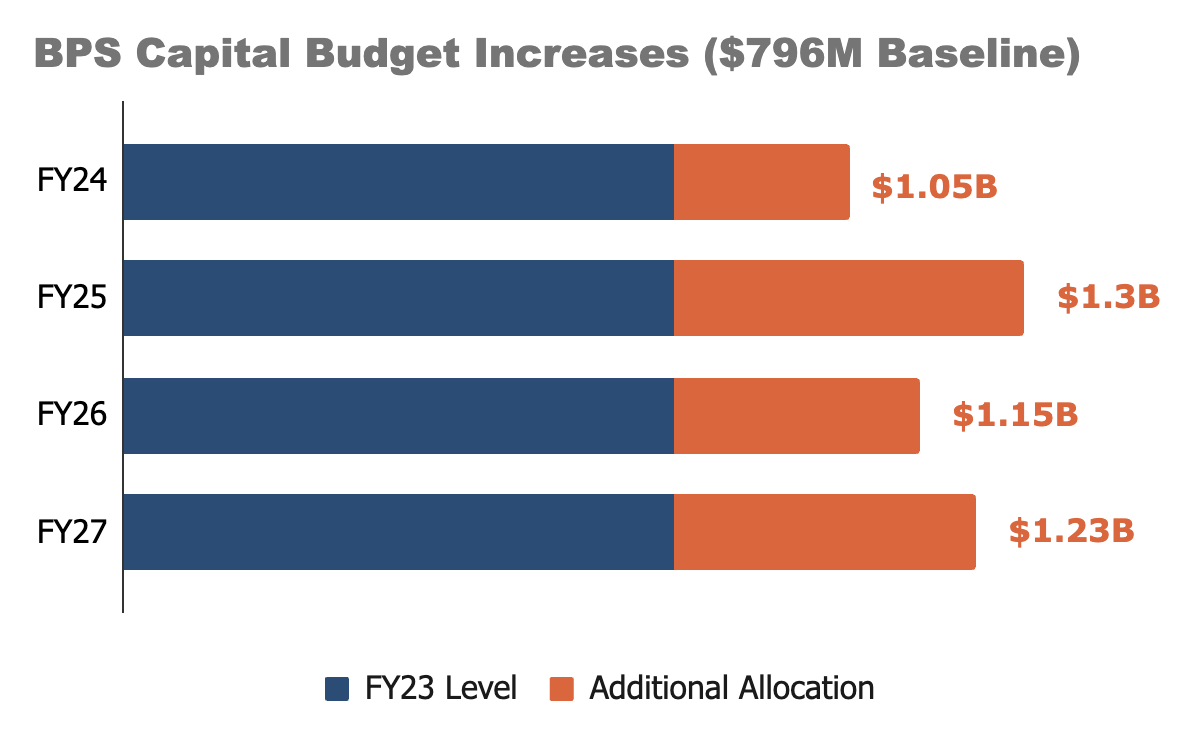
The four capital budgets since the GND announcement have added $1.5B in school capital work. At that rate, Boston could be bumping up near $4B over 10 years. BPS annual capital plans now meet or exceed that of the Massachusetts School Building Authority, which is responsible for helping to fund school projects across the entire Commonwealth.
Which makes it all the more surprising how little that buys you in Boston.
In FY24, things started fast with 83 projects. Wednesday’s plan brings that number down to 38.
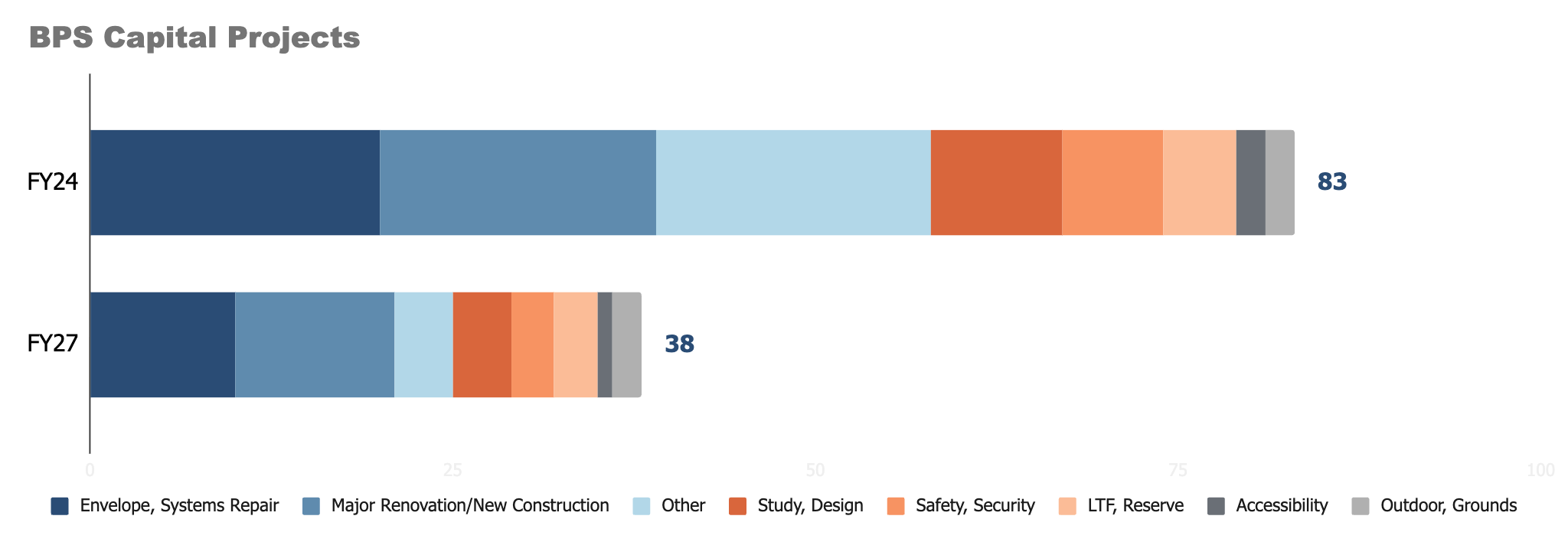
Some of this is to be expected. Boston capital plans have a five-year horizon, so there are projects always being finished and taken out of the rolling budget. These range from replacing windows and boilers, to cutting the ribbon for the Josiah Quincy Upper School.
But what comes next? Investment in design or studies have dropped from $188M to ~$2M this year. The 4 projects still listed - a PK-6 in Allston, a PK-6 in Roxbury, the West Roxbury Educational Complex, and the Blackstone - are incomplete despite sitting on capital plans for several years.
Where has all the money and planning energy gone?
“Long Term Facilities Plan.”
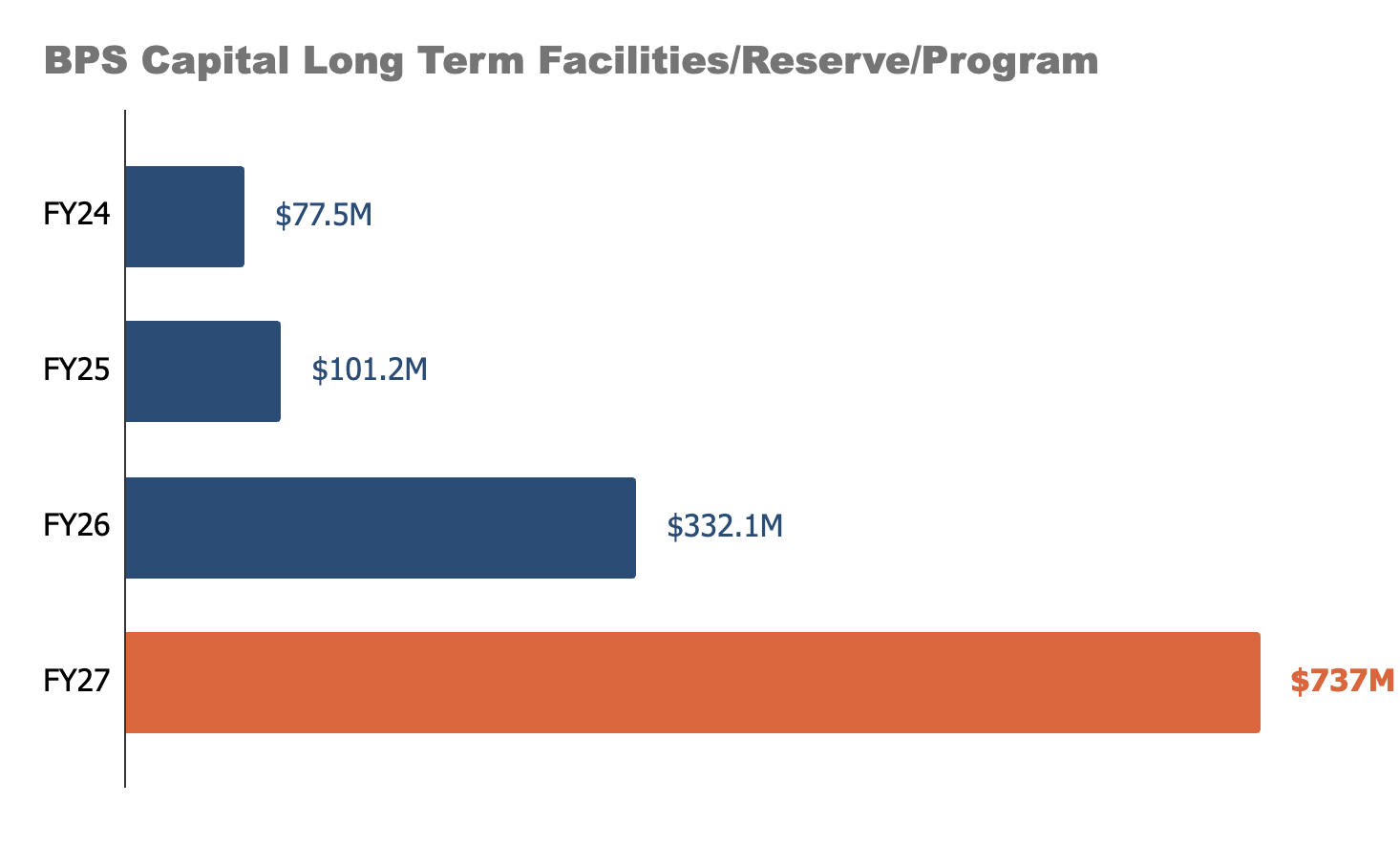
Most of these dollars are likely just for three big projects that have been authorized for state funding: Shaw-Taylor, Ruth Batson, and Madison Park. If you pair them with White Stadium (if that goes forward), and money already allocated to Madison Park (if it goes forward at this site), ~80 cents of every BPS capital dollar is spoken for.
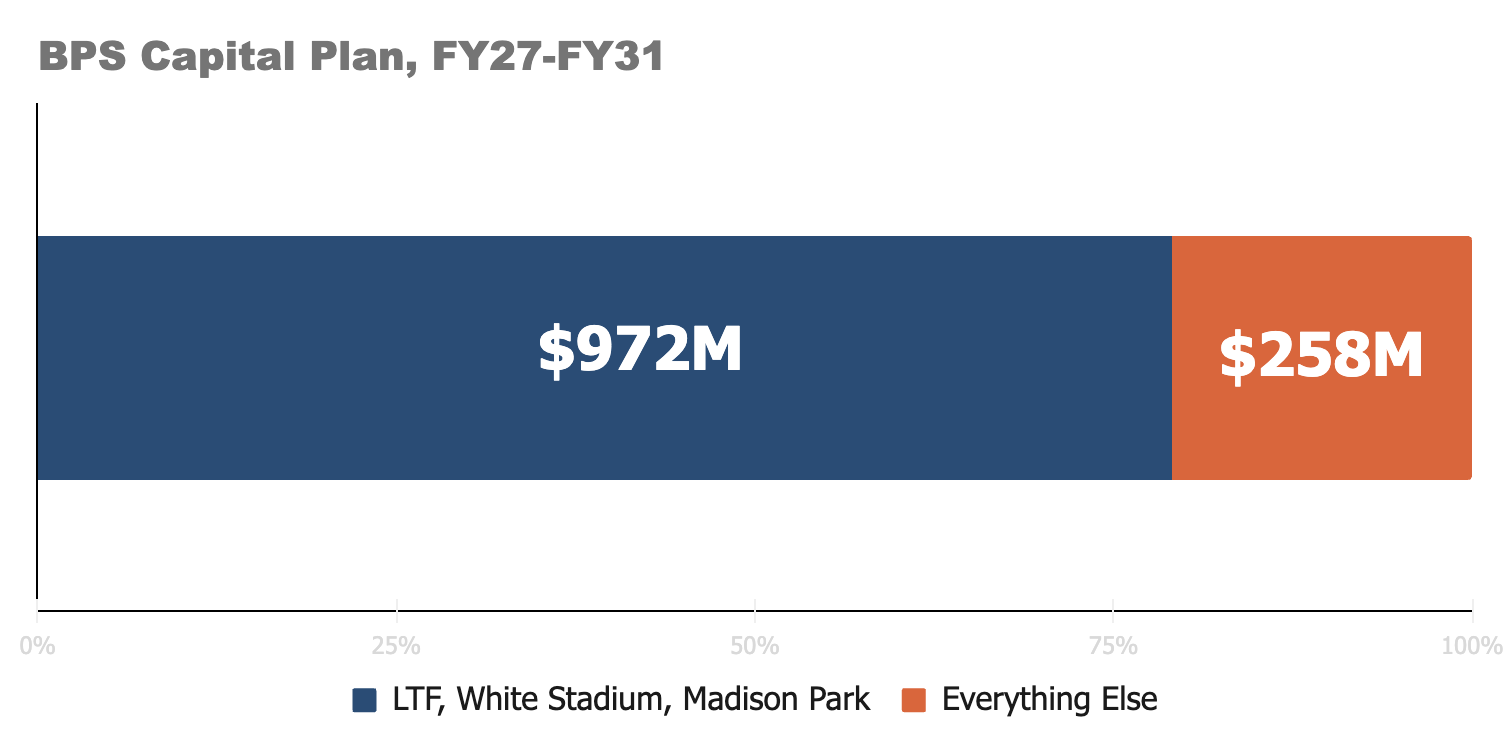
Without really saying it aloud, projects proposed and completed during GND for BPS has now been winnowed down to 5 schools (including the Horace Mann completed in 2025 and Sarah Roberts completed this fall) and a stadium.
Boston currently has ~119 school buildings.
In the past, I have raised the question about the lack of a true master facilities plan. In the very least, an actual plan with a list of projects, timelines, and budgets would create clarity and the ease political tension that comes with trade-offs (like the loss of a new community center that was promised at the old Jackson Mann site in Allston). It may be even more efficient.
But it doesn’t solve for the brutal math of expensive school construction.
If Boston wants to make bigger, faster progress with its school buildings, it will require a lot more money it currently does not have.
Schools
The proposed BPS budget has special education advocates calling for an audit.
The Massachusetts House of Representatives passed sweeping legislation to not only ban cell phones in schools, but also ban social media for anyone under age 16 without parental consent. The former will require reconciliation with the Senate bill and Governor approval. Enforcement issues and legal challenges are likely for the latter.
New technology raises an old question: can/how schools discipline students for behavior off-campus?
In Worcester, “home daycare” is sustained through free space.
Good summary on the state and potential of CTE in Massachusetts (last weeks’ topic).
NCAA’s mens basketball champion Michigan got a coaching assist from the founder of a Boston charter school. Related, it might be time to retire an 80’s trope: “jocks” may do better in school.
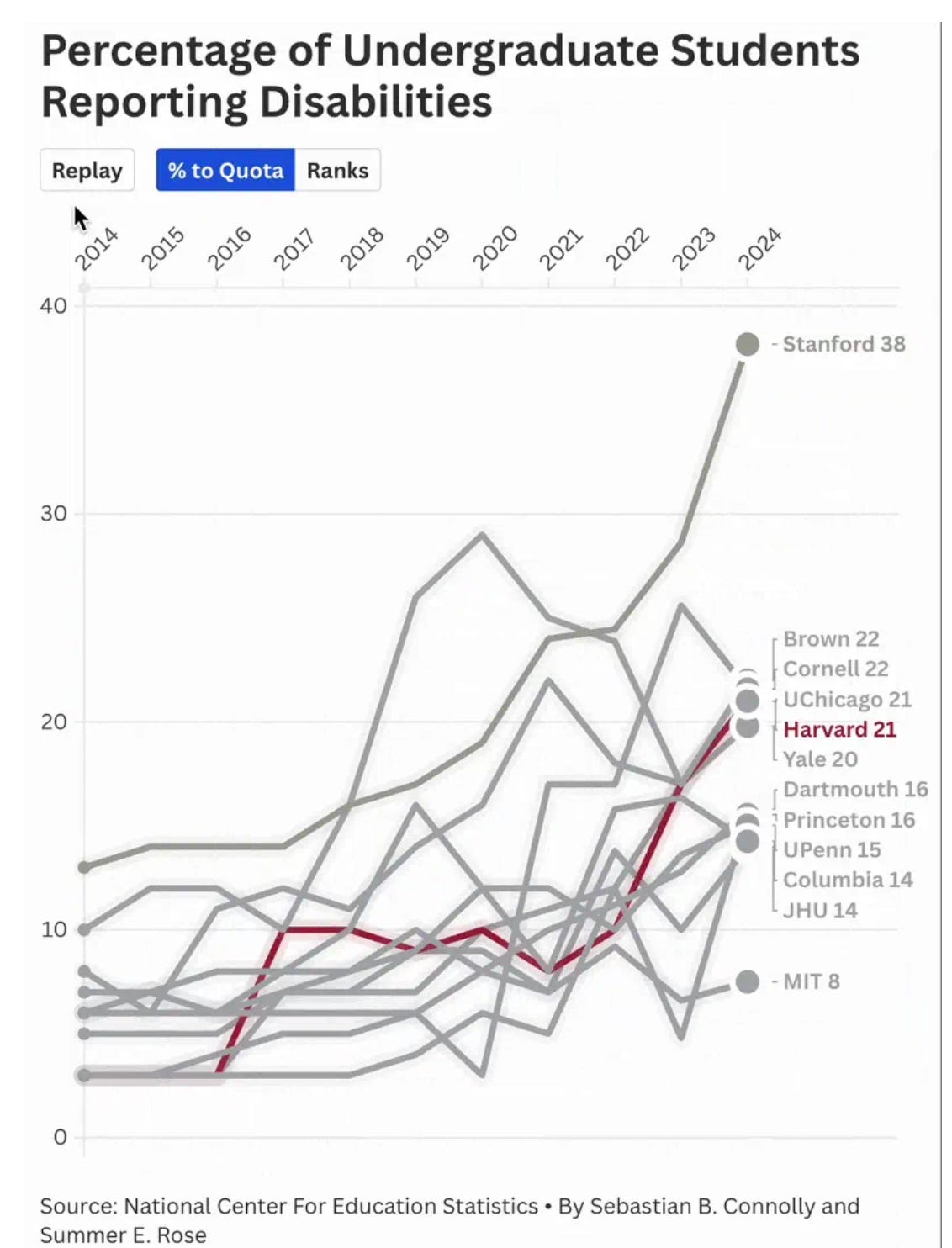
A Boston court has blocked a Trump Administration effort to collect data to ensure colleges aren’t factoring race in admissions. Questions around fairness apparently don’t apply to higher income families that systematically leverage special needs status to gain selective college admission.
Federal aid to education may be cut again in FY27.
Other Matters
Very informative deep dive on the politics of Massachusetts ballot initiatives.
More background on why more online gambling won’t be legal in Massachusetts, for now. Moral shame - not law - is the only thing holding back prediction market expansion.
The outrage around $80 MBTA trips to World Cup games captures a growing economic tension: as a lot of stuff becomes cheaper, some things become a lot more expensive. Live events are a prime example. Blame cost disease, but resale sites like StubHub are doing their part to ensure that World Cup tickets are much more expensive - adjusted for inflation - than they were in 1994.
Thanks - love your Substack!
Great to see the disability chart here!