

Boston Focus, 5.15.26
Kids are learning less and we should probably do something about it

George Carlin said it best: “soft,” bigger words hide true meaning.
So we shouldn’t jargon away this week’s release of the country’s Education Scorecard.
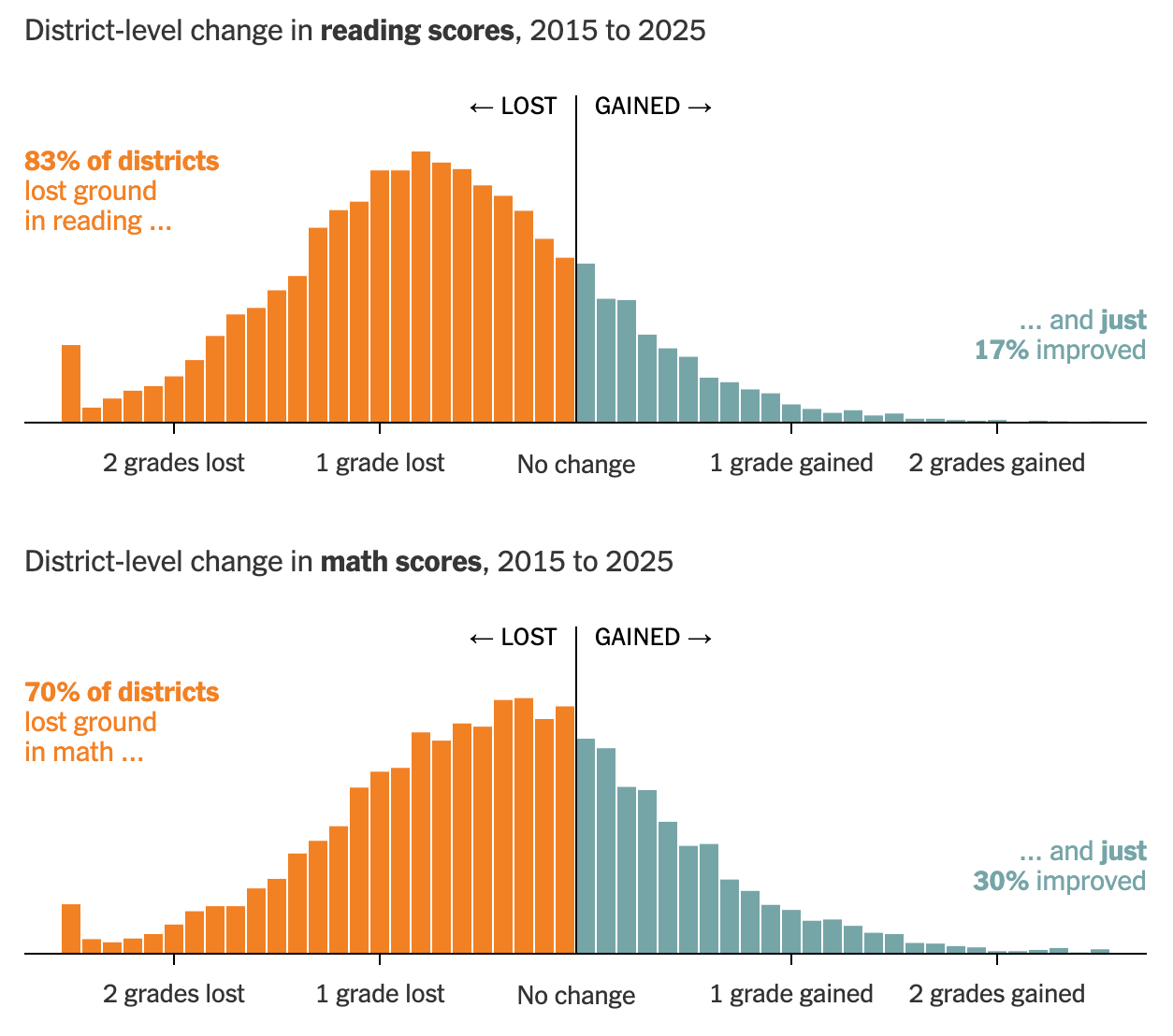
This is not a “learning recession” or even a “depression.” Or a “generational-long decline.” Or “stalled post-pandemic learning recovery.” Let’s call it what is.
It’s bad. It’s really bad.
Most American kids today cannot read or do math as well as they have in the recent past. And no one is really talking about what to do about it.
It’s really bad.
And Massachusetts is no exception. In fact, we are leading the race of soft words and asterisks to the bottom.
Bleak, I know, but this data is a culmination of trends many educators have been observing for more than a decade. The Education Scorecard, the Harvard-Stanford collaboration, aligned decades of National Assessment of Educational Progress (NAEP) results with local testing across 8,000 districts with available data.
The pandemic was the catalyst for the project, but it is not the only cause of learning declines. Keep in mind many of the kids recently assessed weren’t even in school yet when things shut down. By the end of month, half of students affected by school closures will have graduated.
The pandemic certainly had a negative impact. Recovery has not been just “uneven,” as reported in this WBUR piece. Here is a different version of their graph, using the same data.
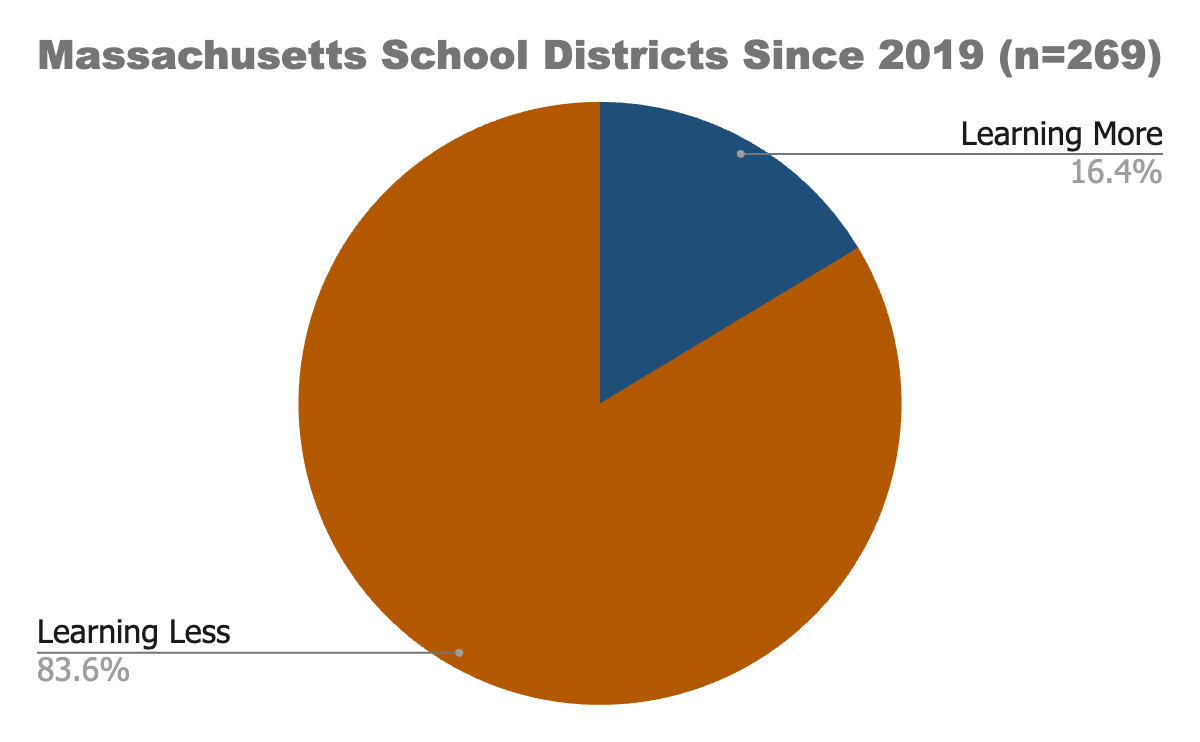
That’s not uneven. That’s really bad.
There is more to the story. Well before March 2020, the Education Scorecard data clearly shows patterns of decline. Starting in 2013/15, performance began to dip.
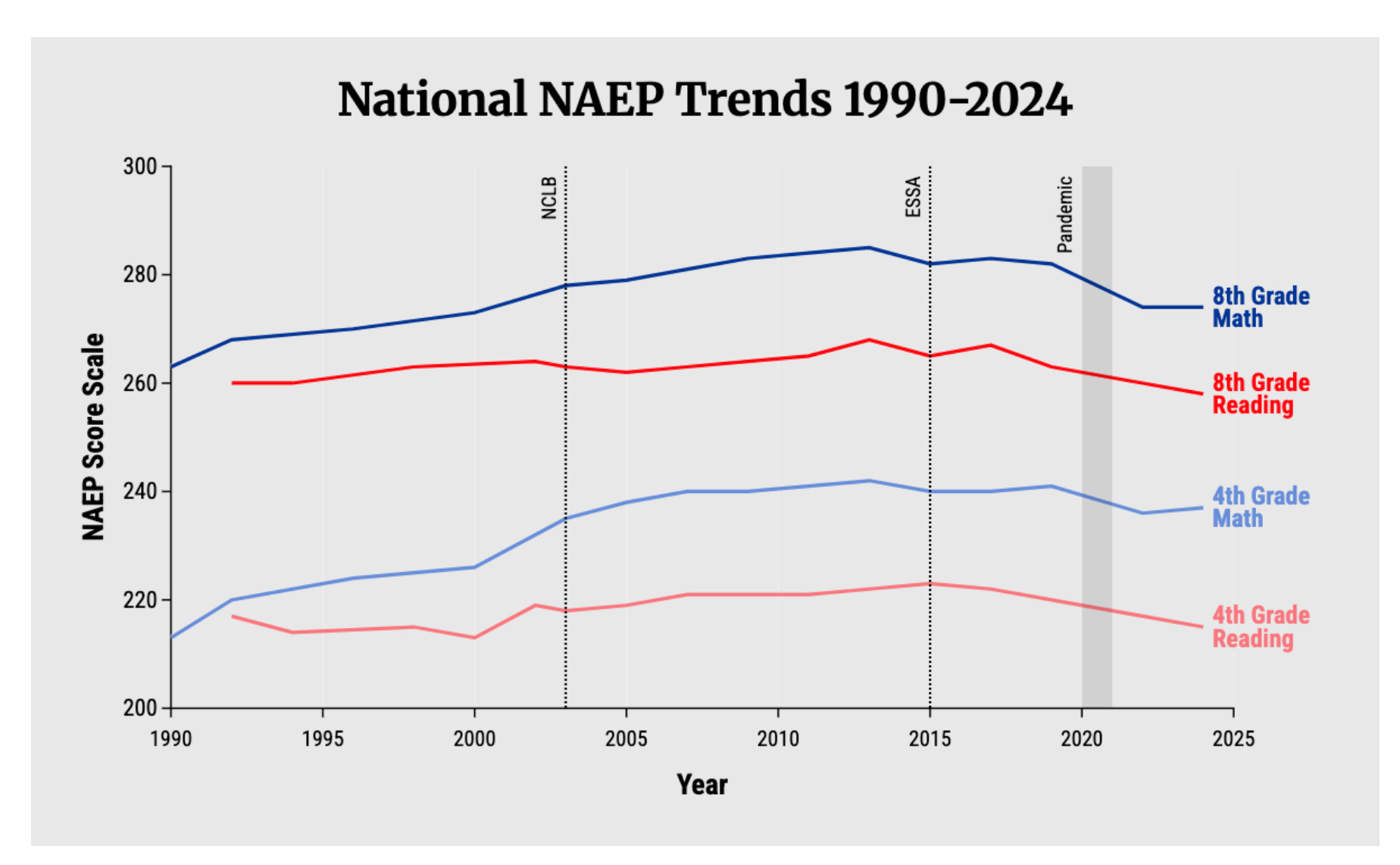
That was the case for Massachusetts, and it is getting worse over time. Frequently claiming the moniker of #1, Massachusetts actually ranked only 11th in math and 15th in literacy since 2022. And although there are some alarming results in Gateway cities (Lynn, Framingham, Everett, and Revere have all lost a full year of proficiency since 2019), the data does not completely square to a “#1 for some” narrative.
Reading proficiency in Weston has declined. That’s right, Weston.
This tracks nationally; even wealthier districts, on average, lost ground.
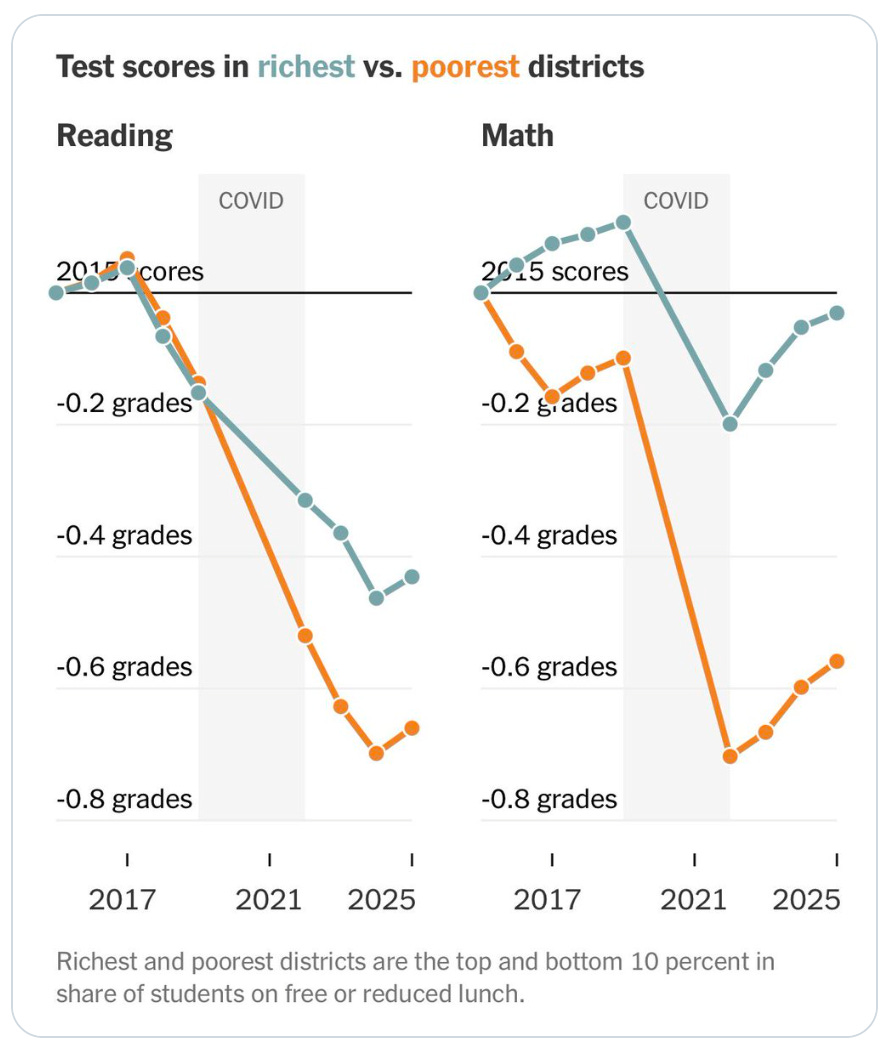
This is not “concerning.” This is really bad.
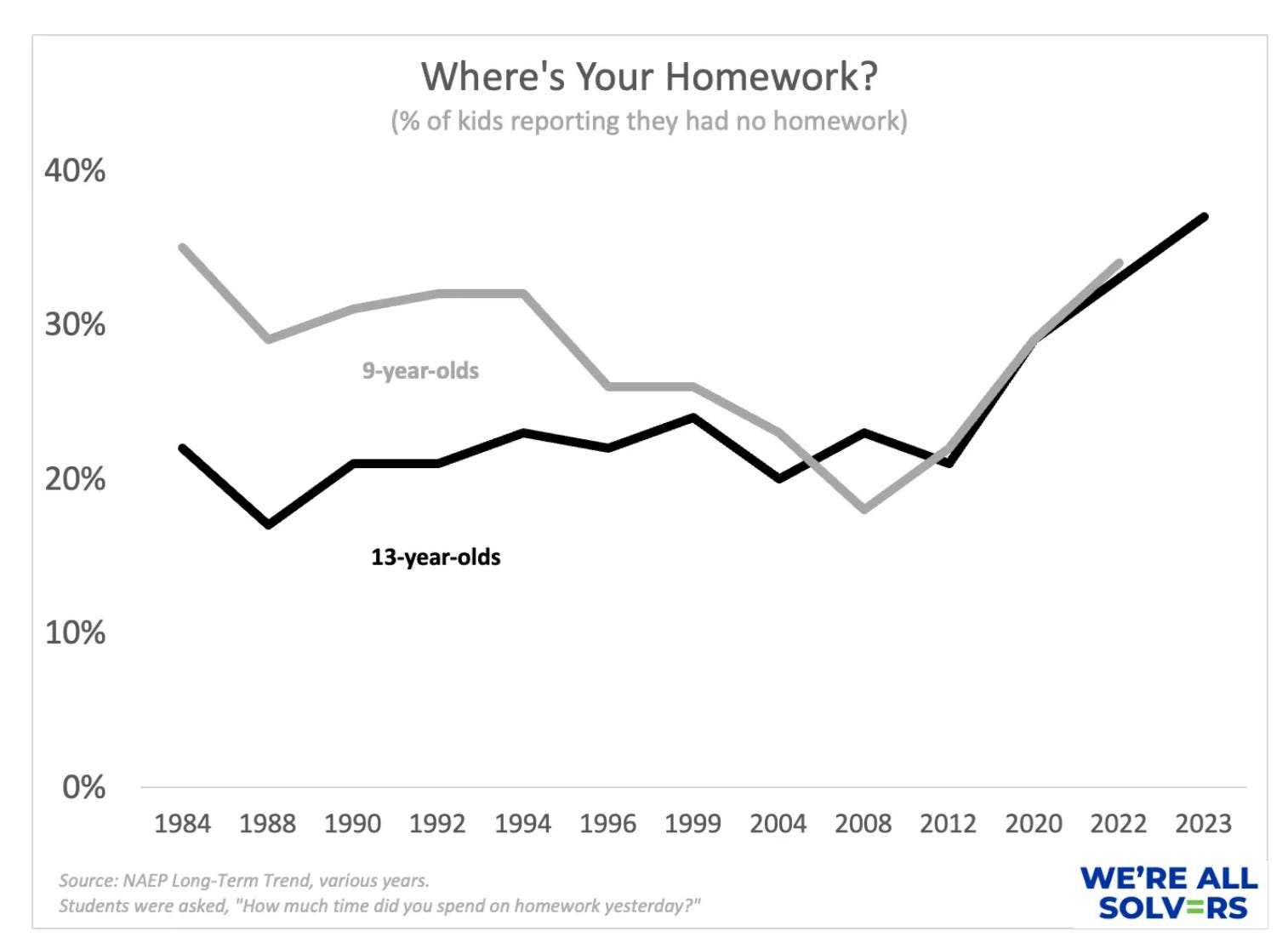
The coverage has had no shortage of explanations and takes. All of them are probably right, to varying degrees: the pandemic, the end of accountability and paired funding, screens, attendance, a sudden rise in mental health issues, bad literacy instruction (math declines are bad, not as bad as literacy), and schools stopped assigning kids homework.
National response? Here are profiles of 100 school districts who are improving. Nice, but that’s an awfully small number to build a case around positive deviants, replication, etc.
Massachusetts response? Crickets. And you can’t really blame our education leaders and elected officials. This week’s MassINC poll makes it really clear where education is on voters’ priority lists.
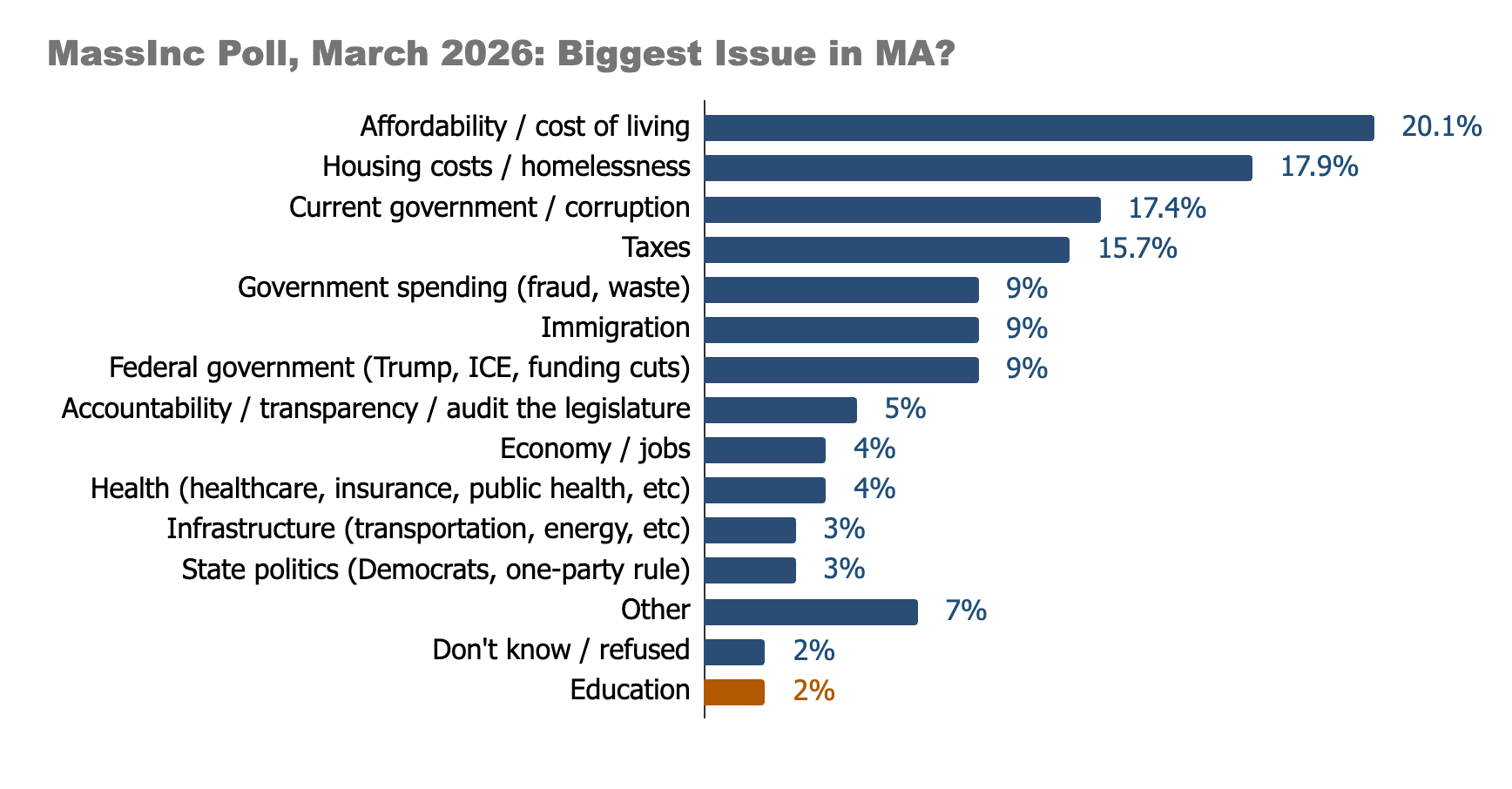
This actually gives me some hope for the future.
Despite never being a top-tier campaign issue, there have been several times when education became a top-tier governing issue. The Massachusetts Education Reform Act of 1993. No Child Left Behind in 2002. The Achievement Gap Act in 2010. In broad strokes: standards, accountability, funding, and state/federal support. These initiatives/eras were all imperfect and certainly have their detractors. They also happen to coincide with long-running, consistent improvement and record-high NAEP scores.
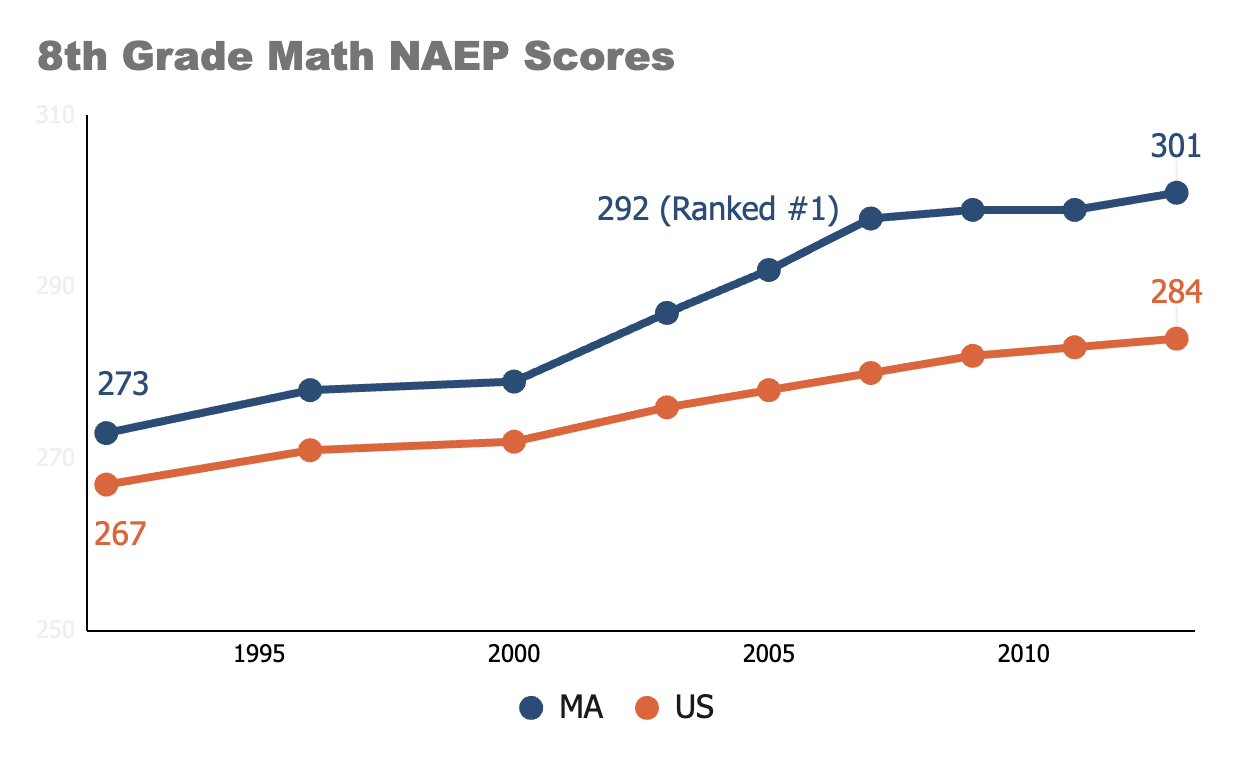
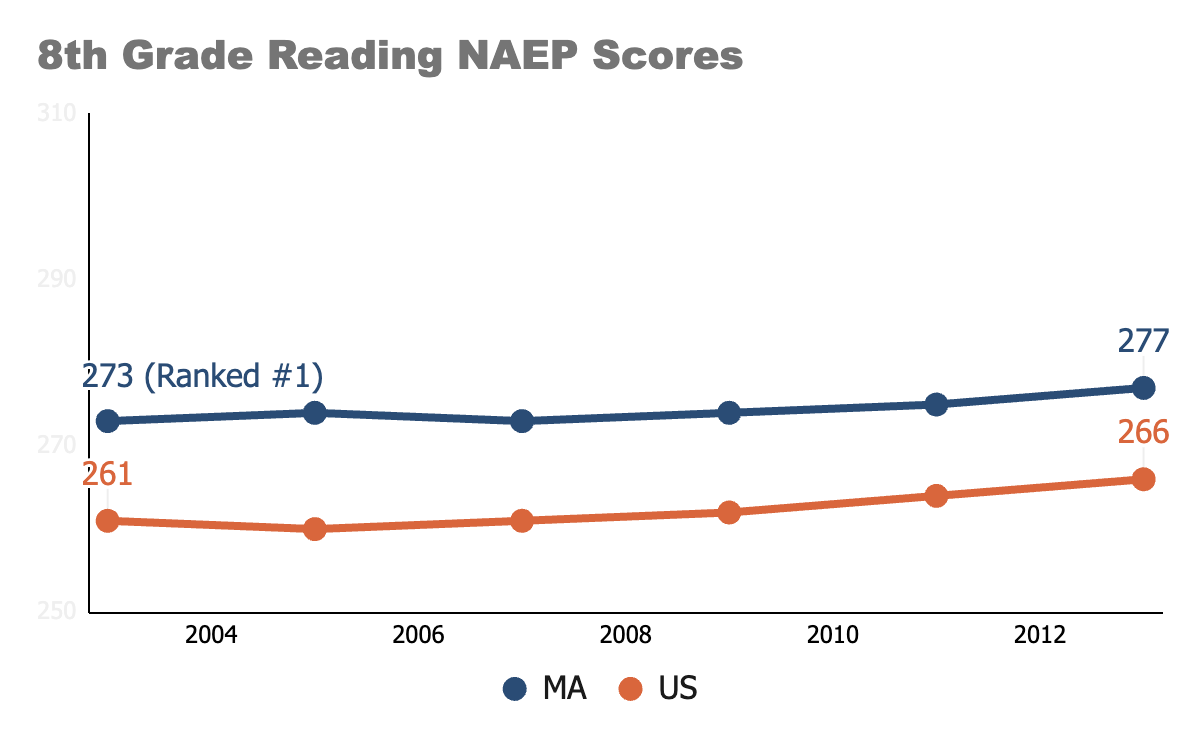
The first step for change is always acknowledging the problem. That won’t be easy here. From the opt-out movement during the Obama Administration, to the strange bedfellow agreement of conservative Republicans and the teachers unions to gut accountability in 2015, to the passage of the ballot question to eliminate the MCAS graduation requirement in 2024, there has been a sustained campaign to discredit educational measurement.
It has been widely successful, so much so that now teachers prefer “vibes” to test scores and “covering material” is not what polled respondents claim is central to being a good teacher. You would be surprised how many educators and parents would say the type of data from the Education Scorecard just doesn’t matter.
But we should care if a fourth grader can add fractions. We should care if an 8th grader can read an article and answer some basic questions about it. We should care if some groups of kids appear to be doing worse than others.
We should be able to assert this without settling by cherrypicking one good data point (congratulations, Cambridge). Or entertaining baseless arguments about standardized tests and not so vaguely racist or classist assumptions about students’ abilities.
I really do wish more Massachusetts residents cared about education.
But that will only change if we start getting real about student learning.
Schools
Two education topics arose at Boston City Council this week: moving forward with school bus cameras and opposing Governor Healey’s proposed social media ban for minors. Holding these two positions requires one to ignore privacy concerns in real life while protecting privacy concerns in fake life.
As the long Boston budget process unfolds, the consequences of tighter fiscal reins have begun to show. Teen jobs and a BPS program aiding homeless families may be cut.
Next door, Brookline is winding down DEI initiatives.
Boston’s Croft schools will close in June.
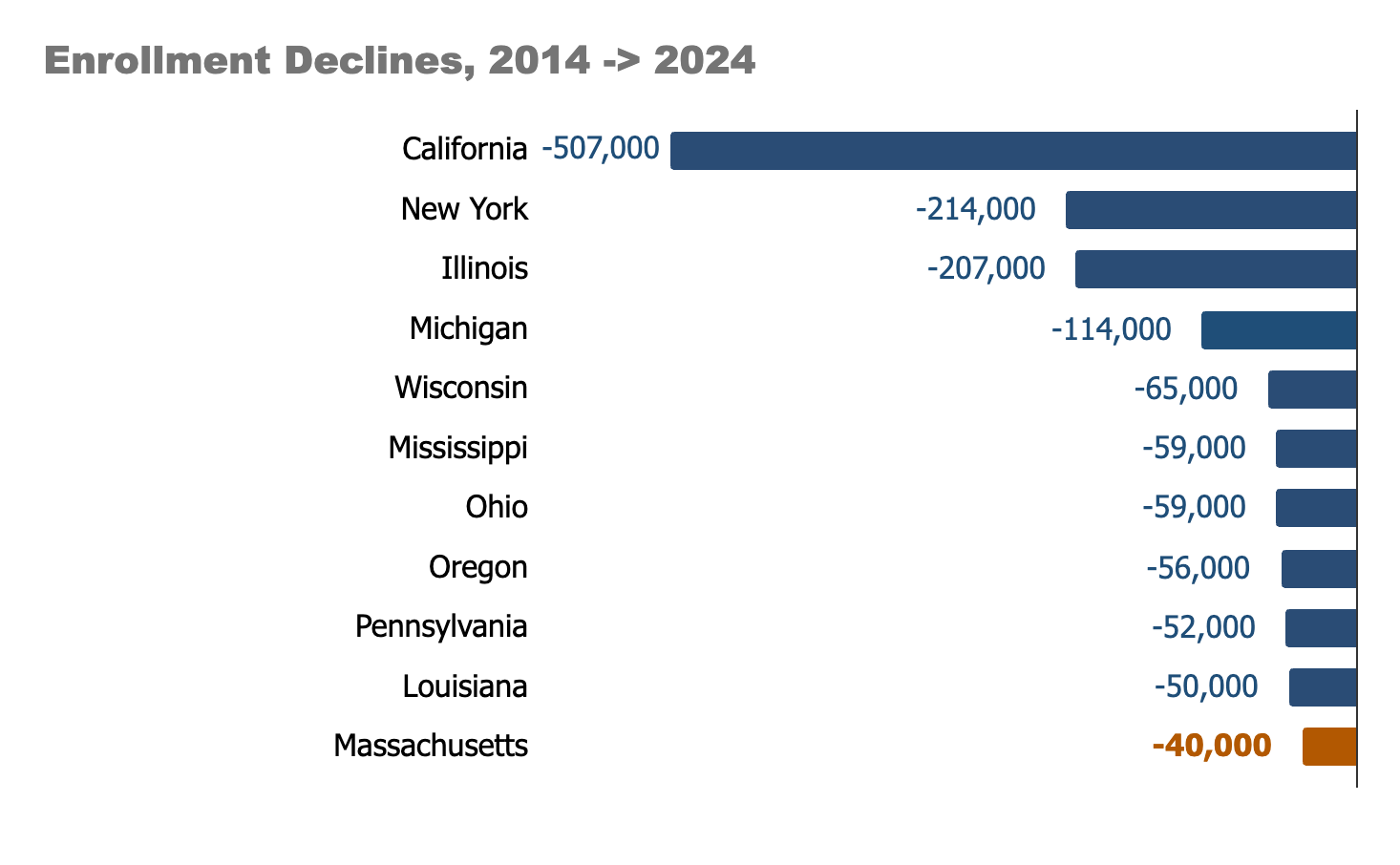
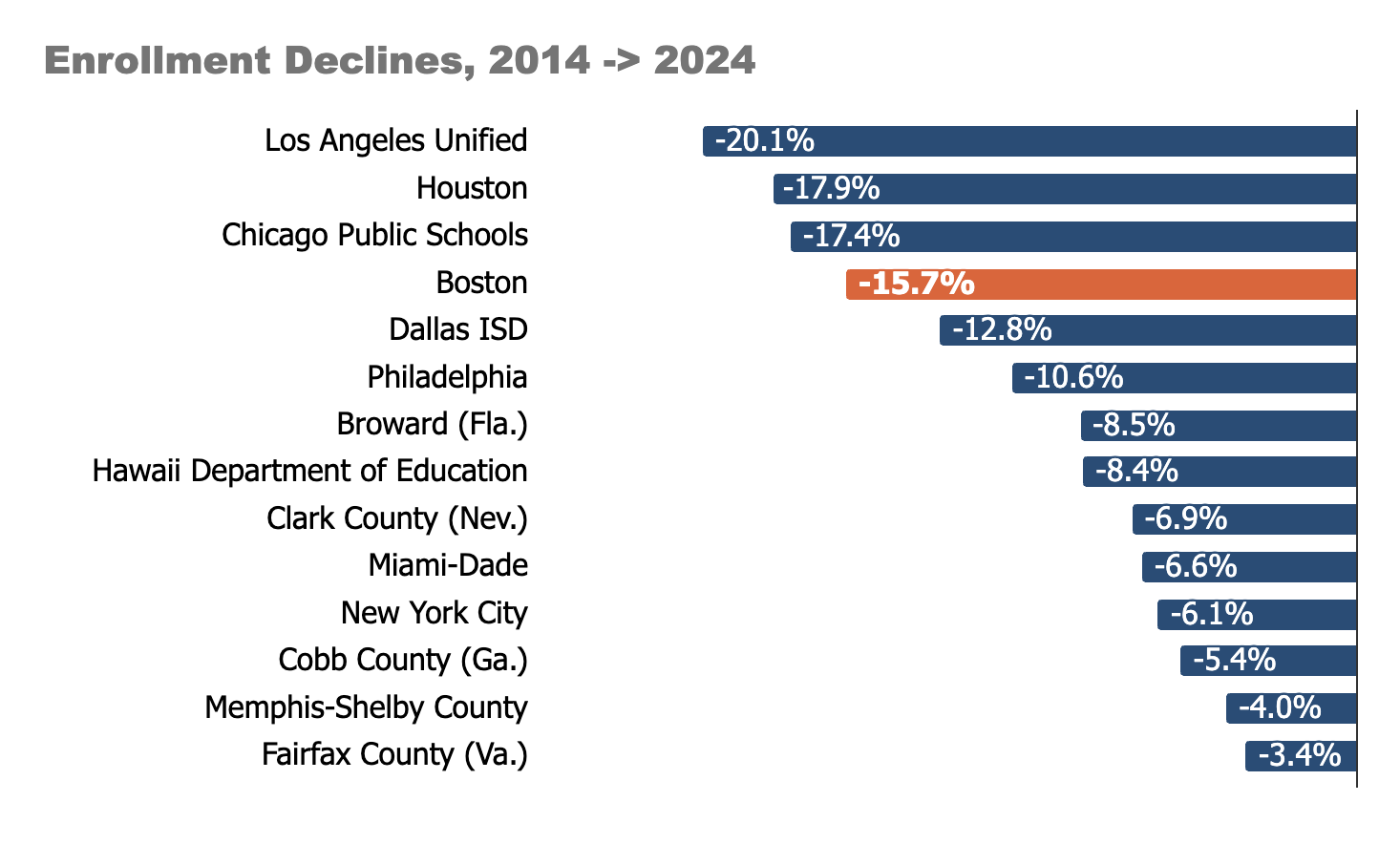
In addition to not singularly causing student learning declines, the pandemic did not singularly cause student enrollment declines. Visuals from the NY Times.
Massachusetts stands just outside the top ten list states don’t want to be on.
If Boston were one of the top-25 largest districts, its decline would be the 4th worst in the country.
At the same time, English Learner enrollment has significantly increased.
New York opted into the federal education tax credit, the second Democratic-led state to do so. Massachusetts is one of ~18 states still officially considering it.
“Reclassing” is being replaced by an unofficial transfer portal for highly competitive high school athletes.
iReady is getting swept up in the edtech backlash. Most of the stories have focused on individual stories of frustration, with little reference to the platform’s efficacy.
A local liberal arts college may cap the number of A’s awarded in classes.
Other Matters
MassInc polling reveals the ballot question to reduce the state income tax as classic political junk food.
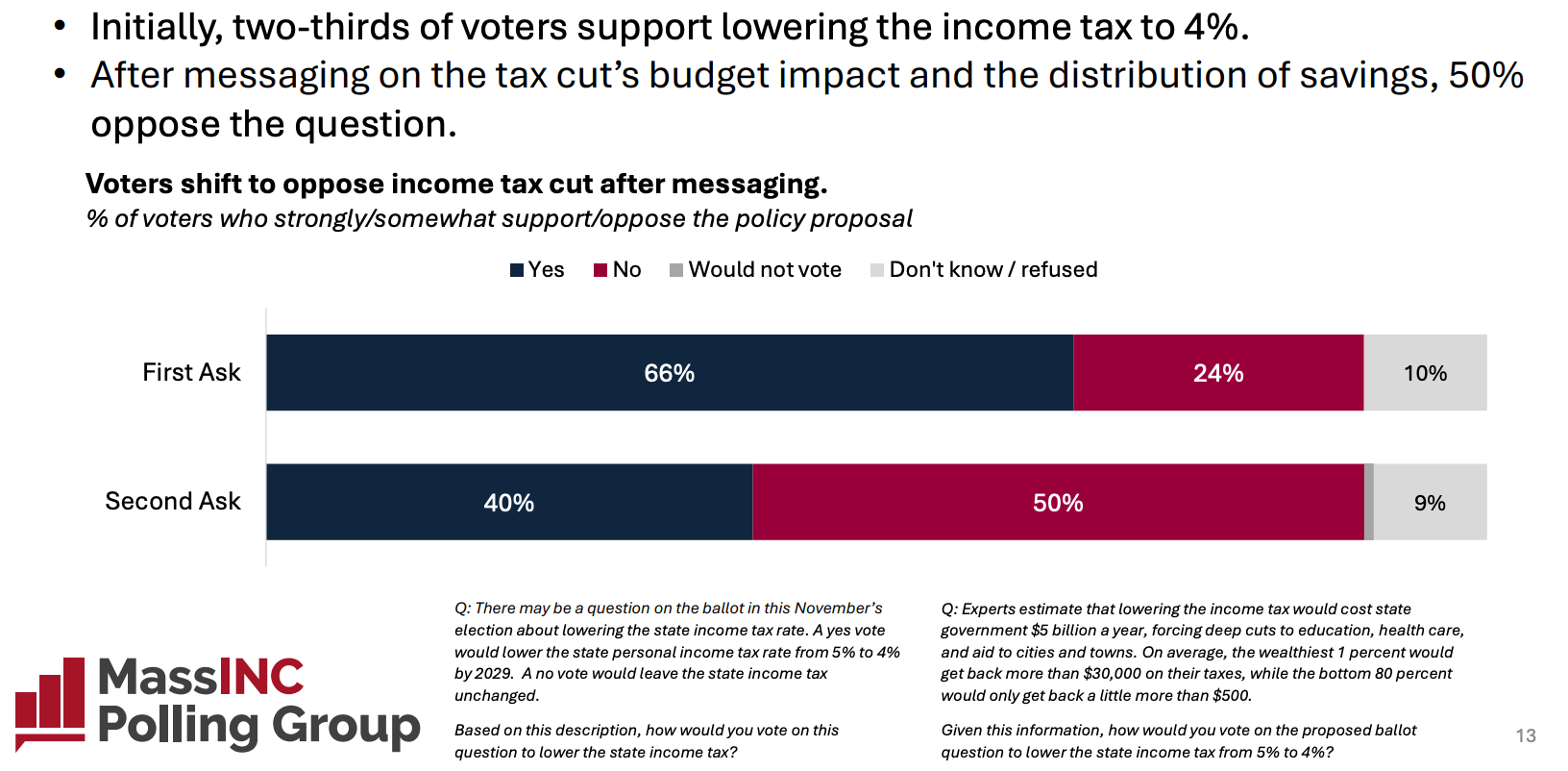
Looks good, but bad for you.
Very interesting point. Not dissimilar from the data story for Washington, DC.
Inflation adjusted median income in Cambridge increased by more than 25% between 2015-2025. The congratulations belong to the successful companies that brought highly educated workers and their smart kids to the city. The school that won a national award for improvement now houses the Mandarin immersion program. The quality of the inputs improved and therefore so did the outputs, end of story.