

Boston Focus, 5.8.26
Stuck out of the middle

MassINC released a really interesting poll this week.
What is the “middle class?”
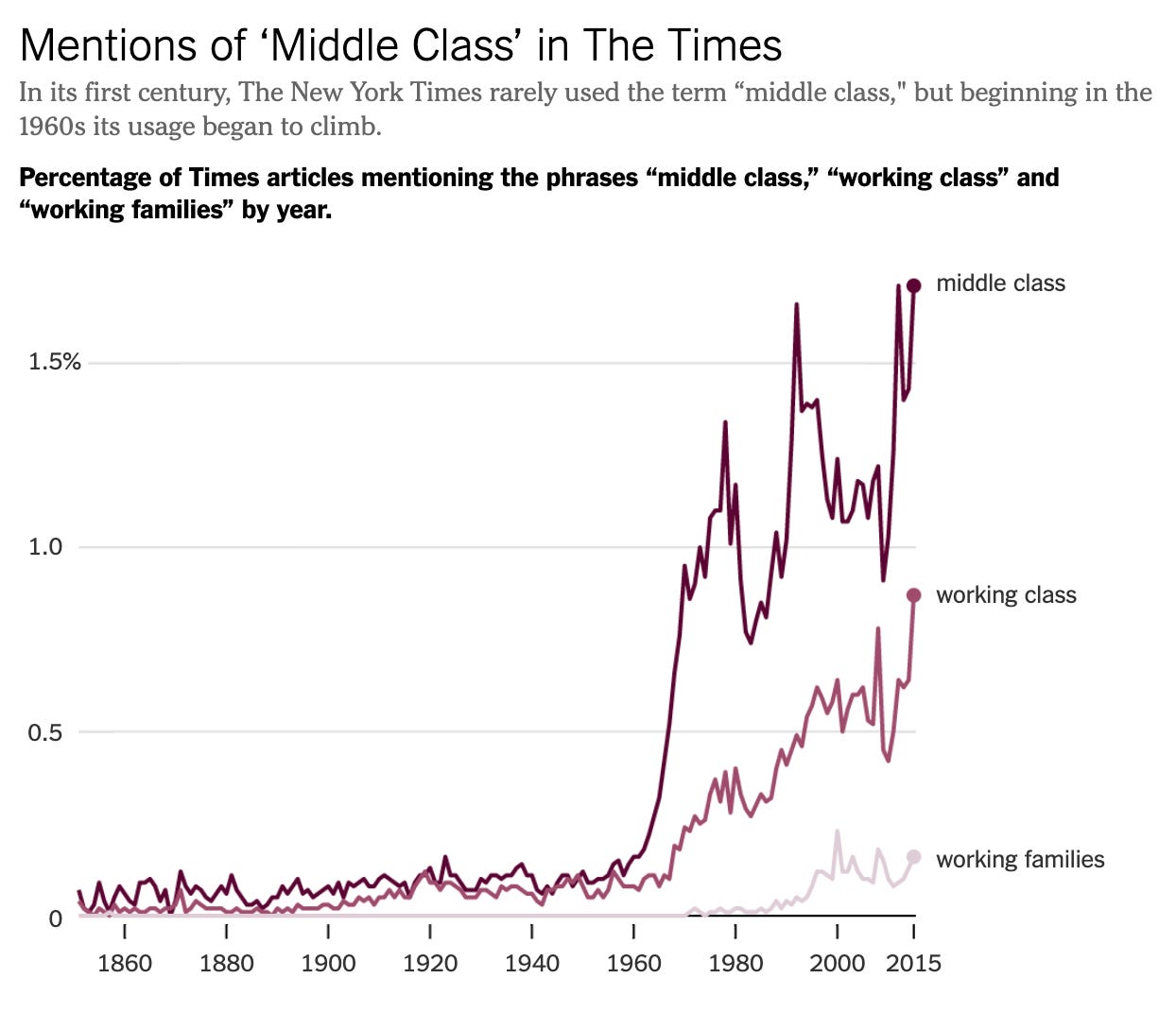
The lack of a definition has not held back elected officials or the media from using the term increasingly since the 1950s.
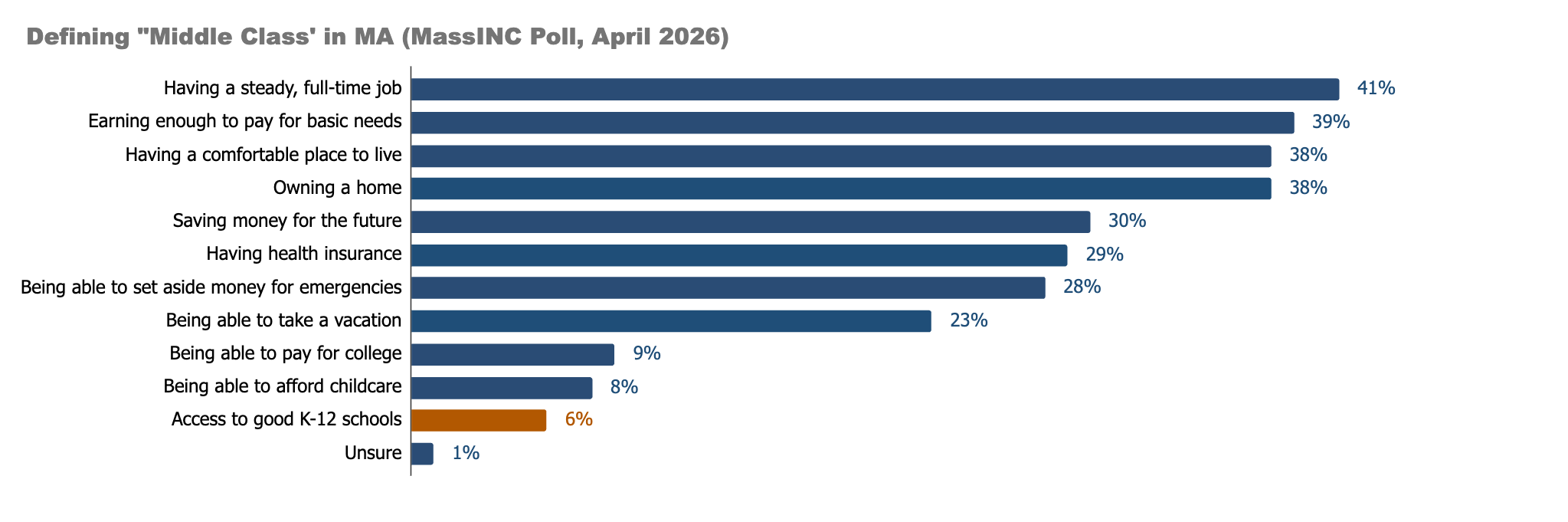
So the survey asked 854 Massachusetts residents what they thought the middle class was. Given the nebulous/aspirational notion of the topic, it was not surprising that the results showed a lot of variance, both in overall answers and accounting for racial backgrounds and income status.
Yet, there appear to be a few things Massachusetts residents agree on.
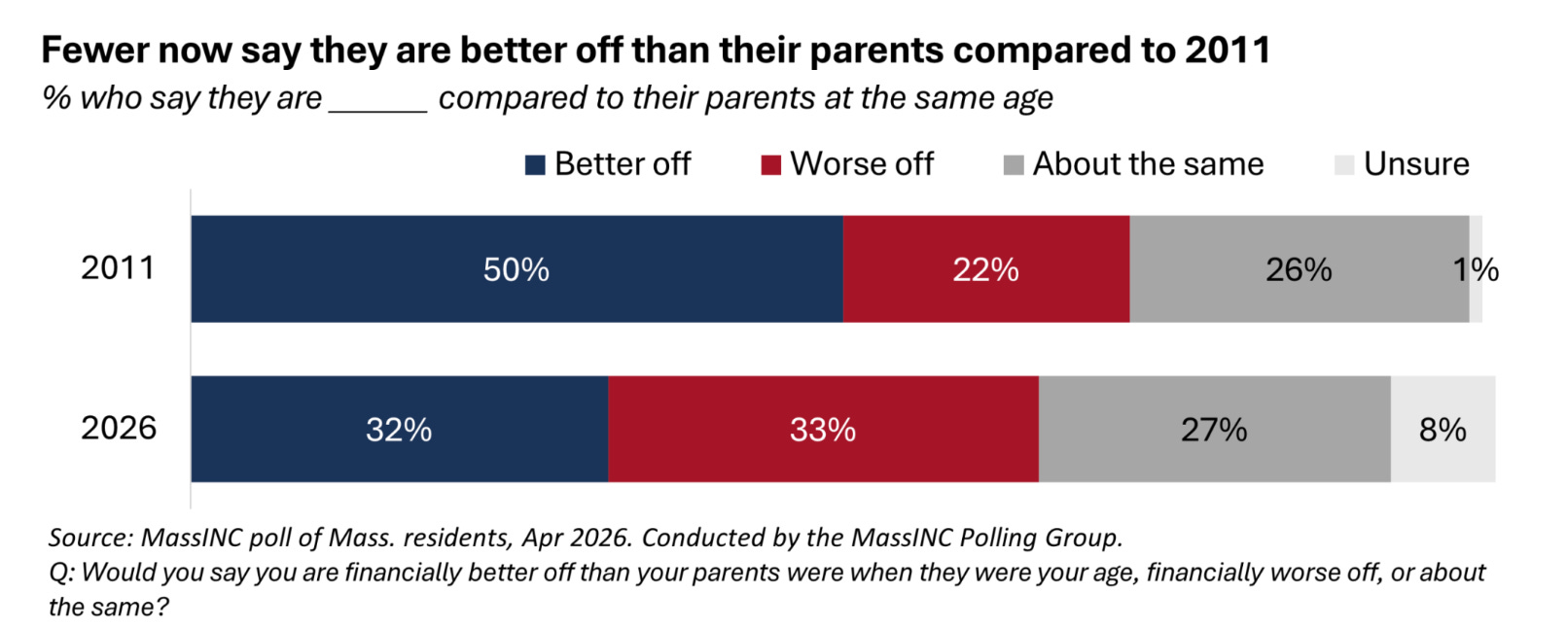
First, a decline in affordability makes middle class status more elusive.
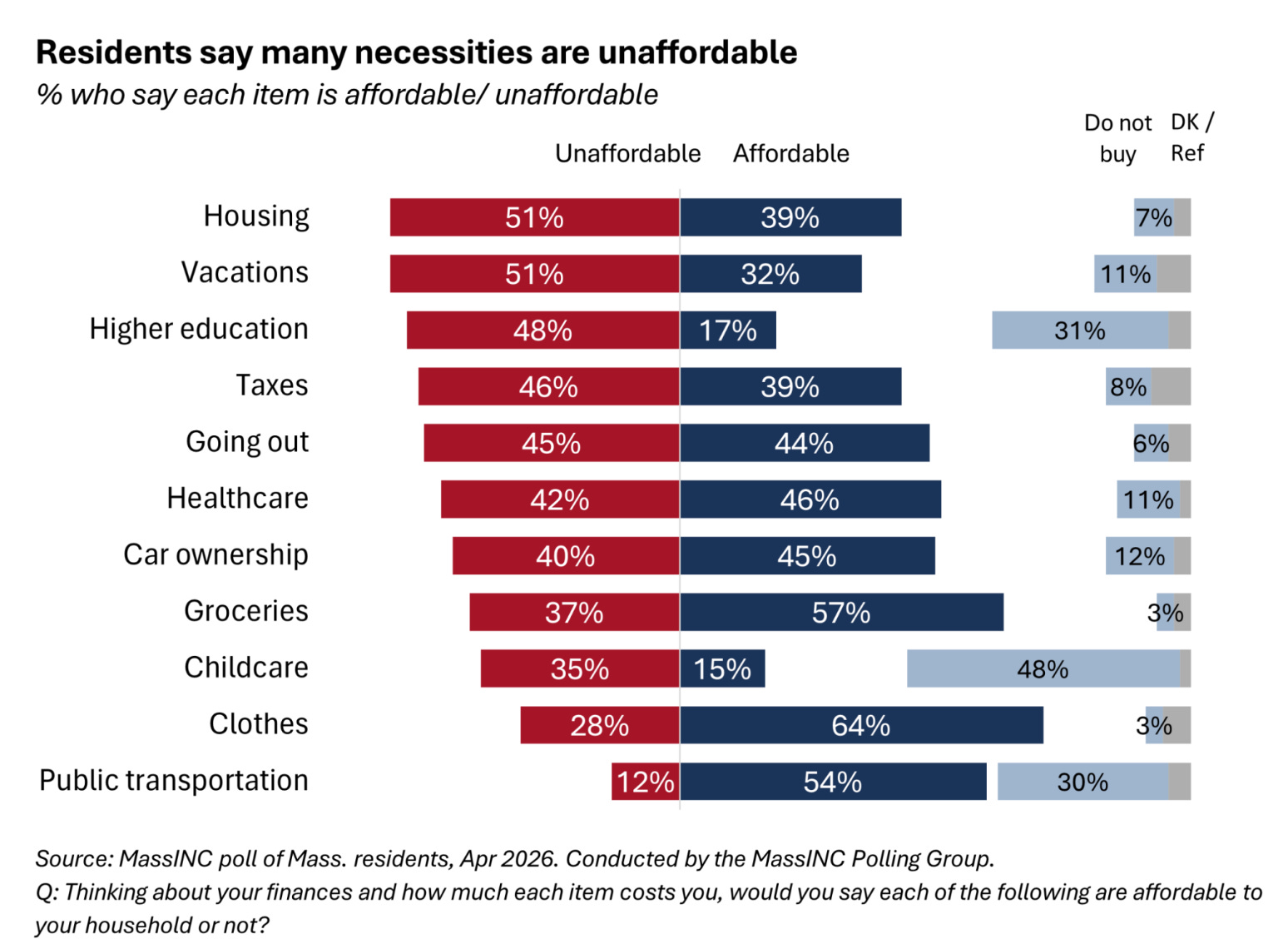
Housing looms large in that perception.
And, education doesn’t appear to be central to a definition of a middle class life.
This is surprising because educational attainment, in the MassINC poll, is a strong predictor for middle class identification and overall economic security.
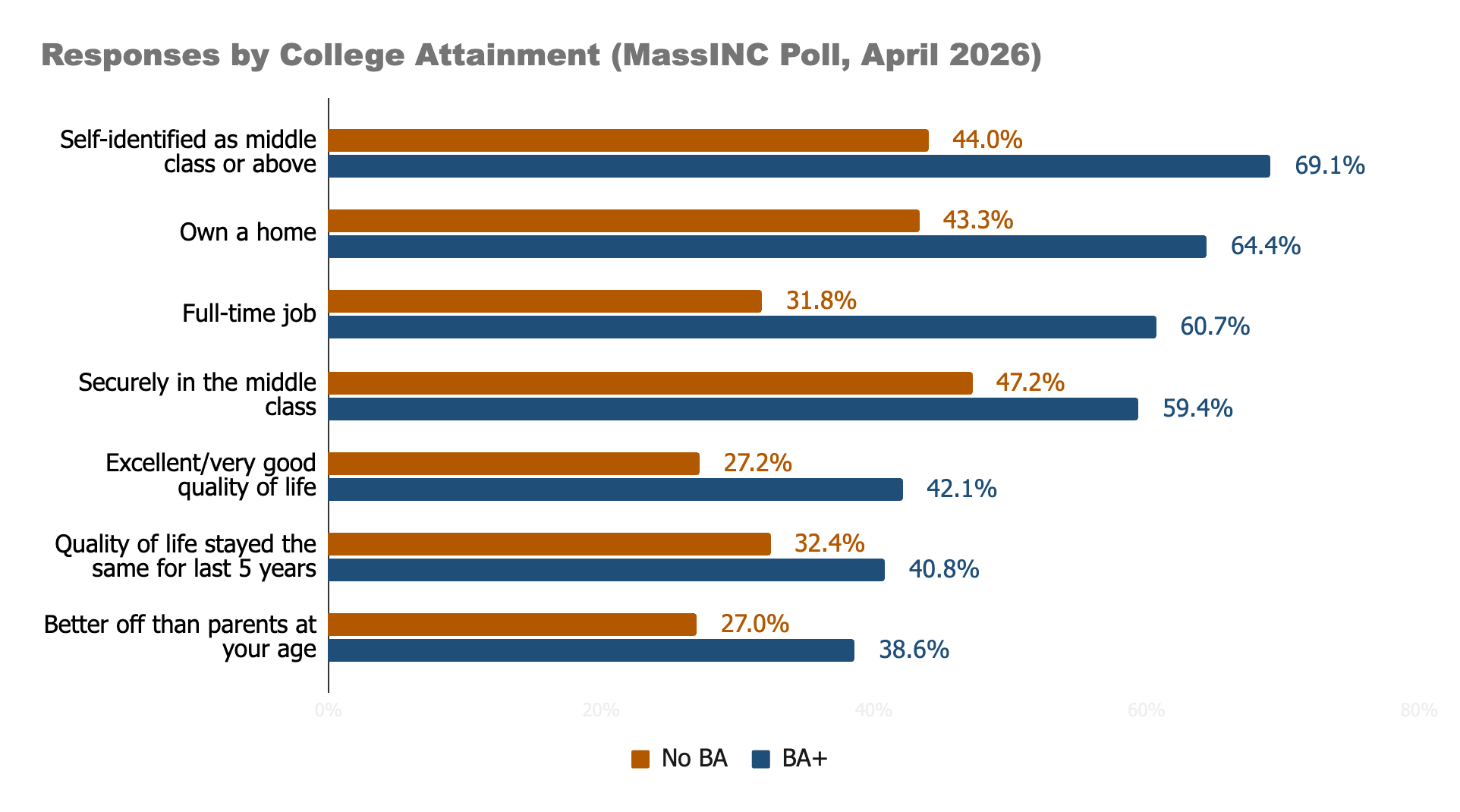
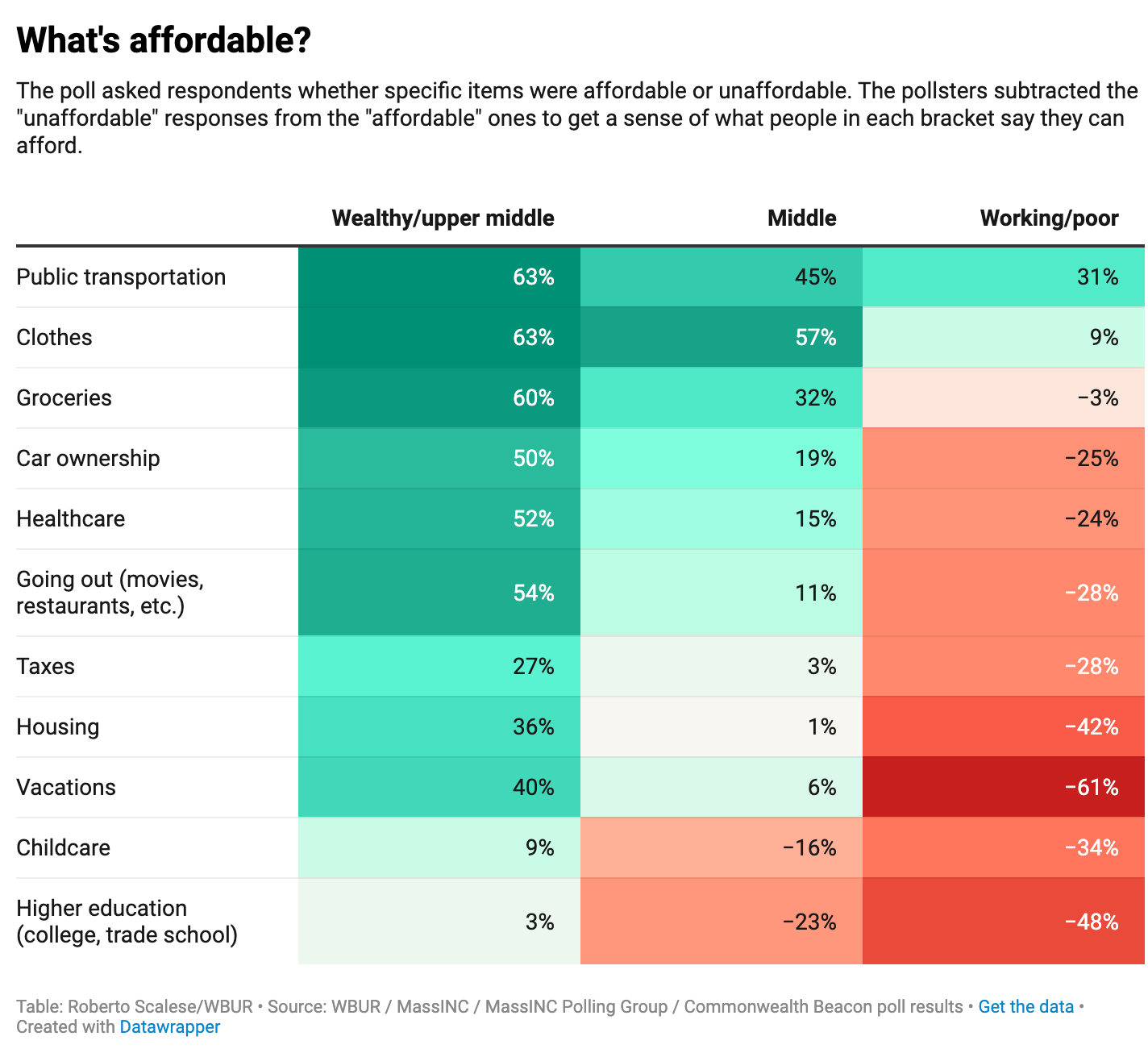
According to Massachusetts residents, college gets you to and keeps you in the middle class. But to many that may seem unattainable. Higher education had the third worst affordability score in the survey.
Study the chart below. The average high income resident thinks it is more affordable to send their kids to BU than an average lower income resident thinks it is to buy their groceries.
The survey is dotted with subjectivity and relativity. But that doesn’t make those sentiments any less real. Another poll released this week by Emerson indicates Massachusetts voters generally don’t want to prioritize PK-12.
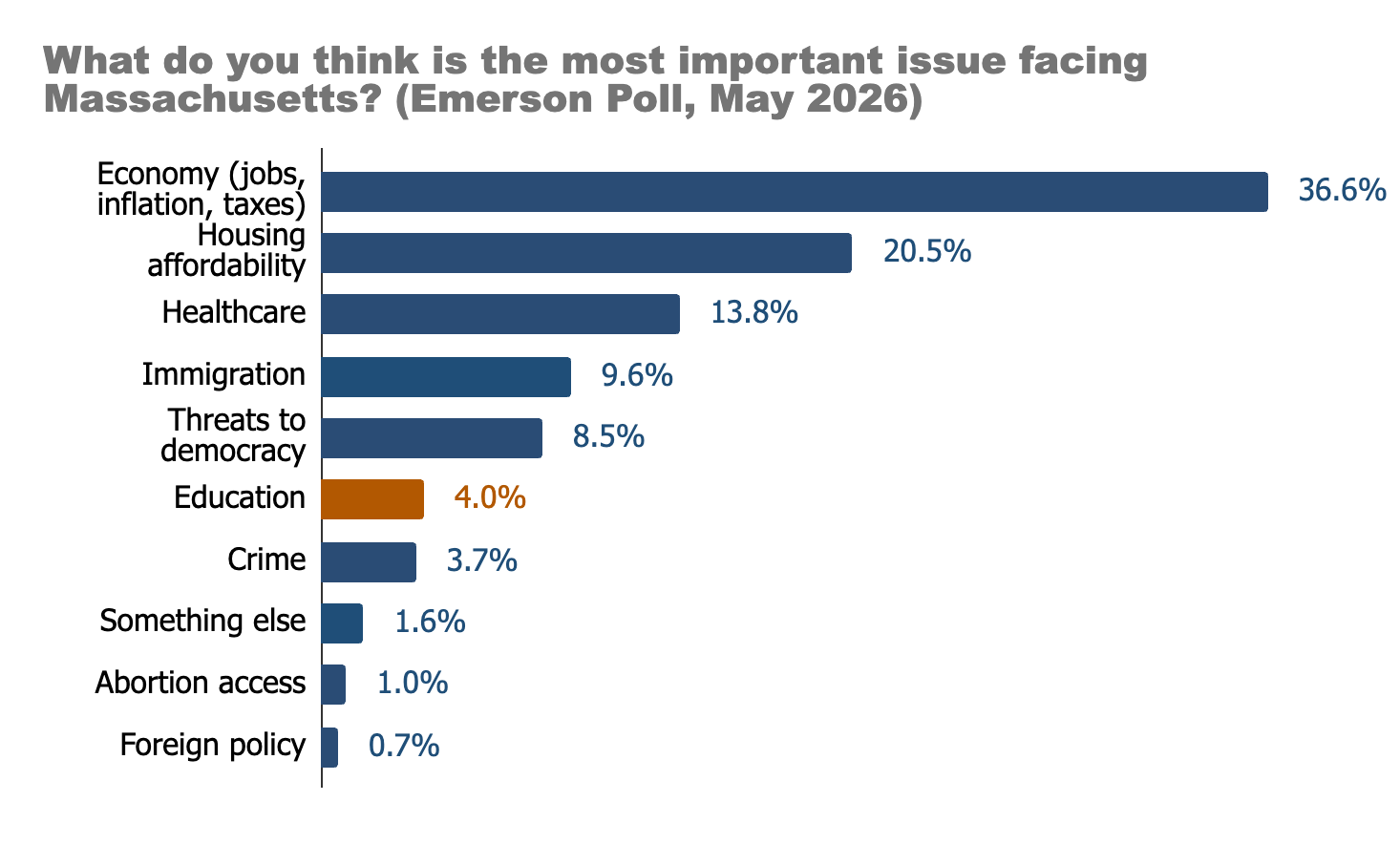
Educational attainment matters, but many residents are not connecting that to PK-12 schools or think college could be for everyone. Data from Pell over the past decade indicates that low-income student college success rates are in decline.
Dynamic and expanding, the middle class was not conceptualized to be a permanent one. But if these trends in educational attainment and outcomes hold, we are headed in that direction.
Schools
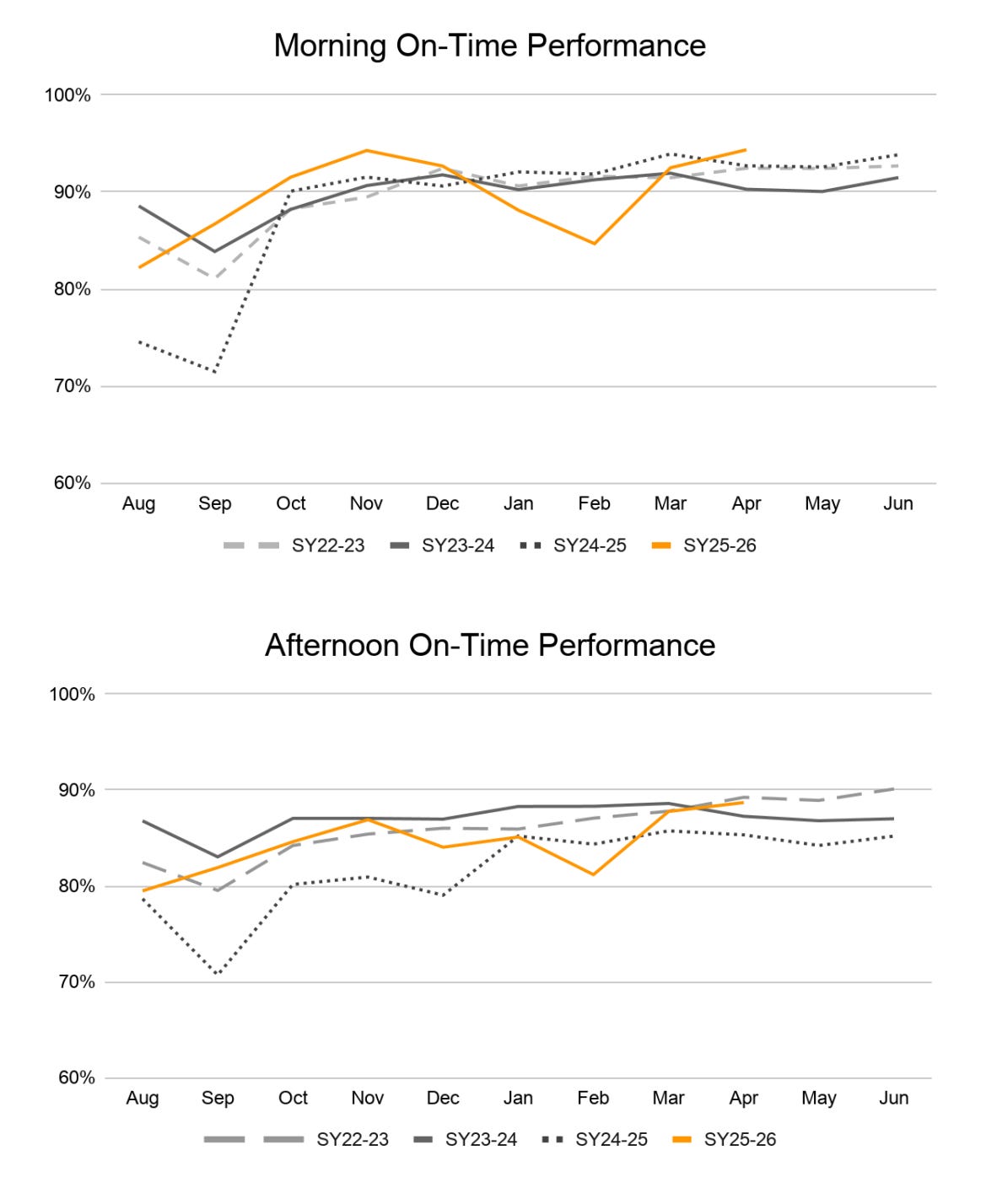
Boston School Committee met Wednesday. Full materials here. Families weren’t imagining buses were worse this year, but recent data shows fast improvement.
Boston will again opt out of interdistrict school choice. The district requested $22.8M to close this year’s books; advocates would like to see even more for next year. And the district presented a draft AI policy.
Not to be outdone on edtech, Boston City Council wants BPS to join litigation pointed at social media companies.
Flashy headlines about a working paper that did not find big short-term academic gains after curbing school cell phone use says less about the intervention and more about the media. The surprise/sensation of this “finding” is pretty similar to the compulsion to report stuff like drinking red wine is good for you (good explainer by John Oliver here).
Without actually reading past the headlines, it is easy to miss that one of the study authors called the findings “encouraging,” while acknowledging the limits of the study itself. For those of us with actual school experience, the change in cell phone policy does seem to follow a classic pattern of initial resistance (these CTE students in Western Mass clearly aren’t fans) followed by improved compliance and, ultimately, outcomes. Interventions often take years to reap benefits in schools and are commingled with other factors.
Test scores may not even be the right bar. Research doesn’t prove recess improves student achievement, but we all seem to agree it is good to let kids play to break up the day. Why wouldn’t we want them talking to each other in class, in the hallways, and at lunch instead of scrolling?
Maybe that is why Watertown didn’t wait on the legislature to pass its cell phone ban.
Expect more coverage about Alpha School coming to town. As a model, Alpha takes edtech enthusiasm to its logical conclusion: education so personalized you don’t need teachers any more. Kids just need an adult somewhere nearby, an AI-enabled laptop, and a lot of time each day doing what they want.
Education is great for this sort of “horseshoe” ideological thinking. Can you think of anything else that is garnering support from the Trump Administration while being rooted in Marxian fantasy?
As Tim Daly noted, edtech will have to accomplish lot to beat chalkboards.
High school kids all of sudden started playing hacky sack.
Massachusetts has some room to grow in public early ed, according to this new report.
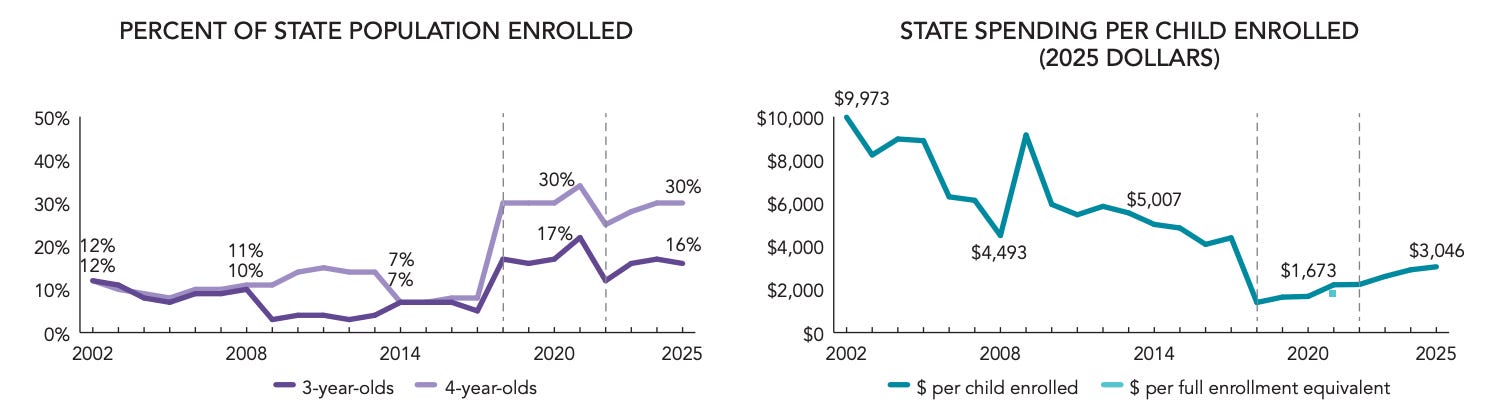
With grades due on college campuses, hackers picked the perfect time to shut down Canvas, a learning and grading platform used by 9,000 schools nationwide.
Other Matters
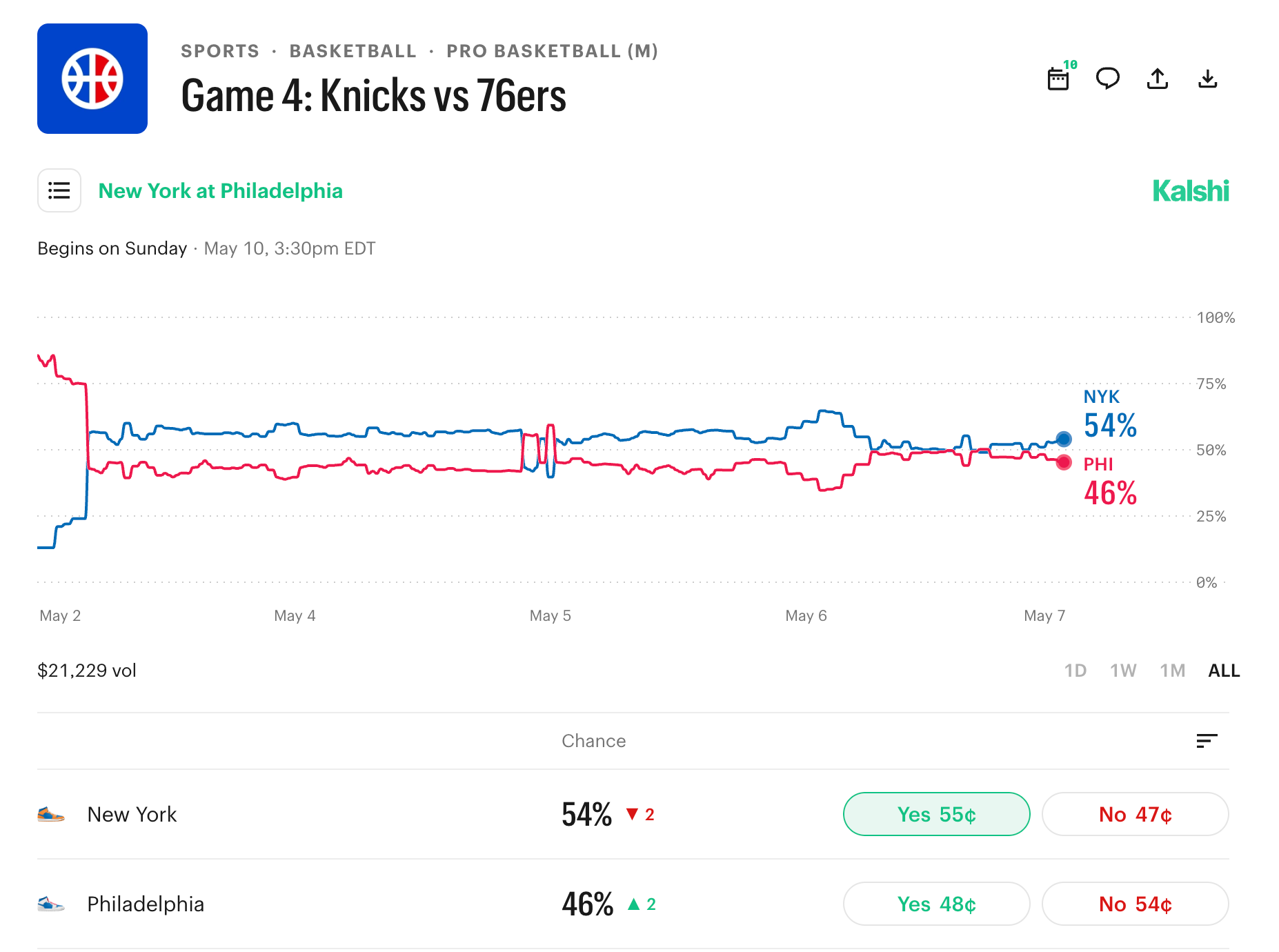
In its legal fight in Massachusetts, Kalshi argues the company is not offering sports gambling, but rather “federally regulated derivatives in the form of sports event contracts.” You know, not the same thing at all.
A helpful summary of the content and status of the 11 potential ballot initiatives this fall.
Not sure. I agree that there is some "relative deprivation" here, but I also think people are charging stuff they can't afford - https://www.cbsnews.com/news/record-share-americans-cant-pay-credit-card-bills/
Regarding consumer sentiment economists would say, "Watch what they do and not what they say." All retailers, restaurants and the hospitality industry quarterly reports suggest people of all incomes are spending like they are doing quite a bit better than their parents. And it is not like credit card debt is any more a problem than in prior decades.