

Boston Focus, 7.10.26
Teacher ratings, widgets, and other news

Kids weren’t the only ones getting final report cards last month.
The state released educator evaluation data for 2024-2025. Massachusetts public school teachers earned honor roll grades.
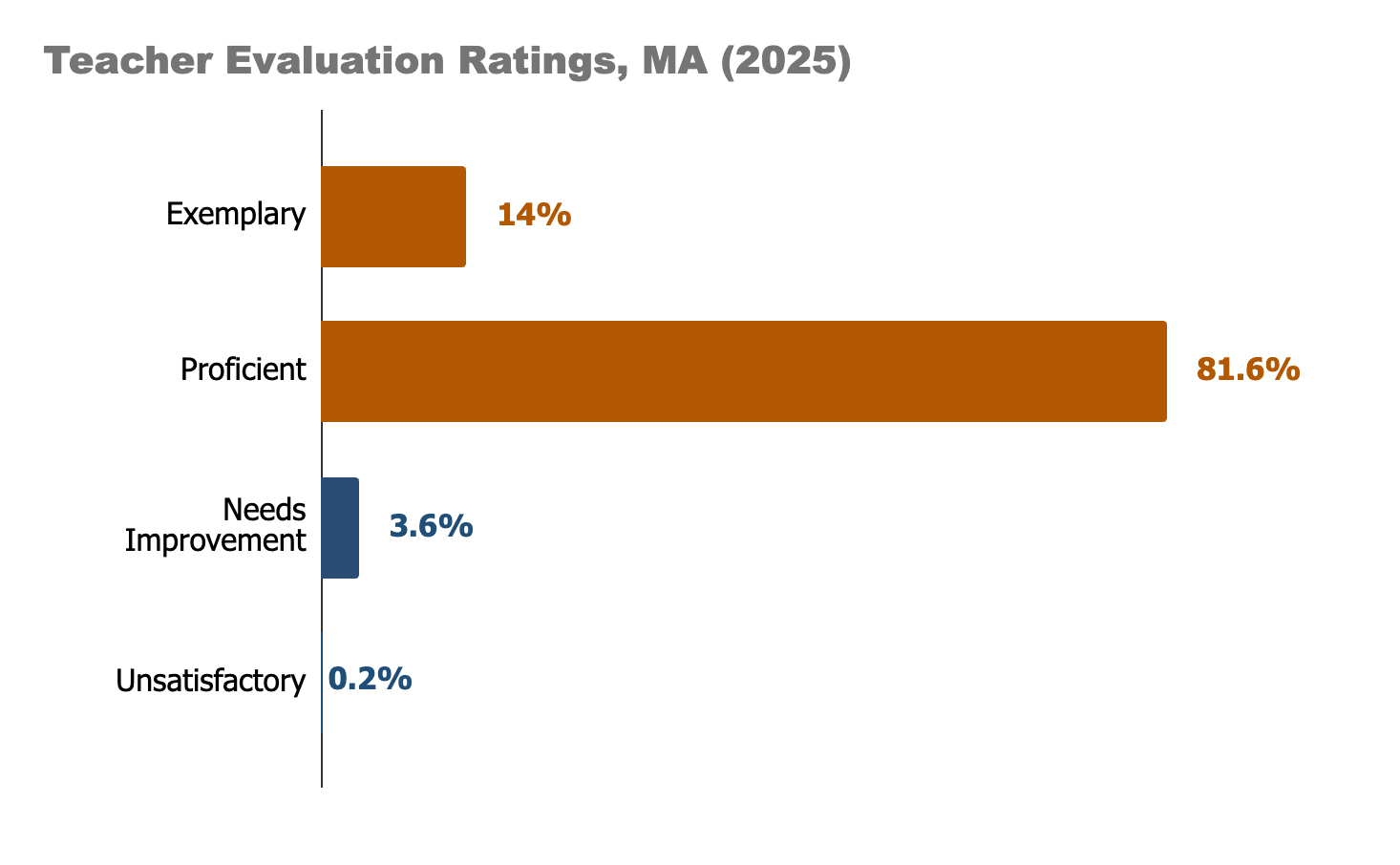
Nearly 96% of teachers were rated exemplary or proficient by instructional leaders, and this is remarkably consistent across districts. Only 10 Massachusetts districts reported ratings below 90%.
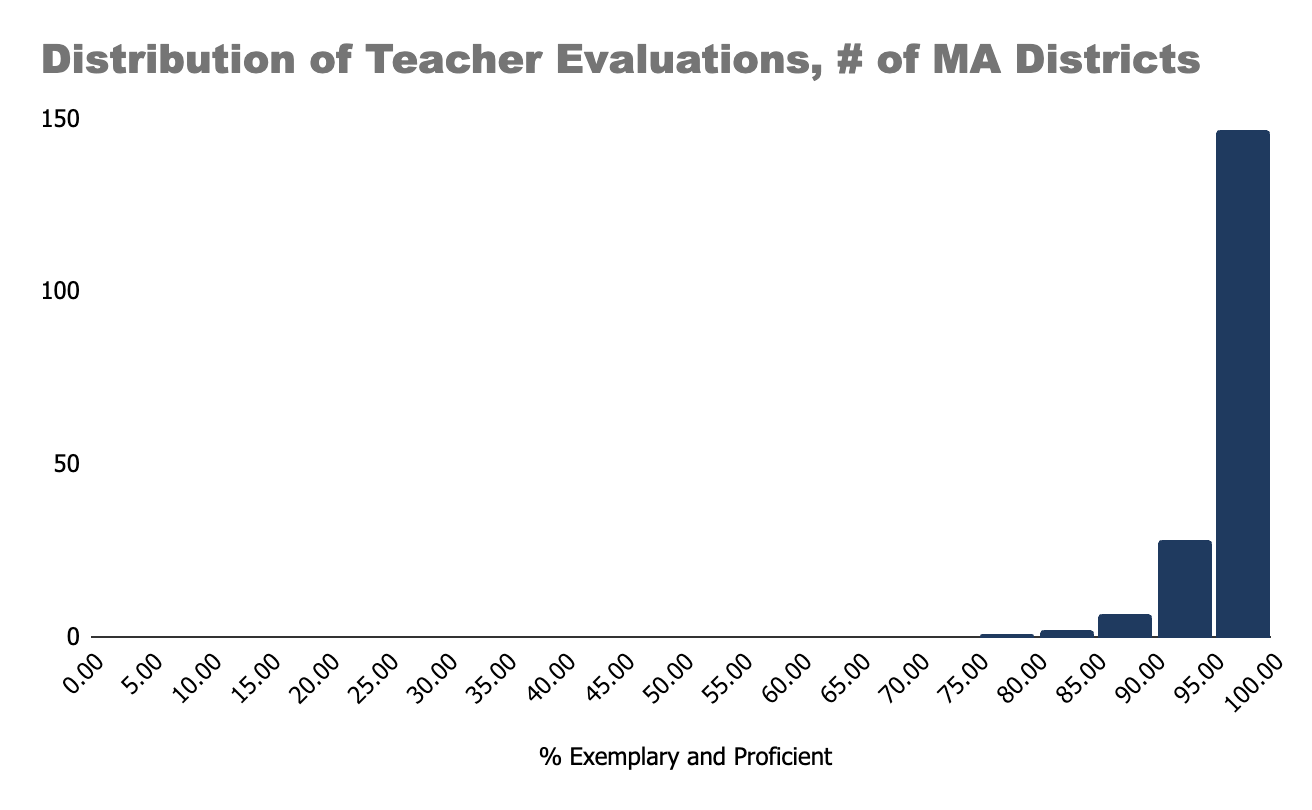
Even more remarkable is the low incidence of low performance. You have to look very closely at the first graph to see that were only ~140 Massachusetts teachers were deemed to be unsatisfactory.
Can you think of another field or career where only 1 out of 500 people aren’t good at what they do?
Rushed in with big expectations in the sweep of the ed reform era, the 2012 Massachusetts law creating a teacher evaluation system was intended to provide consistent systems for feedback, professional growth, and, yes, accountability. It grew from a landmark paper/concept, the “widget effect,” that asserted that treating all educators as the same was bad for educators because excellence wasn’t recognized and teachers weren’t receiving personalized feedback and development. And bad for kids because they had less developed teachers. Evaluation systems were supposed to fix this.
In Massachusetts, we just created bigger names and more numbers for the widgets; nearly everyone is the same, and the same means good.
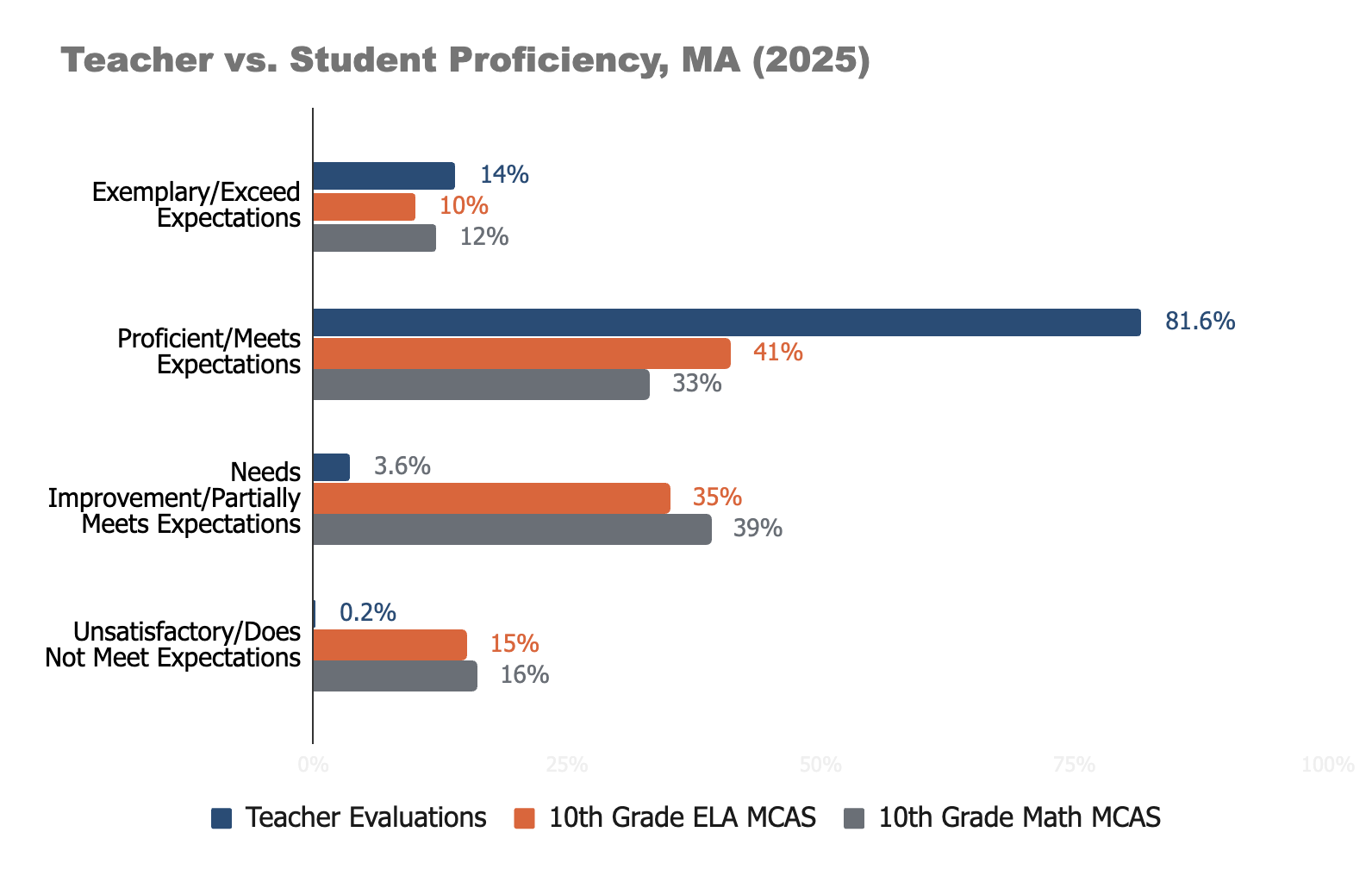
It’s tough to make the case that this is connected to student achievement.
Or the state’s accountability system. With everyone clumped together, the level of educator effectiveness in a district has virtually no correlation to the district’s rating accountability system (0.024).
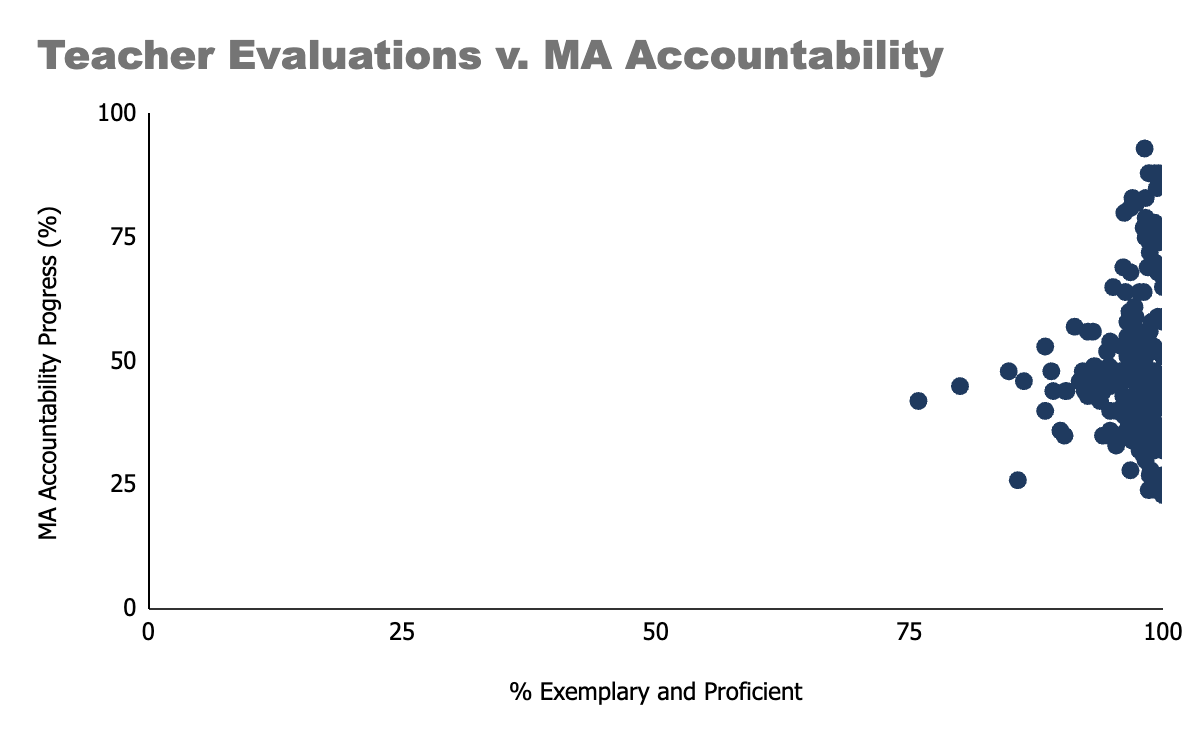
Districts with +99% teacher ratings range from the 23rd to the 88th percentile for accountability.
The educator evaluation system creates a lot of work for teachers and administrators - annual cycles, self-assessments, rubrics, observations, data collection, and writing/reporting. This may all be useful, but I have never heard that shared as an anecdote or seen any survey data that makes that case (share if you have).
There are big education policies on the table in Massachusetts, most of which will be ultimately implemented by teachers. With so much riding on these initiatives - from literacy to reimagining school funding - it seems like a miss to not have an evaluation system that reflects and supports educator performance.
Schools
Another chapter in the Croft School closure story.
In May, Boston Superintendent Mary Skipper worked remotely.
As the city budget settled for the year, the final tally for BPS positions cut was 560.
After +1,500 other school districts engaged in litigation against social media companies, BPS joined the lawsuit this week. Yesterday, the MA senate passed a bill to limit social media usage for minors; that now needs to be resolved with a House bill on the same topic, plus cell phones in schools.
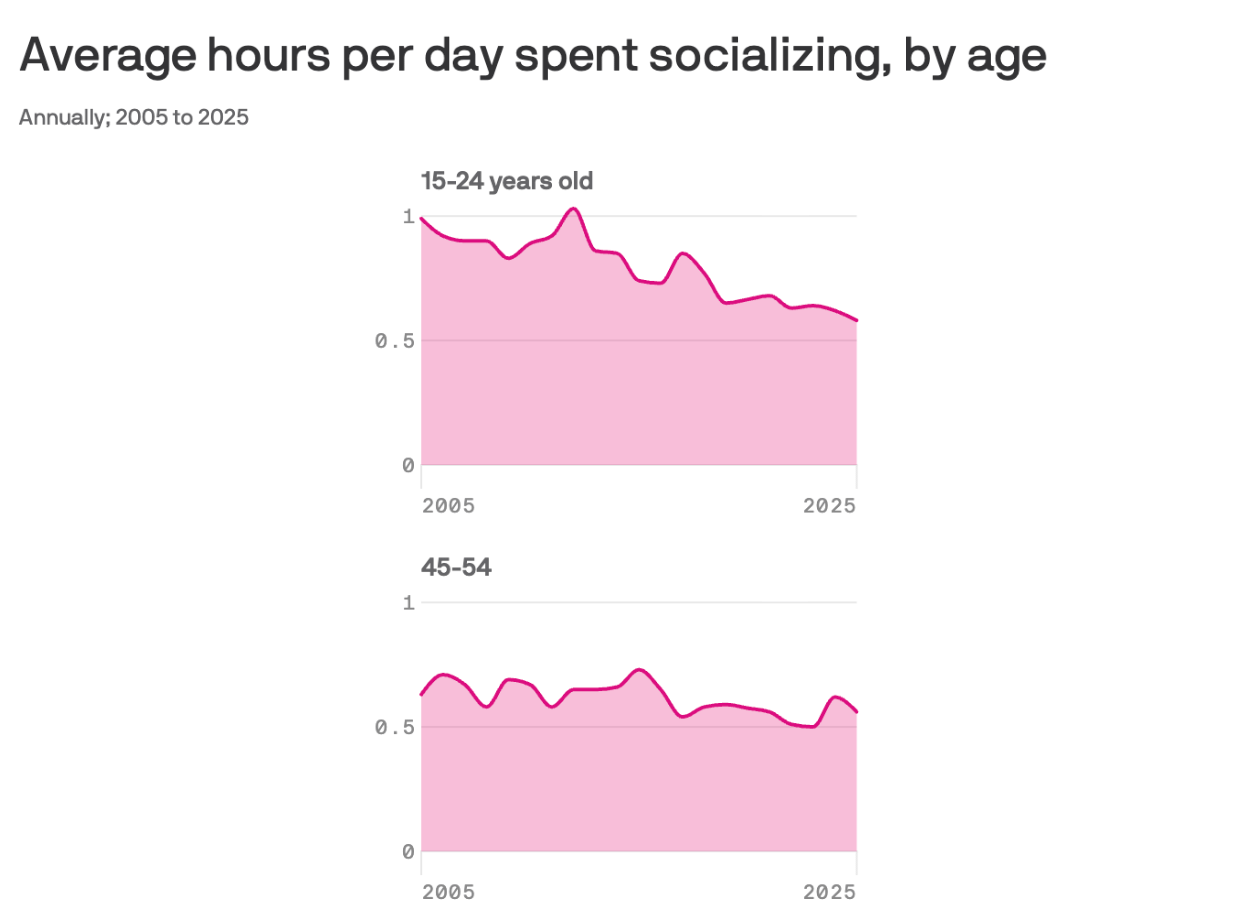
I am skeptical of silver anchors that explain negative trends or outcomes. But the rise of smartphones and social media tracks well with the steep decline of teens and young adults socializing. Now, they hang out less than their parents do.
The math wars pendulum swung back in Cambridge, with all 8th graders taking Algebra 1 this year. Only 40% passed. Rather than framing this as “poor” performance, it is more fair to describe it as expected. After all, only 49% of that cohort was proficient in math on last year’s MCAS. The problem isn’t the standard; it is prior preparation.
Governor Healey signed a sweeping new literacy bill into law. Now implementation begins, with variation between districts and teacher time as initial points to consider.
The FY27 state budget includes a new commission to review state funding of education.
A forceful rebuttal of the case for Massachusetts to adopt the federal education scholarship tax credit.
A deep dive on New Mexico’s attempt at universal child care.
Merrimack and Suffolk are officially the first MA colleges to offer three-year degrees.
Other Matters
The big economic winners of the World Cup may be online sports gambling companies. And, to a lesser degree, a local charity. Scotland’s Tartan Army said goodbye to MA with a donation to The Massachusetts Child, administered by the Massachusetts Teachers Association. That story made its way into every local news outlet.
Maine’s Democratic Party: it’s not too late to see if the Tartan Army’s PR team is available.
This shows that, like Bell's book, A Nation at Risk, there is a lot of hype based on contradictory data. When critics are yelling about teachers not using "evidence-based" instruction and bashing teachers for incompetence (Race to the Top), there is no evidence-based foundation for this political agenda.
Administrator evaluations vary in quality, but with large sample sizes, that variation is reduced statistically. With teacher shortages, you will see greater variation in teacher competence. The research does show that highly effective school systems worldwide have highly trained teachers who are given the autonomy and resources to meet high expectations. This data suggests we do not have enough highly trained master teachers.