

Boston Focus, 7.17.26
Confidence in institutions (including schools) and other news

What do the Iranian hostage crisis, the savings and loans crisis, the Iraq War, and the pandemic have in common?
They all contributed to declining American confidence in institutions, according to new survey data and a report from Gallup.
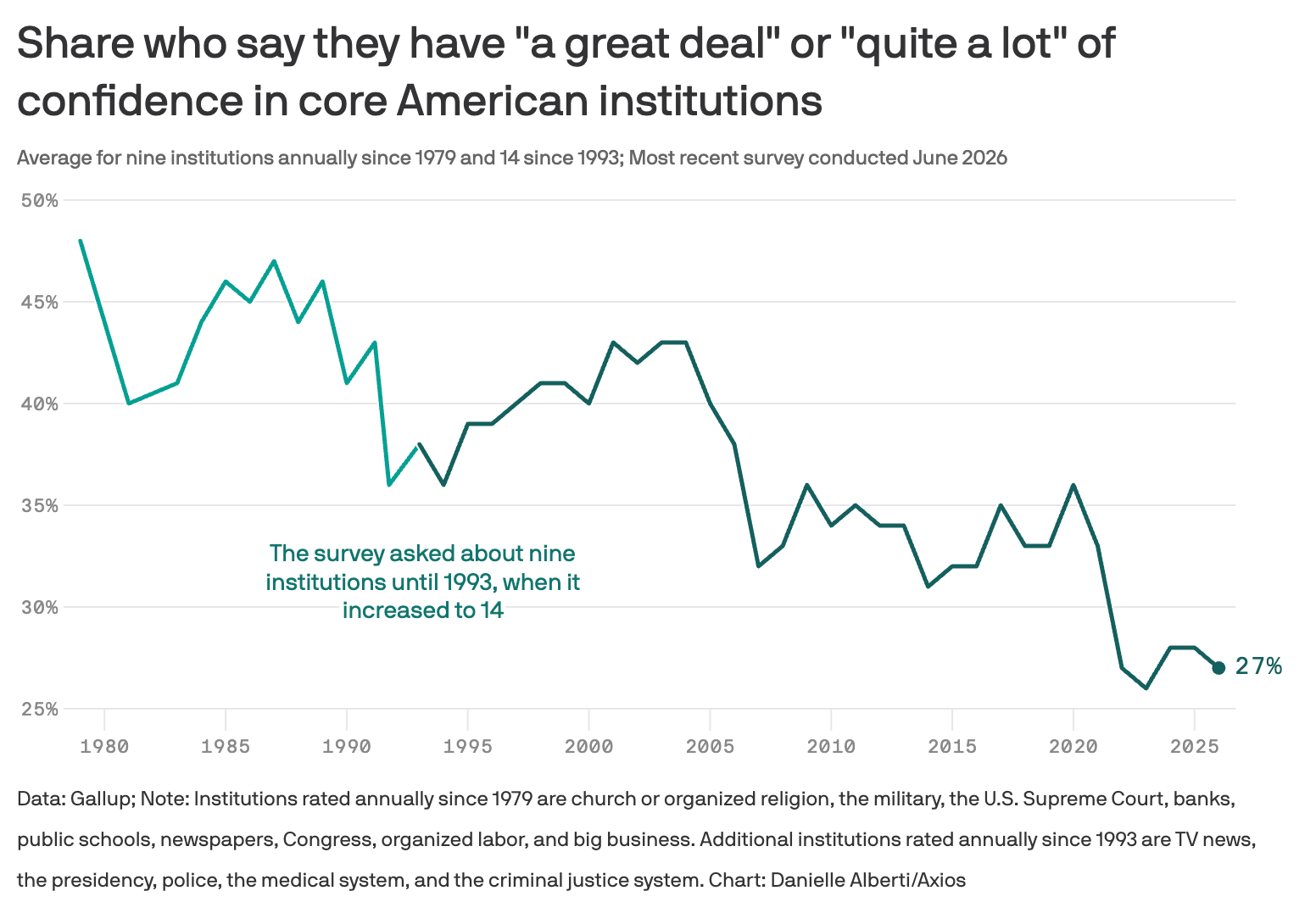
Not surprising, the most recent downturn has the timbre of polarization.
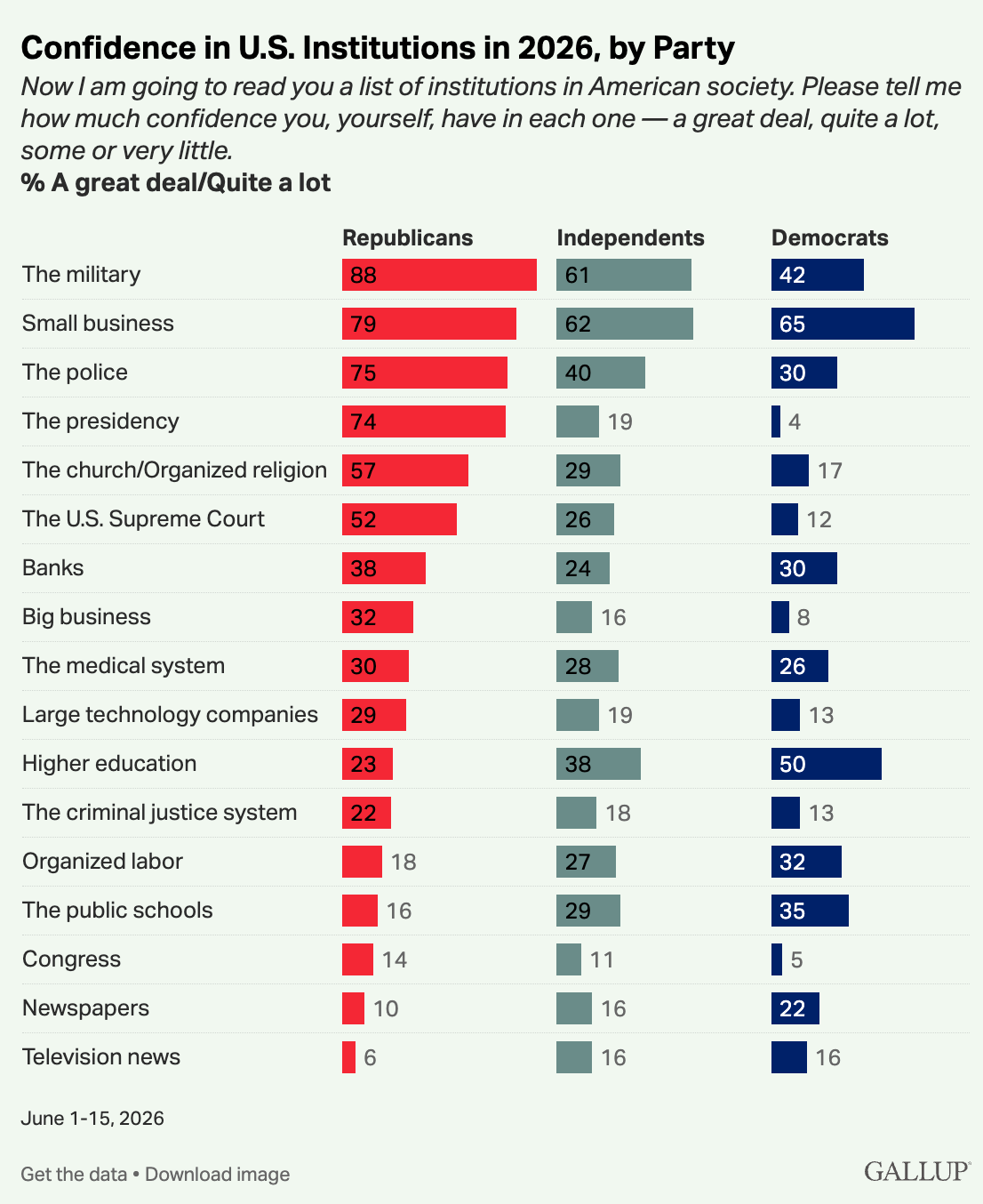
There is easy right/left fodder here, but the bipartisan nature of institutional discontent is more interesting and more serious.
With different tacks, the left and the right have abandoned and even targeted institutions, with the progressive case anchored in identity and the conservative case committed to a more traditional concept of personal freedom.
But the talking points are often the same. Some of what you are reading and hearing from the left about Graham Platner’s exit from the Maine U.S. Senate race sounds a lot like Tea Party talking points.
Schools have been a big part of this trend, tied for the second greatest decline in confidence amongst institutions. Much of that, the data indicates, started with the pandemic.
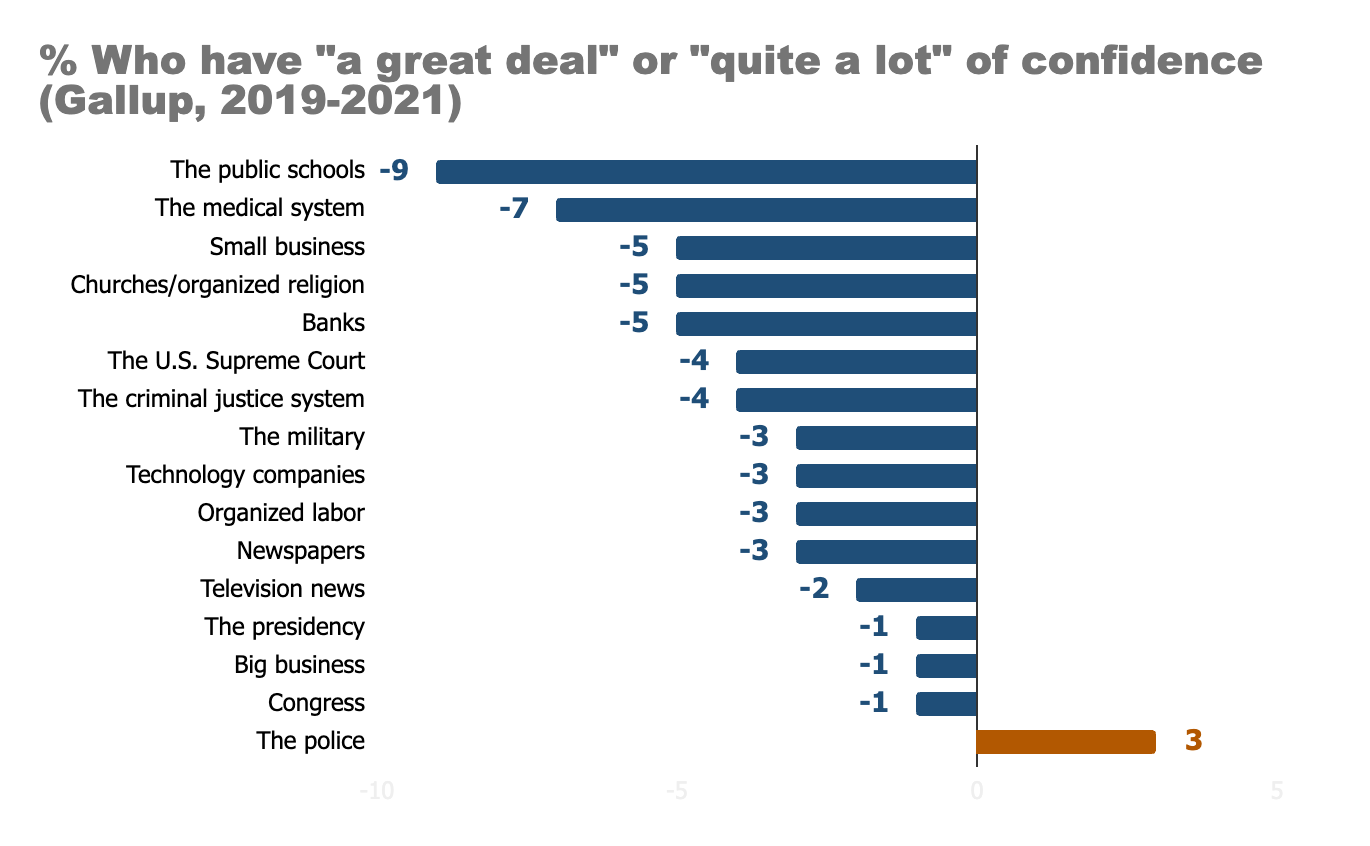
Rather than reopening a debate about remote schooling, I would rather cast this as the first in a recent series of disruptions and shifts in public schools, from chronic absenteeism, to the culture wars, to enrollment and budget pressures, to the tech backlash/AI skepticism playing out now.
It has been a rough few years.
But reasonable critiques and frustrations are blinding many people from seeing the things schools offer that you can’t get alone: knowledge and skill transfer, stability, place, rituals and routines, community, commonality, and productive conflict and compromise, for starters. The world is saying you can go further by fighting an enigmatic “establishment” or pursuing the traditional or latest techno version of unschooling.
Increasingly, you can do more by yourself and for yourself.
But there is no way that is actually better for you, or your community.
Schools
Missed one: Boston School Committee met last Wednesday. The meeting wrapped some previous business on contracts, autonomous/private schools, and the annual superintendent evaluation. New business: data on school closures and mergers. Full materials here.
State data is not out yet, but Boston is reporting record high Advanced Placement participation and passing rates, reflecting a long-term national trend.
Boston kids will get more free meals this summer.
BPS regional superintendent Tommy Welch has been named as the new superintendent of Salem.
A new MIT study finds Boston charter school performance consistently high over the past two decades, even when accounting for a dip in the back-half of the 2010s.
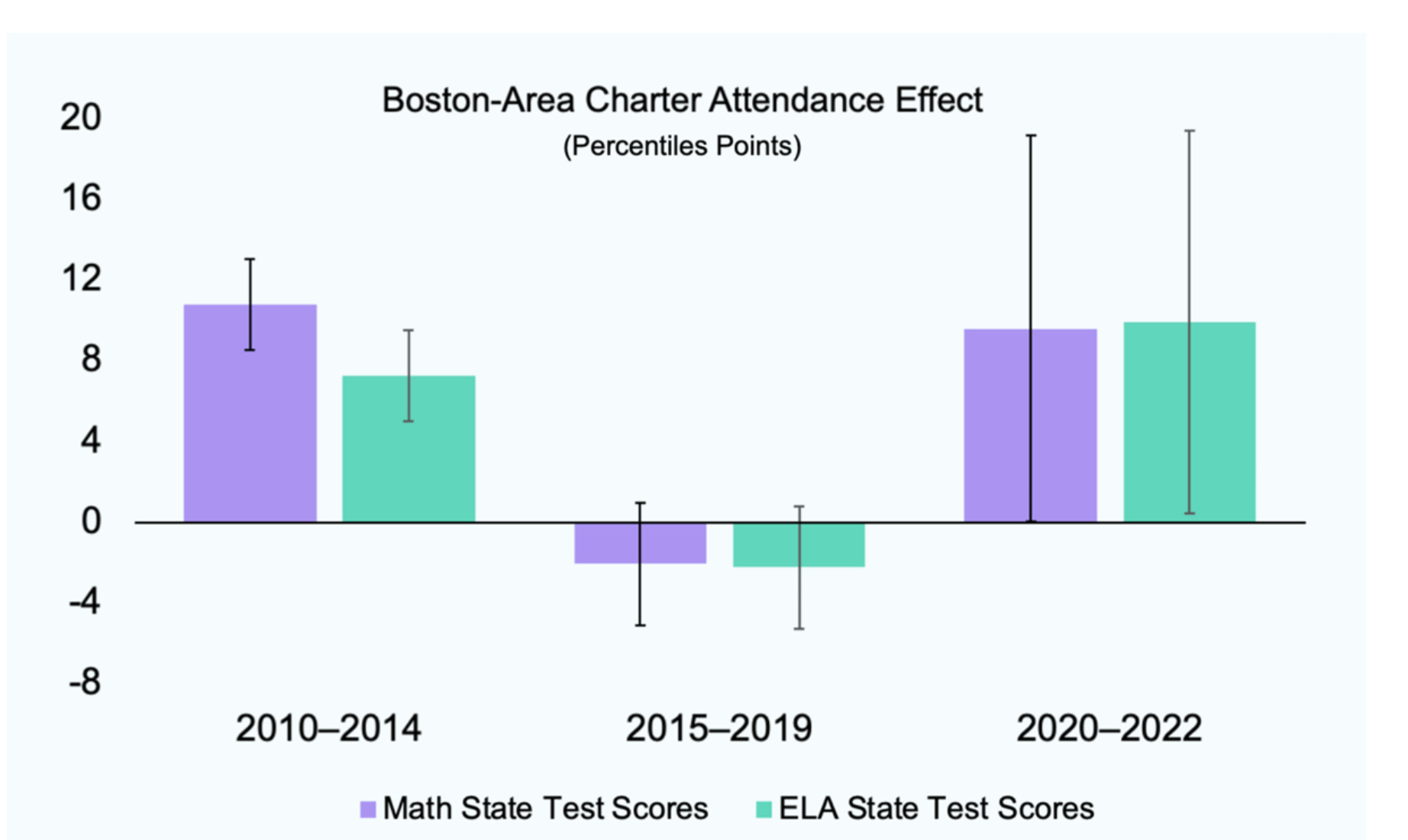
Two things here. First, the graph above drives a truck through the silly case that antiracism hurt Boston charter school performance. Achievement actually improved during and after a period of national racial reckoning!
Second, the authors draw a far more likely conclusion that leader turnover was a contributing factor to performance declines. Schools are fragile, and I have seen schools rise and fall (or fall and rise) in real time. That is a feature, not a bug, of the highly decentralized public education system we have chosen for ourselves.
How are the NBA and school districts the same? Analytics don’t tell you everything, argues a Boston school leader.
With $20 bill-found-in-your-winter-coat energy, Governor Healey is proposing a post-budget $100M bump in public education funding. Christmas comes in July this year, adding up to $112 per student, real money in bigger districts like Boston (adds up to ~$5M). The city already has more money coming from late bus fines.
MA bills to ban or restrict social media by minors pose significant regulatory and legal complexity.
Attorney General Campbell is suing the federal government for funds that pay for mental health professionals in schools.
A good primer on what the MA budget means for early child care.
While other private colleges struggle with PR and enrollment, HBCU’s are growing. As I argued here, the value of enrolling more kids is greater than the value created by artificial scarcity.
Other Matters
Some good housing news. Here is an abundance-angle summary of the federal housing bill, and what it means for Massachusetts. Plus, churchyards are now in play.
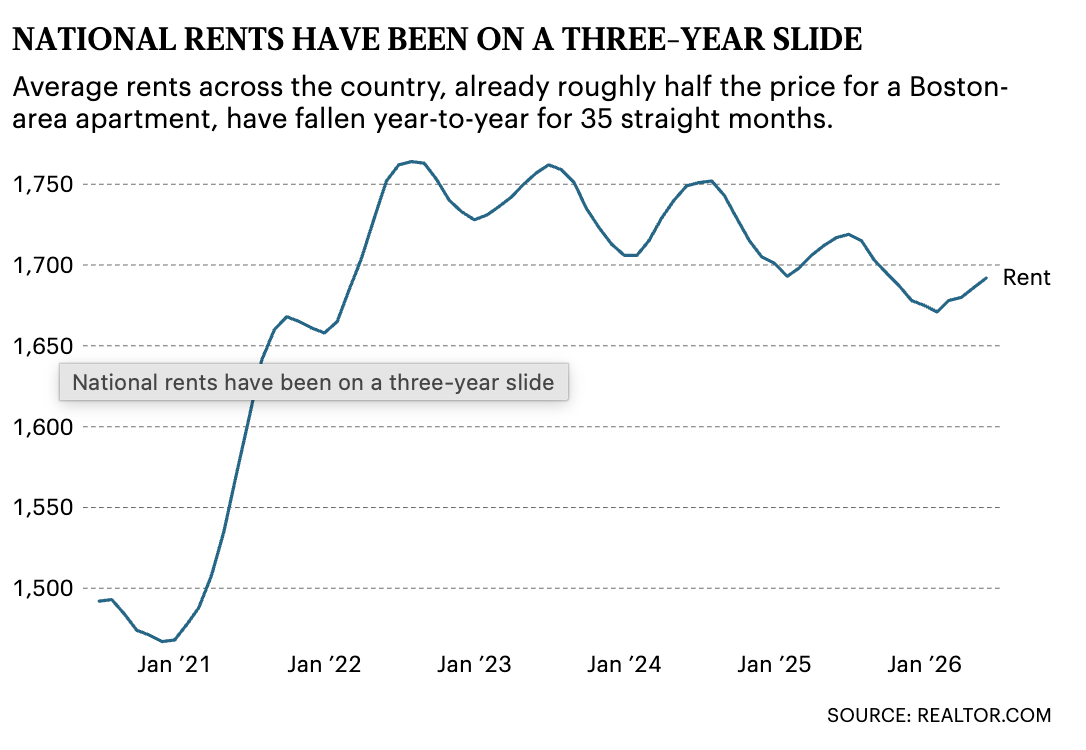
Rents continue to fall in Boston, mirroring national trends.
More evidence that online bookies are coming for the kids: MA regulators have logged hundreds of underage users gambling online.