

Boston Focus, 7.25.25
What happens in a city where fewer voters seem to care about their schools?

Thanks to a Suffolk/Boston Globe poll released this week there is fresh data on Boston voters’ attitudes on education.
The emphasis here is on voters. Unlike some other survey research (such as MassInc’s many “parent” polls since 2020), the demographics of this poll do not match the demographics of the children of the district.
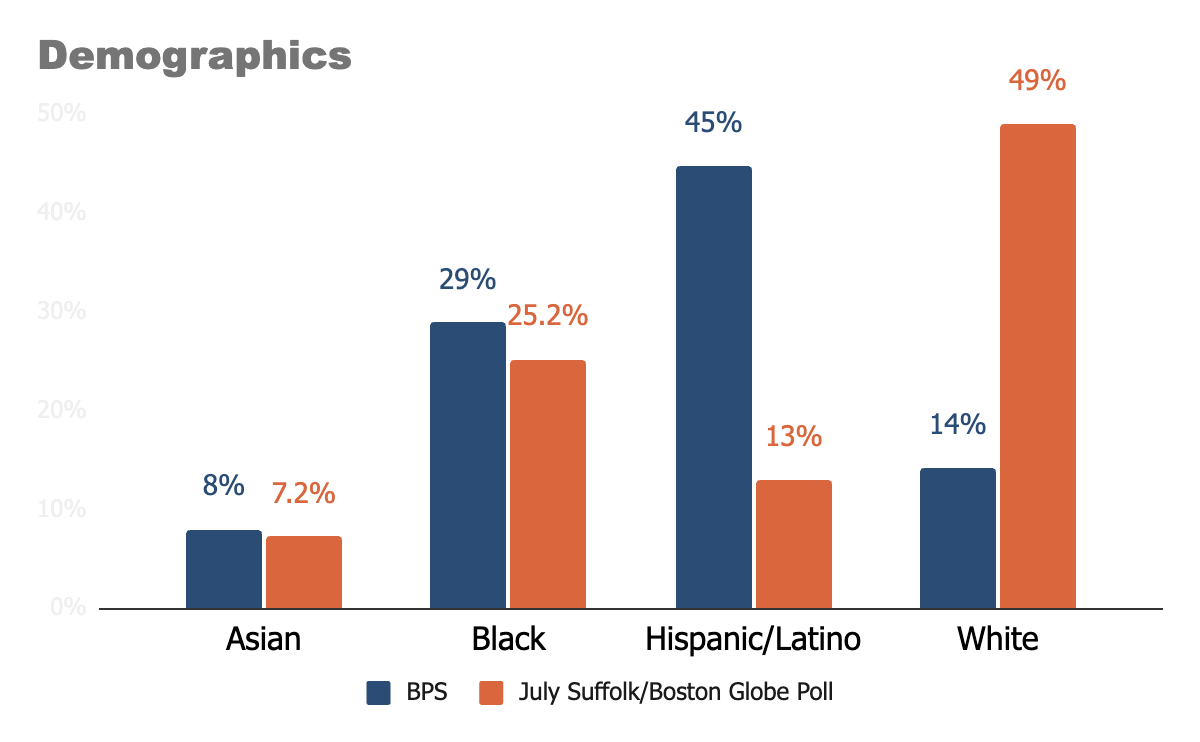
The poll did isolate respondents who self-identified as parents of public school children, but the mere 83 responses (~17%) are not large enough to draw any sort of conclusions, comparative or otherwise, about families and their opinions.
However, with a total sample of 500, it does tell you something about Bostonians who cast ballots. Probably most significantly, this is the lowest ranking of education by Boston voters in the last four mayoral election cycles.
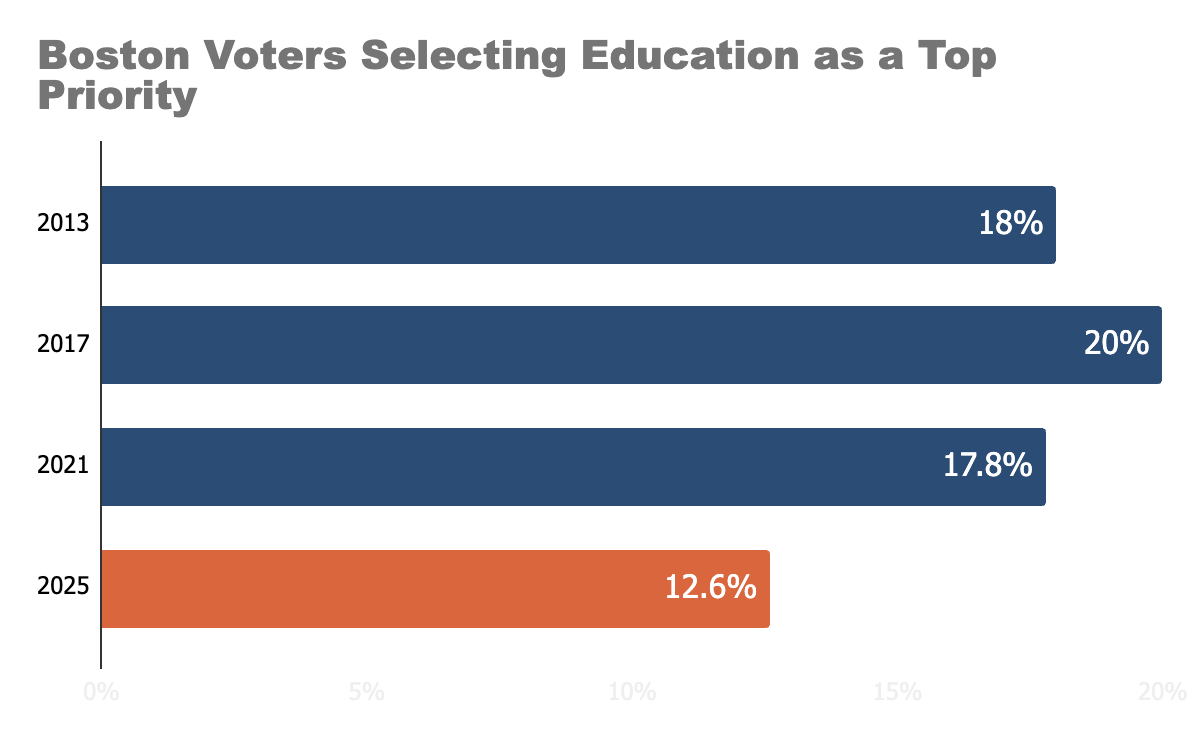
The consistent ranking in 2013, 2017, 2021 - when education was within the margin of error as the top issue of the campaign - has seen a significant drop-off this year, with education ranking 4th amongst Boston voters.
Interestingly (and perhaps relatedly), Boston voters’ satisfaction with Boston Public Schools has not changed very much in the past 12 years.
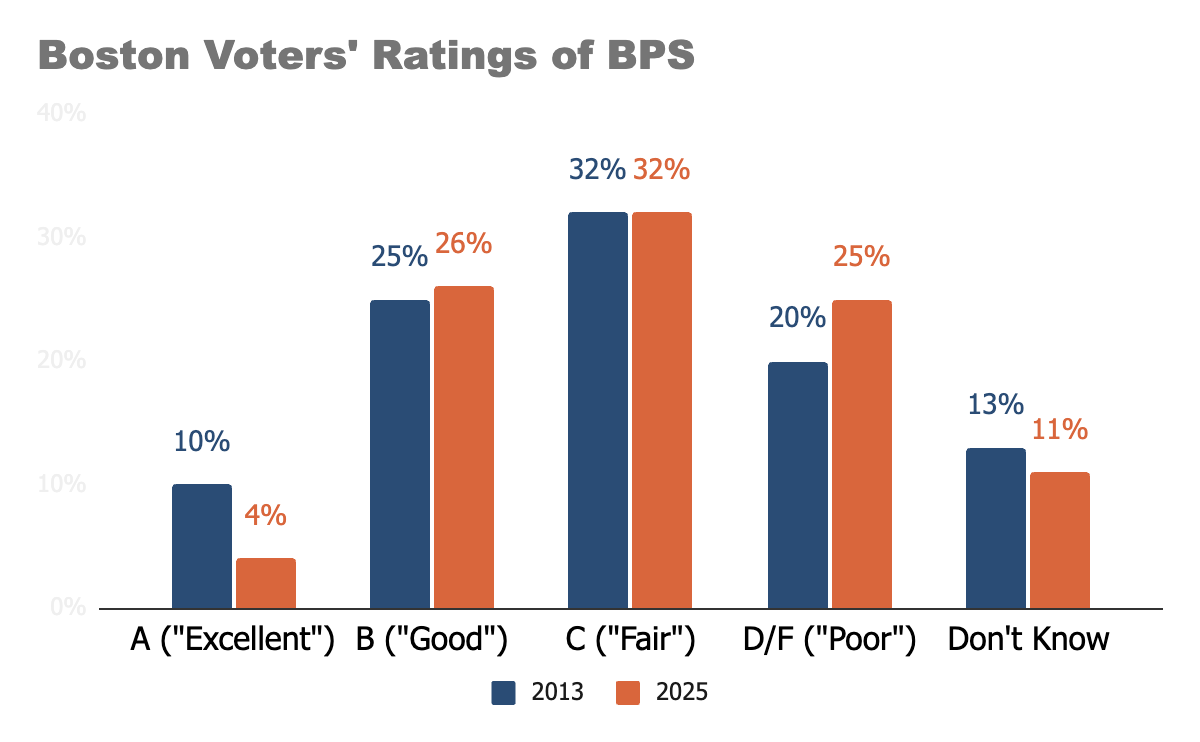
There is some noise on the margins, but the central insight remains. In 2013, 57% of Boston voters ranked BPS as “good” or “fair.”
In 2025? 58%.
Voters do seem to agree loudly on the concept of an elected or hybrid school committee: only 8% of respondents support the continued policy of appointing school committee members. (Coincidentally, there is an open seat and applications are due August 8th.)
Advocates and voters could make the case around accountability, that the pressure on elected members would be more effective than holding a mayor accountable (as the late Mayor Menino articulated). But it is awfully hard to make the case that an elected school committee would be more representative or responsive to the needs of actual BPS families.
Research indicates that school committee elections are ironically anti-democratic. With low and skewed turnout, elected school committees are typically whiter and wealthier than the districts they represent. Lynn, MA is 90% students of color. This is their school committee.
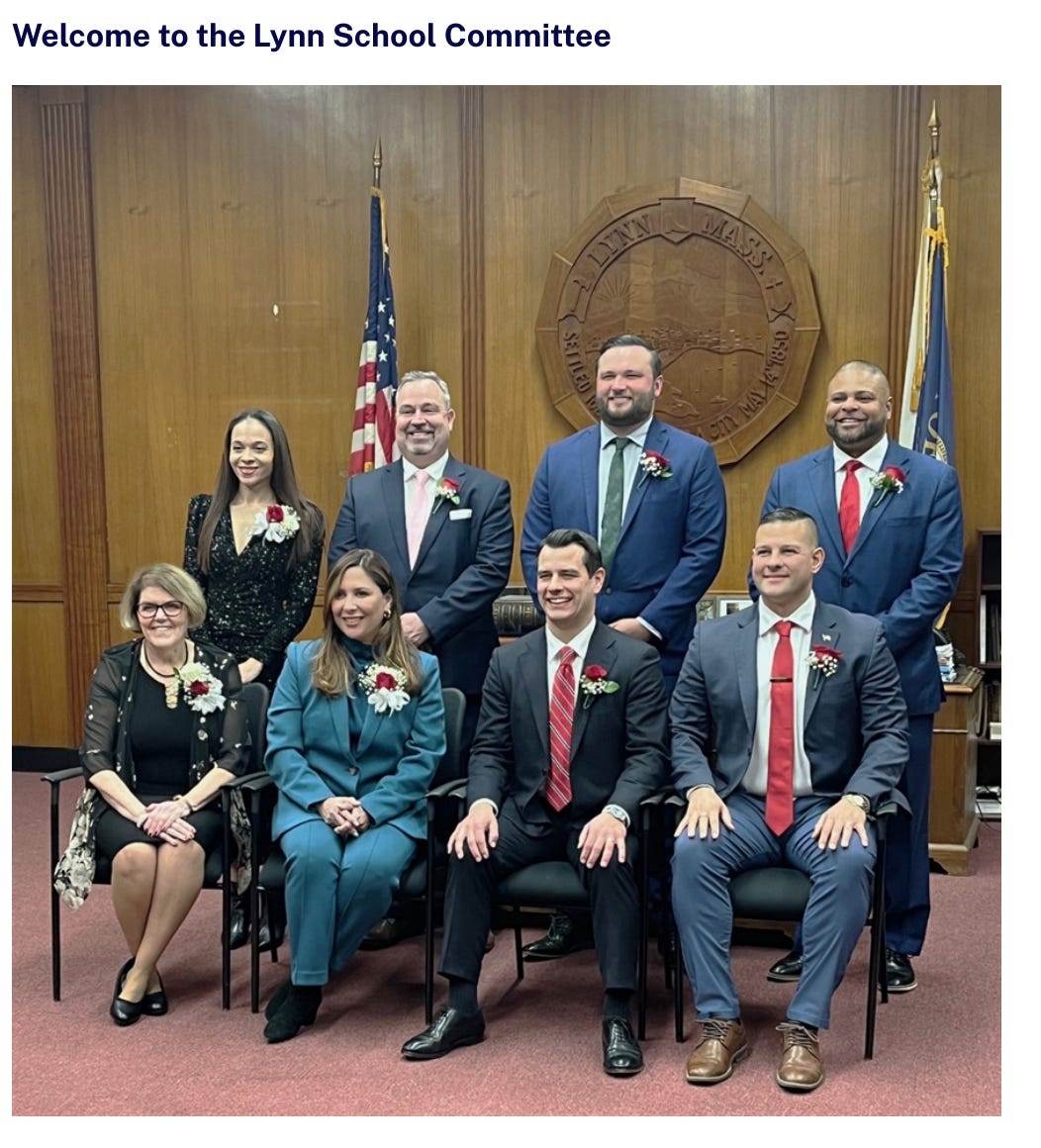
Would something like this play out in Boston? Probably.
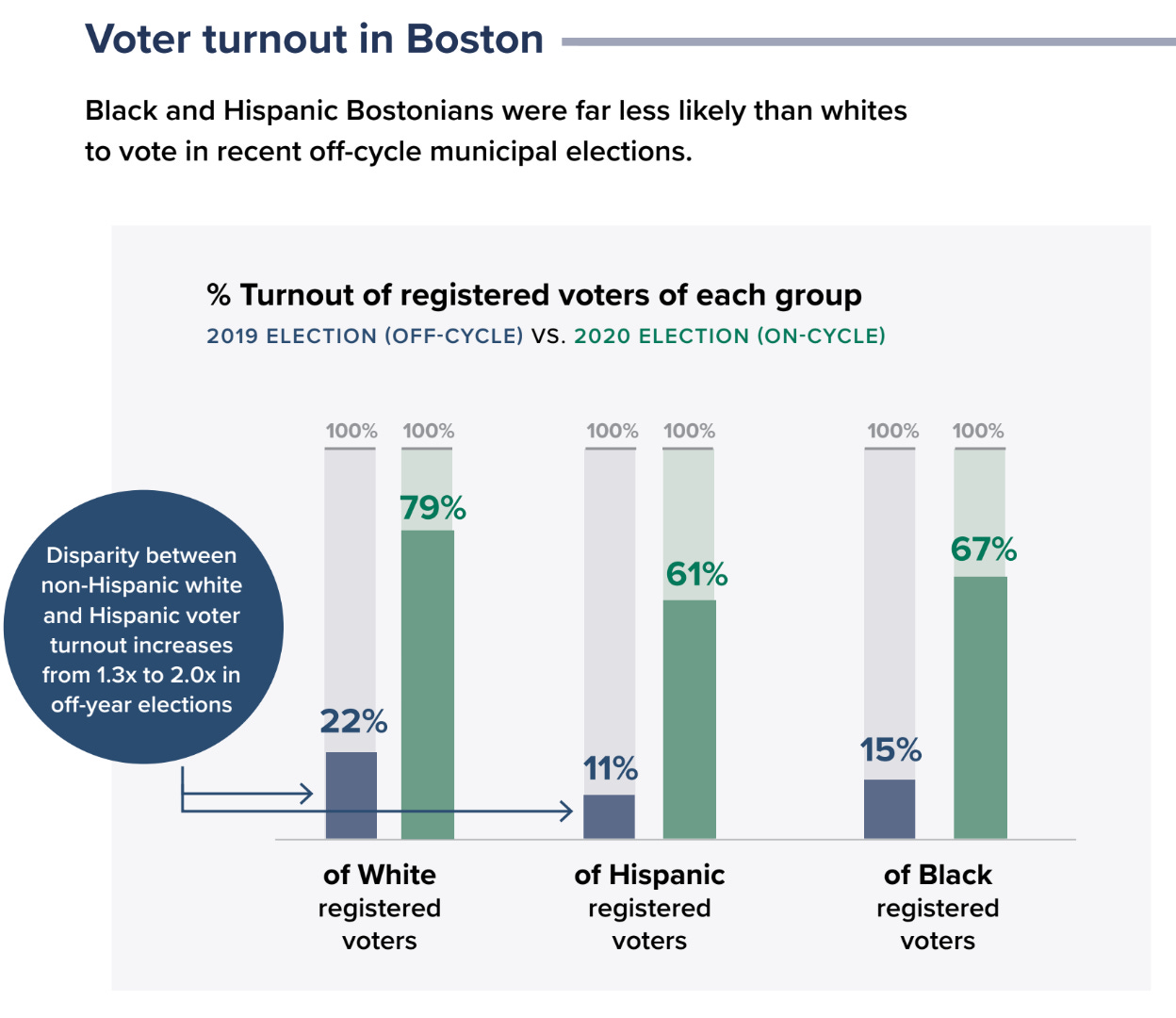
It is probably a moot point. Although a non-binding referendum passed in 2021 supporting the move back to an elected school committee, it currently has no path to the State House for its approval. At the end of the day, all we learned was that if you ask people who vote if they want to vote on more stuff, they will likely say “yes.”
As a lifetime Boston educator, I was working when education was a salient issue for Boston voters (and, for a time, American voters). Our schools saw massive infusions of local, state, and federal funds, opportunity gaps were exposed and mined systematically, and well-meaning reforms (across the ideological spectrum) were developed and tested. We can debate data, research, and experiences to argue how effective all of that was, but I have no doubt that a lot of kids, families, and educators benefited.
What happens next, in a city with fewer children and fewer voters who seem to care about their schools?
Schools
The family of Lens Joseph - the 5 year-old struck and killed by a school bus - is suing.
Boston After School and Beyond is logging its 20th year for comprehensive summer programming.
I know virtually nothing about WalletHub, other than it seems to rank Massachusetts public schools #1 every year and press releases follow.
What the impact of ICE looks like in some MA schools.
Some of the $6.2B federal dollars withheld from school districts have been unfrozen. Will blue states go for more with a new federally subsidized school voucher program?
AI and how it disrupts writing and student/teacher relationships. Shorter, high school: Boston Globe. Longer, college: New Yorker.
Glad to see I was 1 of just 83 BPS parents sampled in the survey! Tina Fey once said (in character), "Boston's not a city. It's a college town with a fishing pier." Very challenging to expect electeds to focus on fixing the public school system when the electorate is so disconnected from it. I believe 11% of NYC residents are enrolled in public schools and 13% in Philly while Boston is more like 7%.