

Boston Focus, 8.1.25
Can time heal (some) wounds?

In his recent media appearances and his newsletters, Representative Jake Auchincloss (D-MA4) has been popularizing a wonky economics term: “cost disease.”
Housing and health care - particularly in Massachusetts - are the most obvious demonstrations of this affliction: complex, service-heavy industries for which prices are climbing annually without improved services or outcomes.
There are economic, regulatory, and political reasons that conspire to drive these costs up endlessly. Rooting those out would take real work.
Public education is suffering from its own version of cost disease. There are national statistics to support this claim, but Boston’s data positions us as a model patient.
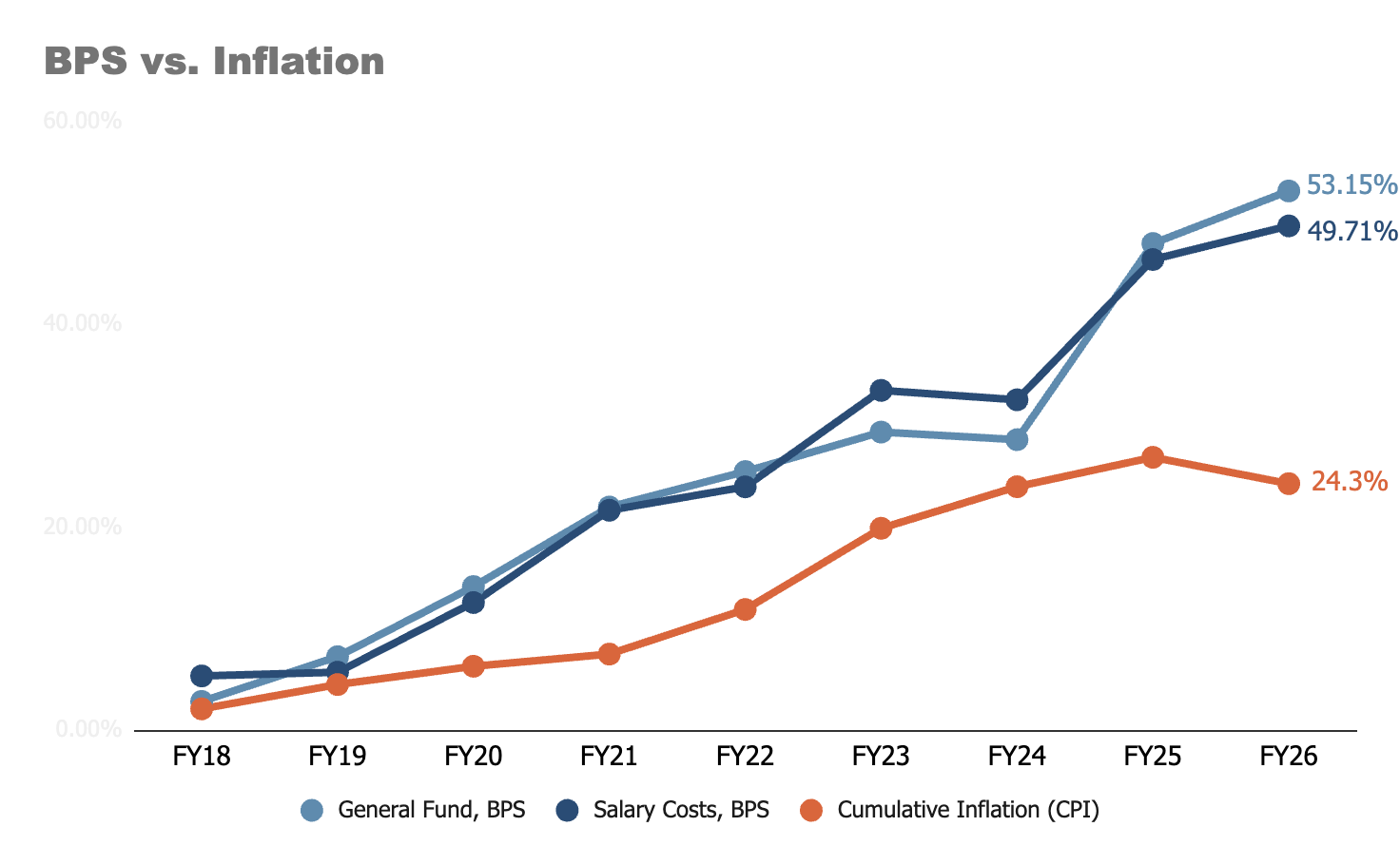
Costs have significantly increased; a substantial driver of has been the addition of staff (+23% since 2018) and staff compensation.
At the same time, we are educating fewer and fewer students.
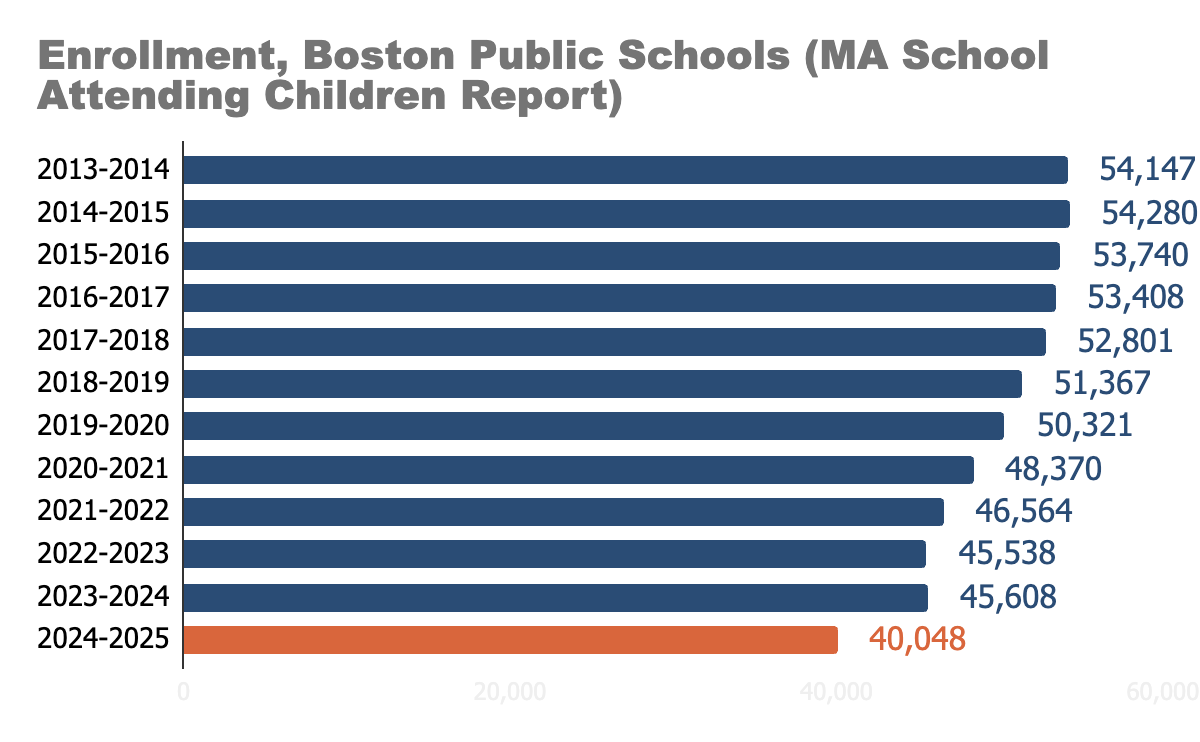
That last bar jumped out at me, too. I reached out to the state and the city for clarification; either you are looking at an unprecedented enrollment drop or a lack of real data controls and awareness. (Neither is good.)
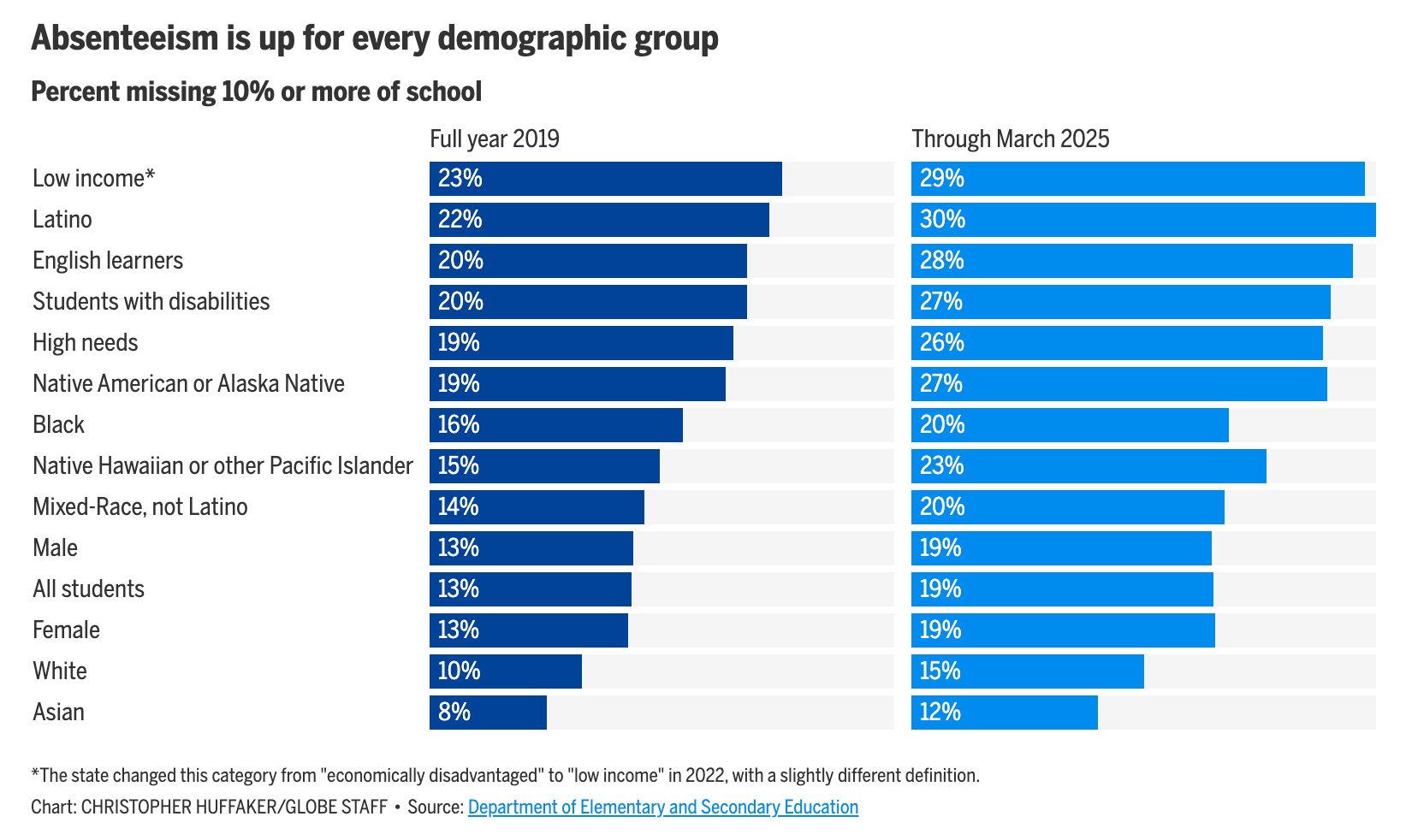
And, those fewer students are in school for less time. This week’s visualizations and policy interventions in the Boston Globe underline what may be the pandemic’s legacy for education: kids, of all backgrounds, just don’t go to school as much.
As this story notes, you would also be surprised to learn how much learning time during a typical school day evaporates through longer transitions, free periods, missing substitutes, etc.
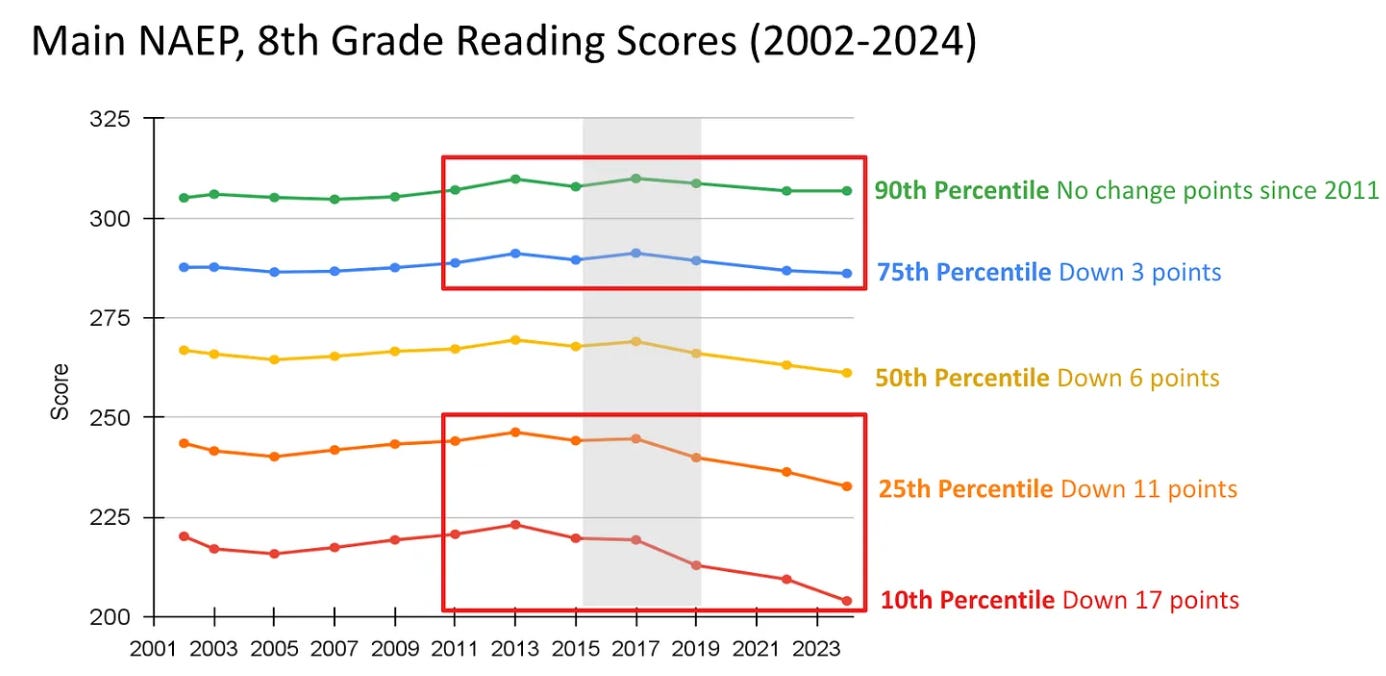
Paired with less homework and less sleep, it is no surprise to see that student achievement has declined and achievement gaps by income have reopened.
If the average student is literally less productive, why wouldn’t we see diminished outcomes?
Just like housing and health care, there is no miracle drug to cure this. Nor will there ever be agreement on the right amount resources for schools. “More” is generally the accepted answer, but it lacks a definition.
So perhaps we could spend less time debating that number, and instead address how productive the students themselves are being.
Schools
The MA Senate passed its school cell phone bell ban. It comes with asterisks, and not much more can happen until the House takes it up in the fall.
If we were behind the tech curve with cell phones, educators around the world are ringing the bell earlier about AI in schools.
The Trump Administration released the remaining billions in federal aid that school districts needed this summer. Not content with just forcing higher education to change its policies, the administration is also pledging to make kids do sit-ups again.
Once both valuable, a building in downtown Boston and a college dorm are both now distressed assets. The Boston Globe opines on the former; “for sale” signs are becoming more common for the latter.
Yes - the posted 40,048 figure is either really bad or really off.
Something up with that BPS enrollment number. Prior years pretty closely match the number from the main page. https://profiles.doe.mass.edu/profiles/student.aspx?orgcode=00350000&orgtypecode=5