

Boston Focus, 8.29.25
A fall this semester

Two things tell you it is almost Labor Day in Boston.
Joyful pictures of the first day of school and “Storrowing” content.

The pandemic, economic volatility, daunting competition, and federal vindictiveness have made higher education a tougher place to be these days. A decline in higher education’s prestige, enrollment, and budgets looms a bit larger in a city like Boston, where so much economic activity and employment are driven by our colleges and universities.
Crushing traffic on or around September 1st is actually a good thing. If there is a year when some cursed family dropping their kid off at BU doesn’t get their UHaul hung up, it should give the city and the region pause.
Boston and Massachusetts schools are not doing as much as you would think to help out. The state has released college and university attendance for the Class of 2024, reflecting continued lower rates post-pandemic.
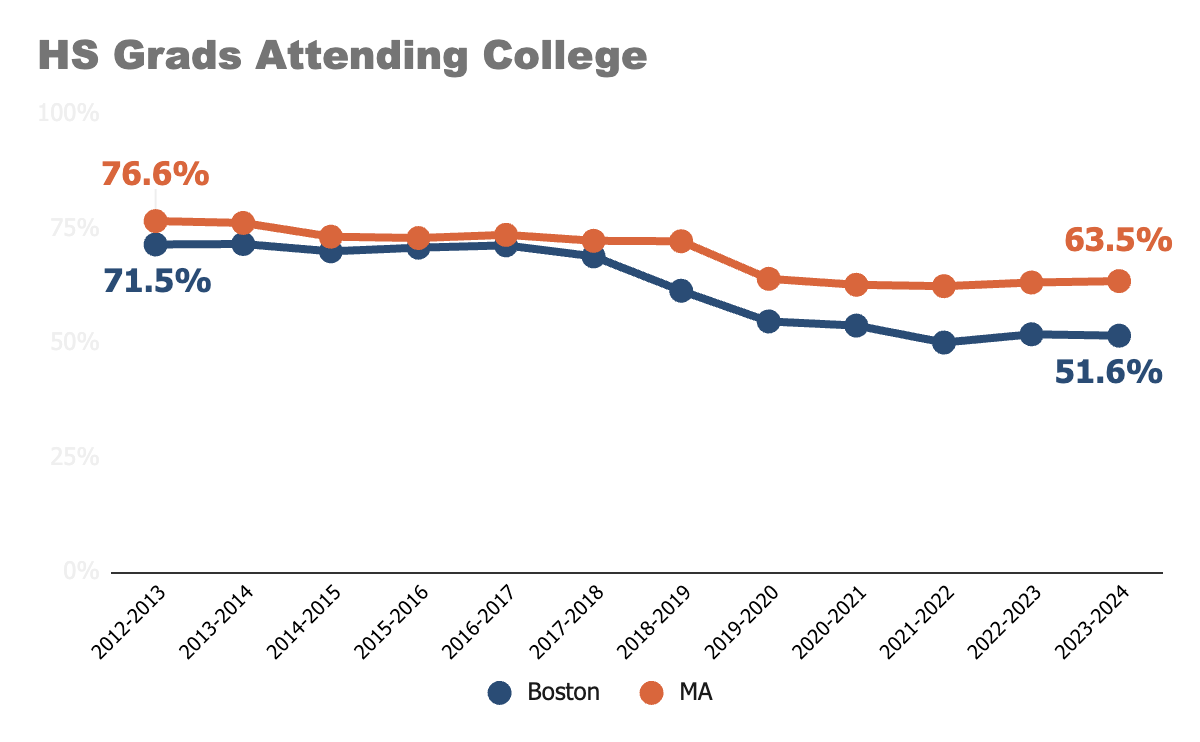
The decline here is significant and diffuse. There are no clear, obvious drivers; there are drops across the board for every subgroup: race, income status, gender, etc.
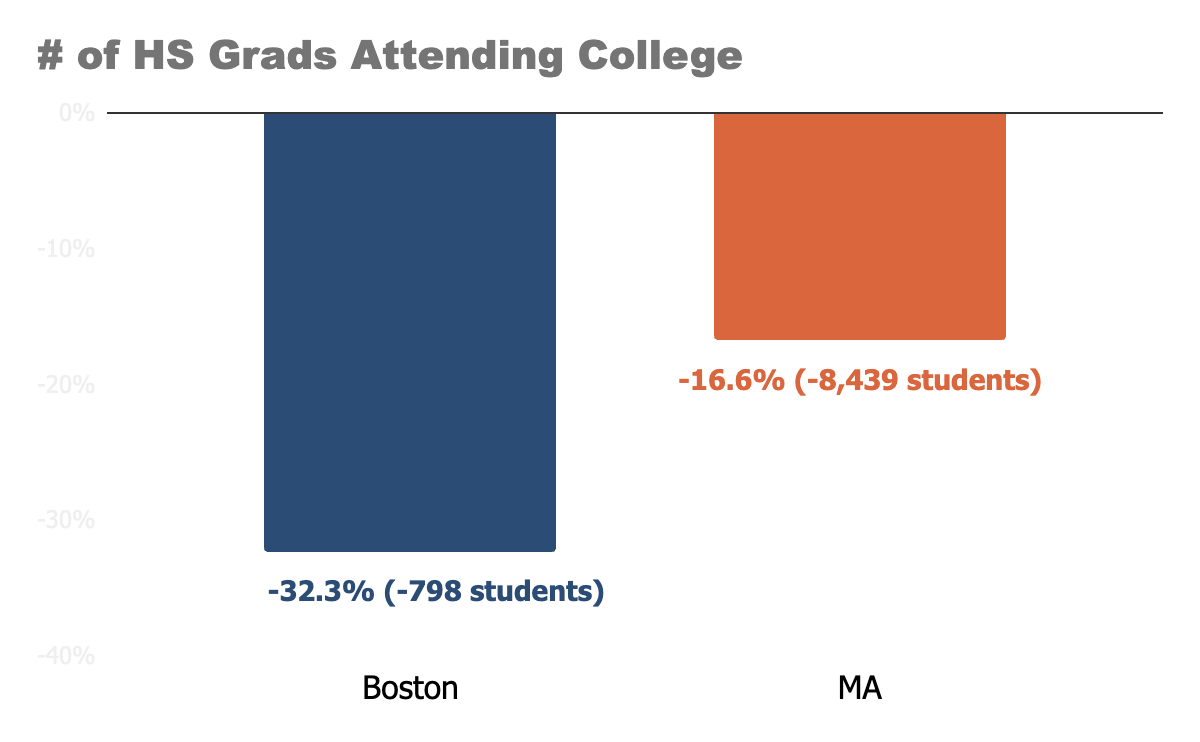
More importantly, we are not just witnessing lower rates. The recent decreases in the school-aged population also means there are even fewer students graduating from our public high schools and attending college.
As is typical, the Boston high school data is skewed. 12 of the 42 Boston public high schools (BPS + charters) beat state averages for college attendance.
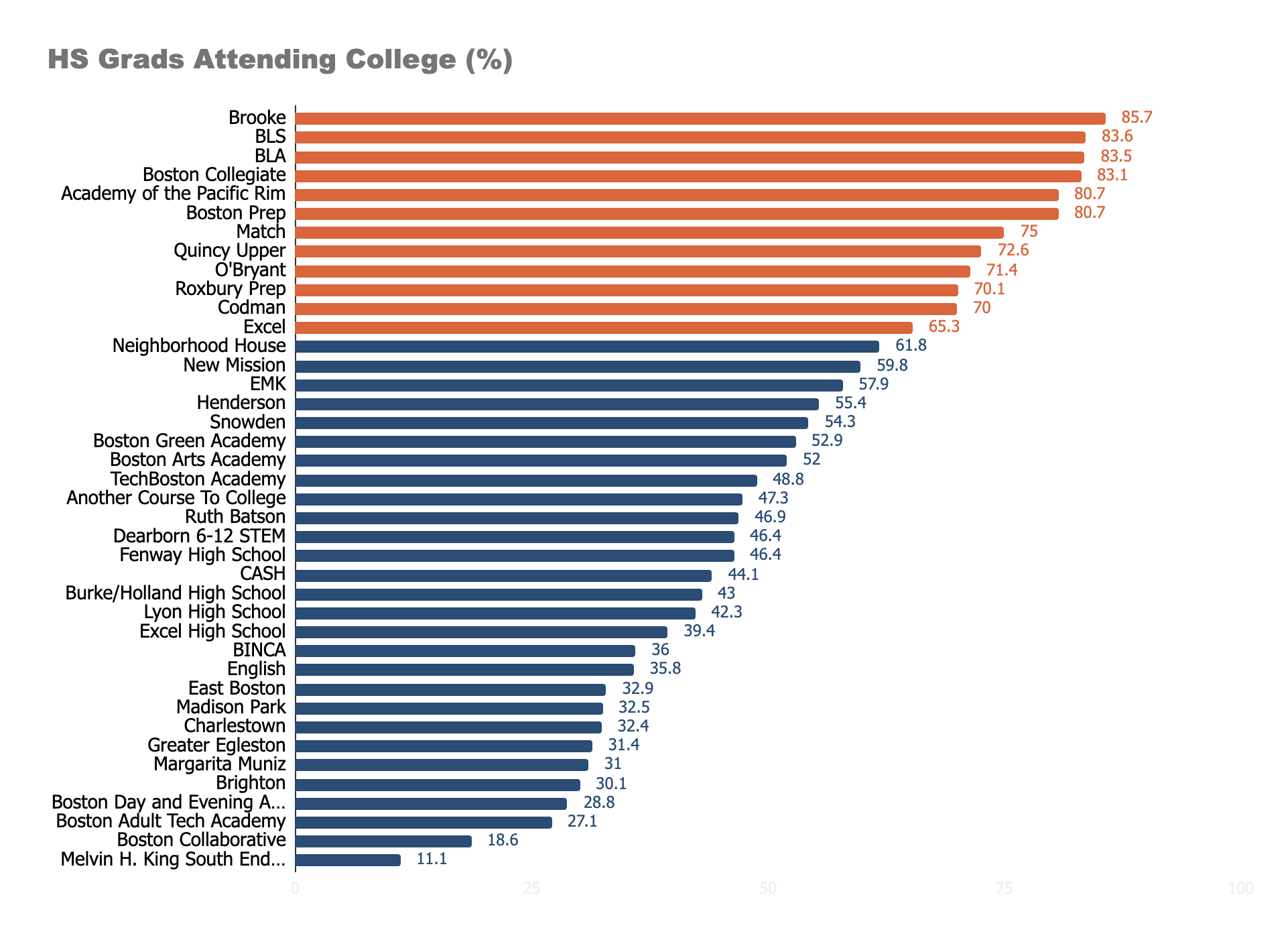
This subset of schools - which includes the three large exam schools - is responsible for greater than half of all of the Boston students enrolling in college (~56%).
The well-worn adage is that Boston’s economy hinges on “eds” (higher education) and “meds” (health care). But this only works with a steady pipeline of college-educated workers. It is no coincidence that individuals with Bachelor’s degrees or higher were among the greatest subgroup to move into Massachusetts over the past two decades.
The choice or ability of Massachusetts residents to continue to reside in the Commonwealth has become an ongoing economic and political question. The reasons for outmigration are varied and complex, ranging from affordability to weather. But we do ourselves no favors by not graduating more college-ready students each year. Whether they enroll in one of the Bay State’s 100+ colleges and universities or return home after earning a degree, they would strengthen the flywheel that has created a lot of prosperity in this city and state.
And they wouldn’t need to be reminded about Storrow Drive.
Schools
Former Boston Latin head of school Rachel Skerritt was appointed to Boston School Committee. This appointment coincides with the quadrennial tradition of political candidates vowing to return to an elected or hybrid school committee. Those invoking “representation” in their arguments should note the big increase in political action committees popping up to influence these local, low turnout elections, with the Massachusetts Teachers Association committing at least $1M to such initiatives.
A long-awaited review of BPS bus safety is a good primer for those not fluent in transportation outsourcing (in this case, BPS to Transdev). As you read the report, your “who’s on first” confusion is not your lack of comprehension; it is a feature of the arrangement. Hard to change anything when no one is clearly in charge or ultimately accountable.
As BPS attempts to expand programs for multilingual learners, the Trump Administration has rescinded guidance for serving them.
A WCVB interview with Commissioner Pedro Martinez touches on the state’s education priorities and policy questions, such as cell phone bans (Boston City Council held a hearing), a commission’s recommendations to combat anti-Semitism, and Massachusetts schools’ impressive showing in US News and World Report rankings.
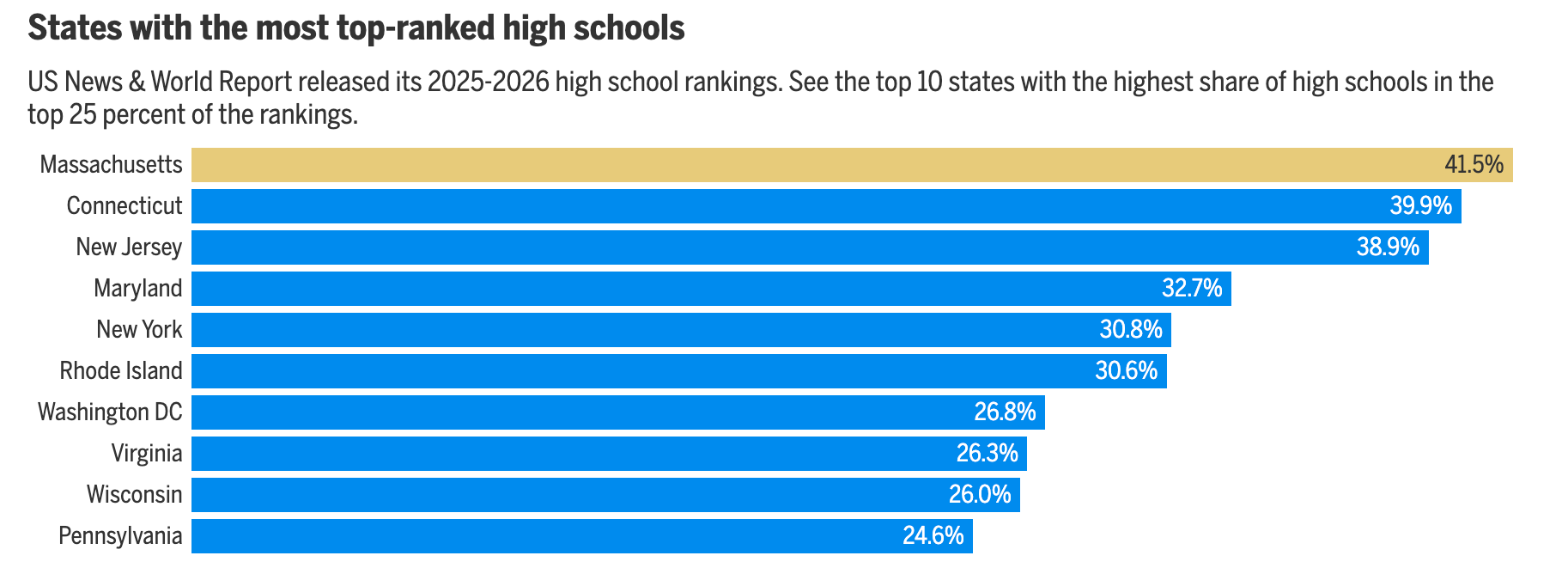
Boston Latin held its perennial top spot, with other Massachusetts schools also near the top nationally. List here.
Massachusetts regulations requiring early literacy screening are yielding new data.
Remember when everyone thought Newton North or the combined Boston Arts Academy/Quincy were too expensive? The new Lexington High School building could cost as much as two Gillette Stadiums.
The promising early data on high-dosage tutoring may not have scaled with stimulus funding.
A provost’s modest proposal: make college students read and write (for real in real time).
No matter how many times this happens, school shootings like the one in Minnesota this week continue to be terribly sad and uniquely American.
Other Matters
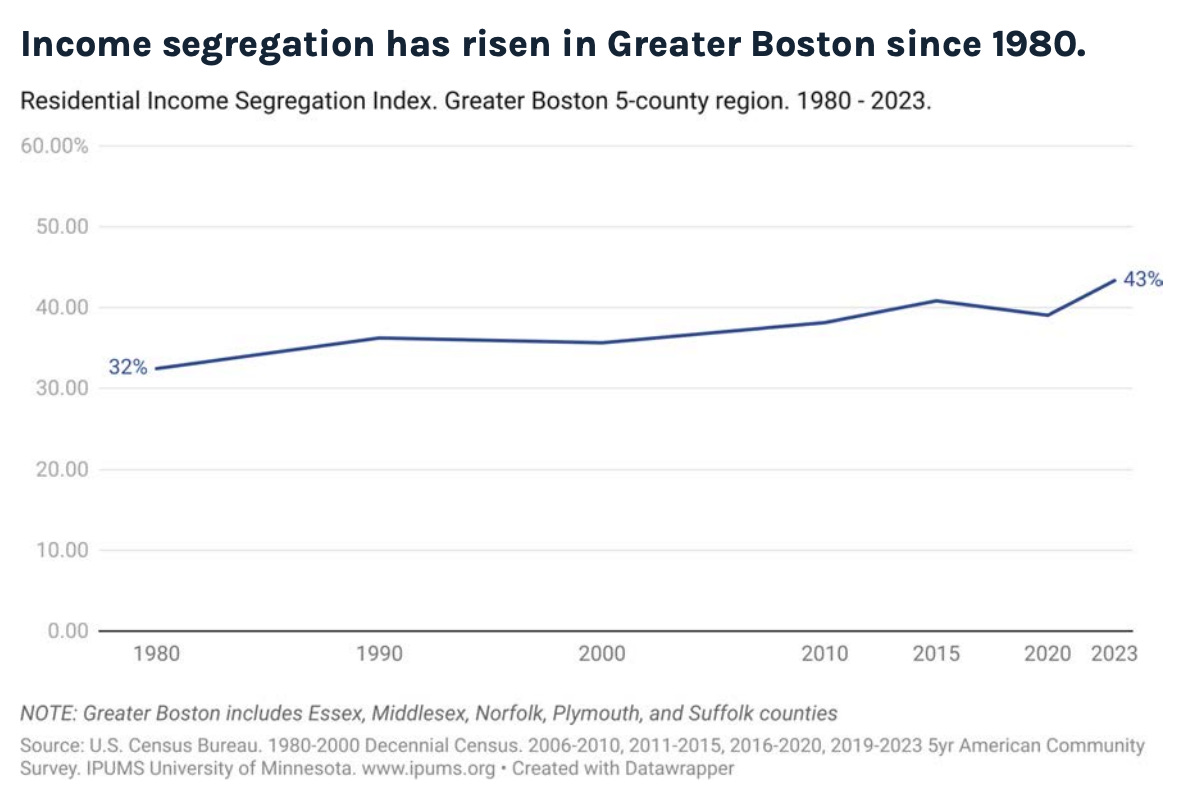
A new report from Boston Indicators paints the picture of Greater Boston’s increasing racial diversity, declining racial segregation, and increasing income segregation.
I'd like to see the data on rate of college enrollment controlling for the economy (wages and teen unemployment rate). In a very short window a job at Chipotle went from $11/hour to $18/hr. Surely not enough to convince a well off kid to choose work over U of Wisconsin or Elon. But if the decision is borrowing money to attend UMass-Boston or Fitchburg State versus $30k/year at Chipotle (or well more to start in the trades), different decision.