Boston Focus, 2.6.26
Making less with more

Boston Public Schools (BPS) has proposed a record-breaking budget of $1.84B. And all the talk is about cuts.
How can this be?
Budgets are just about two things (revenue and expenses), and BPS has issues with both.
The overall BPS budget - with city, state, and federal revenue - actually increased for the first time in three years (+3.4%).
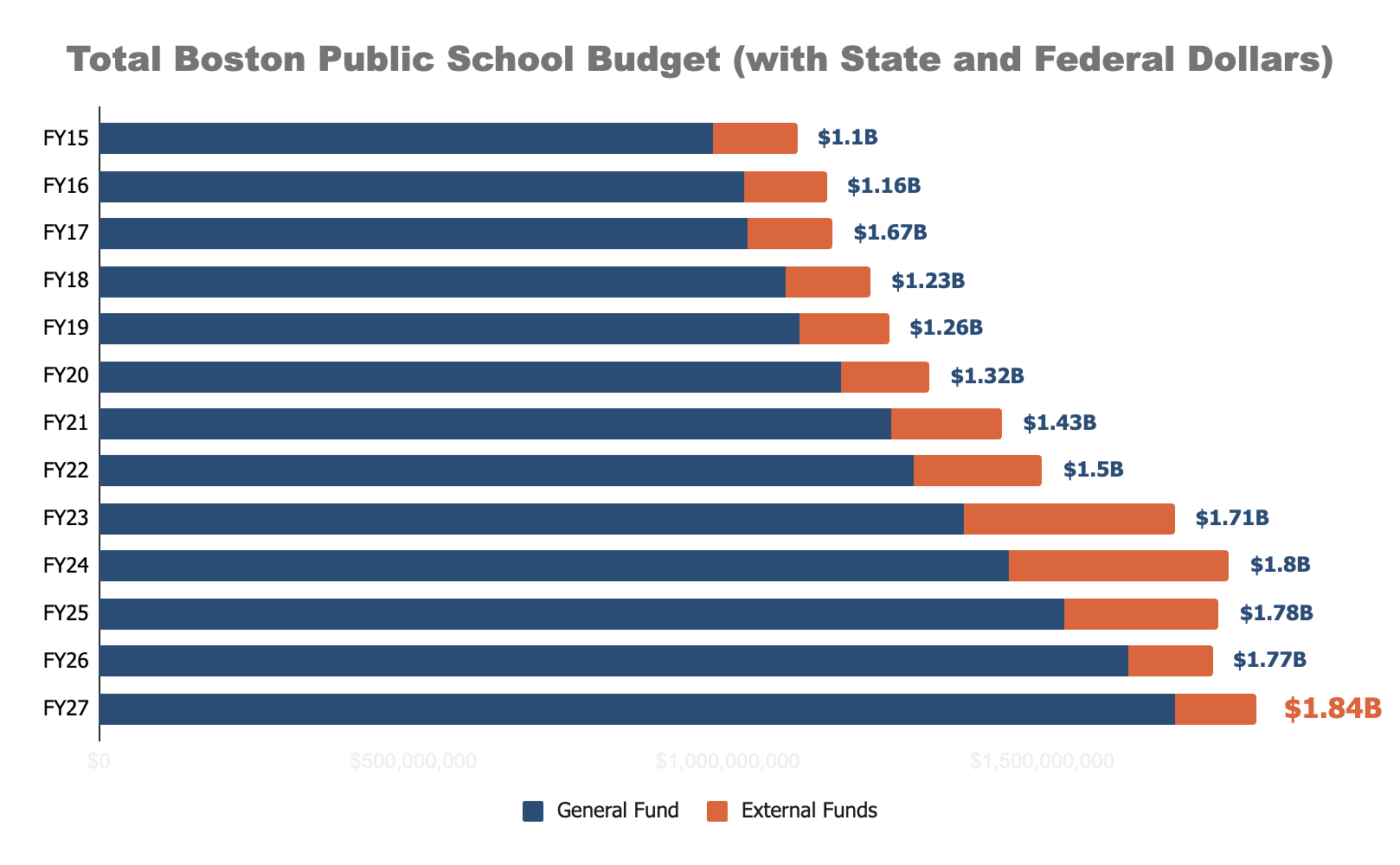
$1.84B surpasses pandemic era school funding, which was once conceived as a one-time bump. The increase since 2019 is north of 30%, even if you account for inflation.
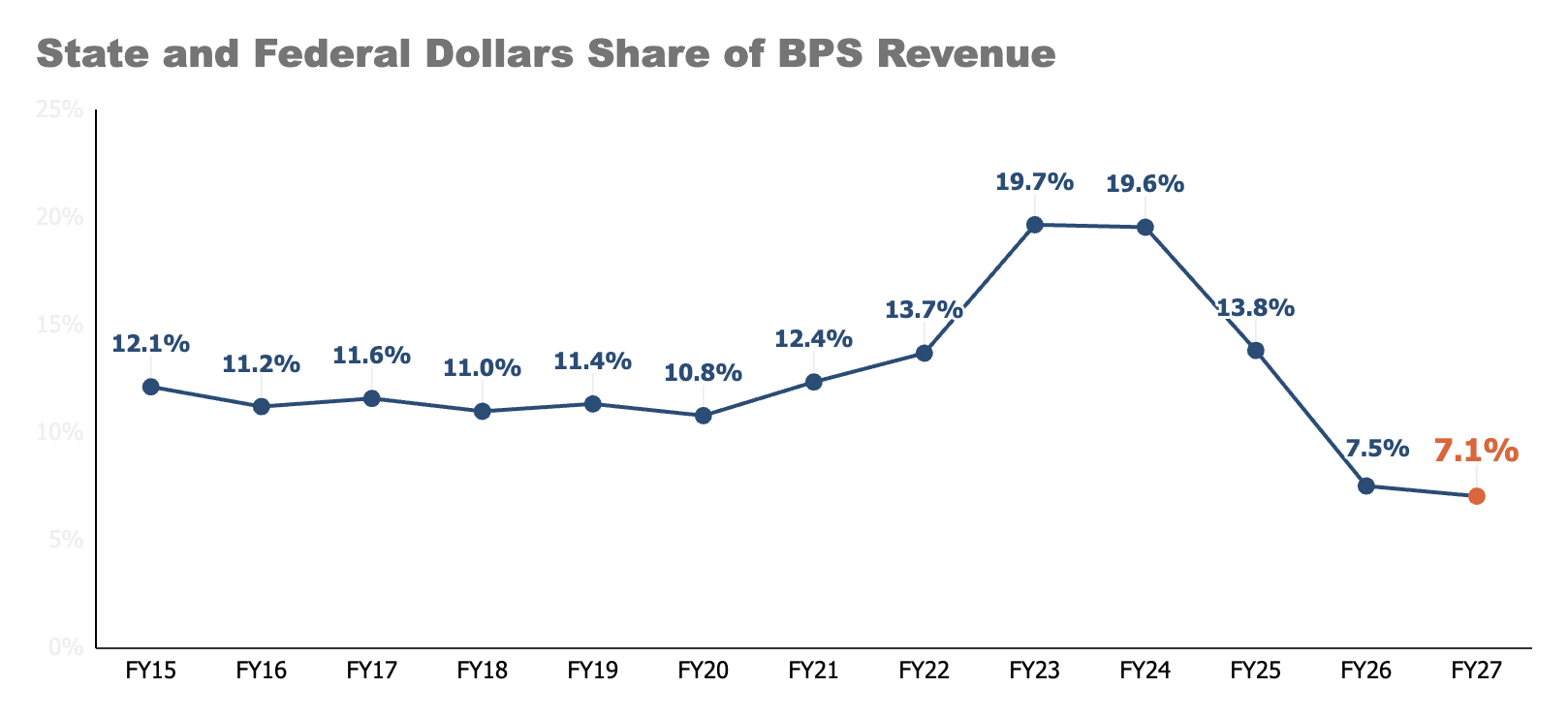
More money is going into the BPS budget, but proportionally a lot of less of it is state and federal dollars.
Why? Because of the Trump Administration’s attacks on the Department of Education and random withholding of funds?
No, it is because BPS has fewer children. State and federal funding is formulaic, based on the number of kids in a district (and its demographics). Given that BPS has lost one out of eight pupils since 2019, it should be no surprise that state and federal funding - aside from stimulus years - has declined.
This coming year, BPS will receive less external revenue than it did in 2015.
Who picks up the balance? The city, which has increased its funding for BPS by +53% (not adjusted for inflation) since the pandemic. This revenue reality creates a trade-off: the overall city budget must keep increasing to keep pace, or pull money from police, fire, streets, parks or other city services to make BPS whole. Based on early budget communication, the former seems unlikely.
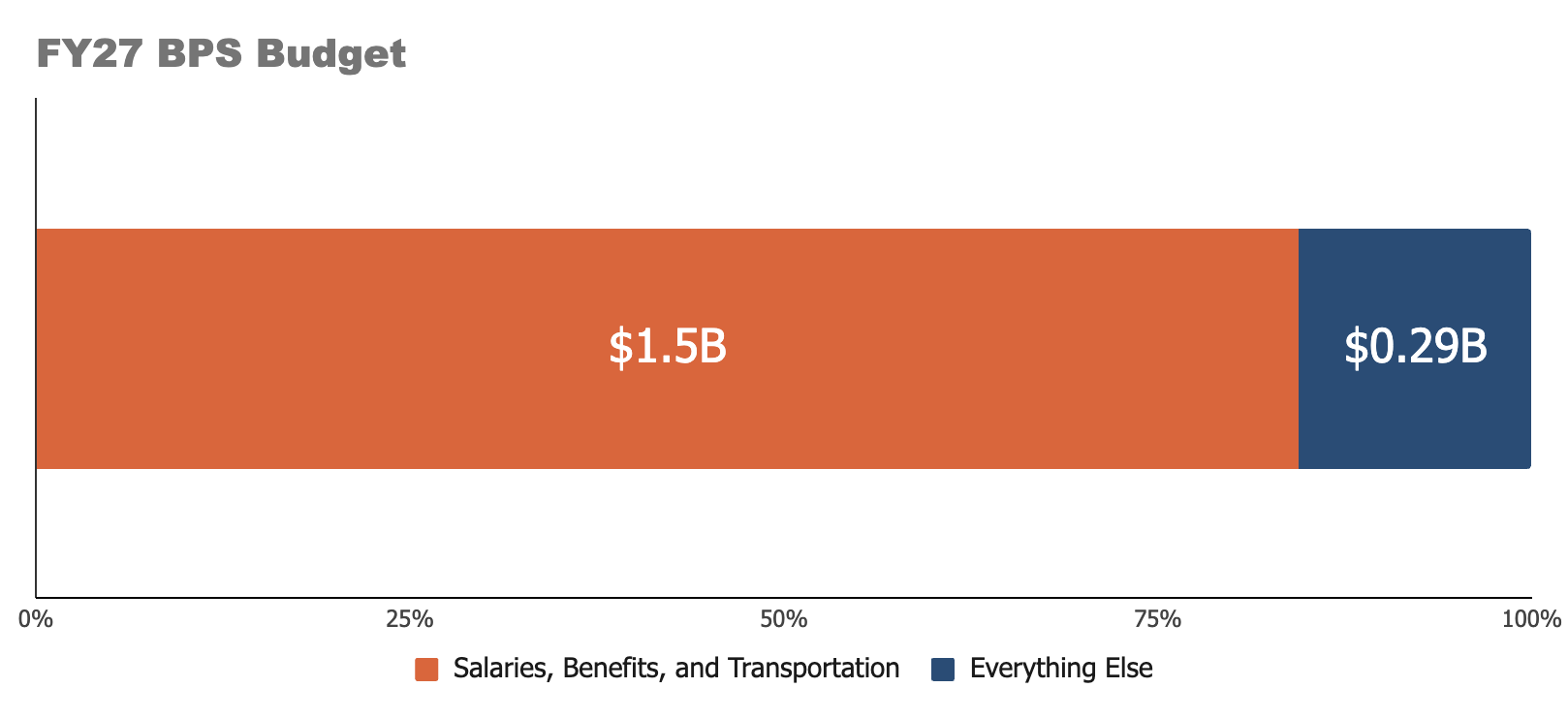
There is very little that can be done on the spending side. Nearly 85 cents of each BPS dollar is tied up in people and buses, making dollars already tight for supplies, books, etc.
Much of these costs are largely out of the control of the district. Collective bargaining agreements are negotiated with Boston School Committee signing off, but are ultimately approved by the City Council and often championed by the Mayor.
Health care cost increases are being felt everywhere, and with a lot of employees and generous benefits, school districts are particularly vulnerable. In BPS, employee benefits increased by 23% this year.
There is an annual tradition of talking tough on transportation, but those busing costs are driven by an assignment system enacted more than a decade ago.
So, with almost nothing left to cut, BPS has only one option left: headcount, which is why the reduction of ~550 staff members is on the table and in the headlines.
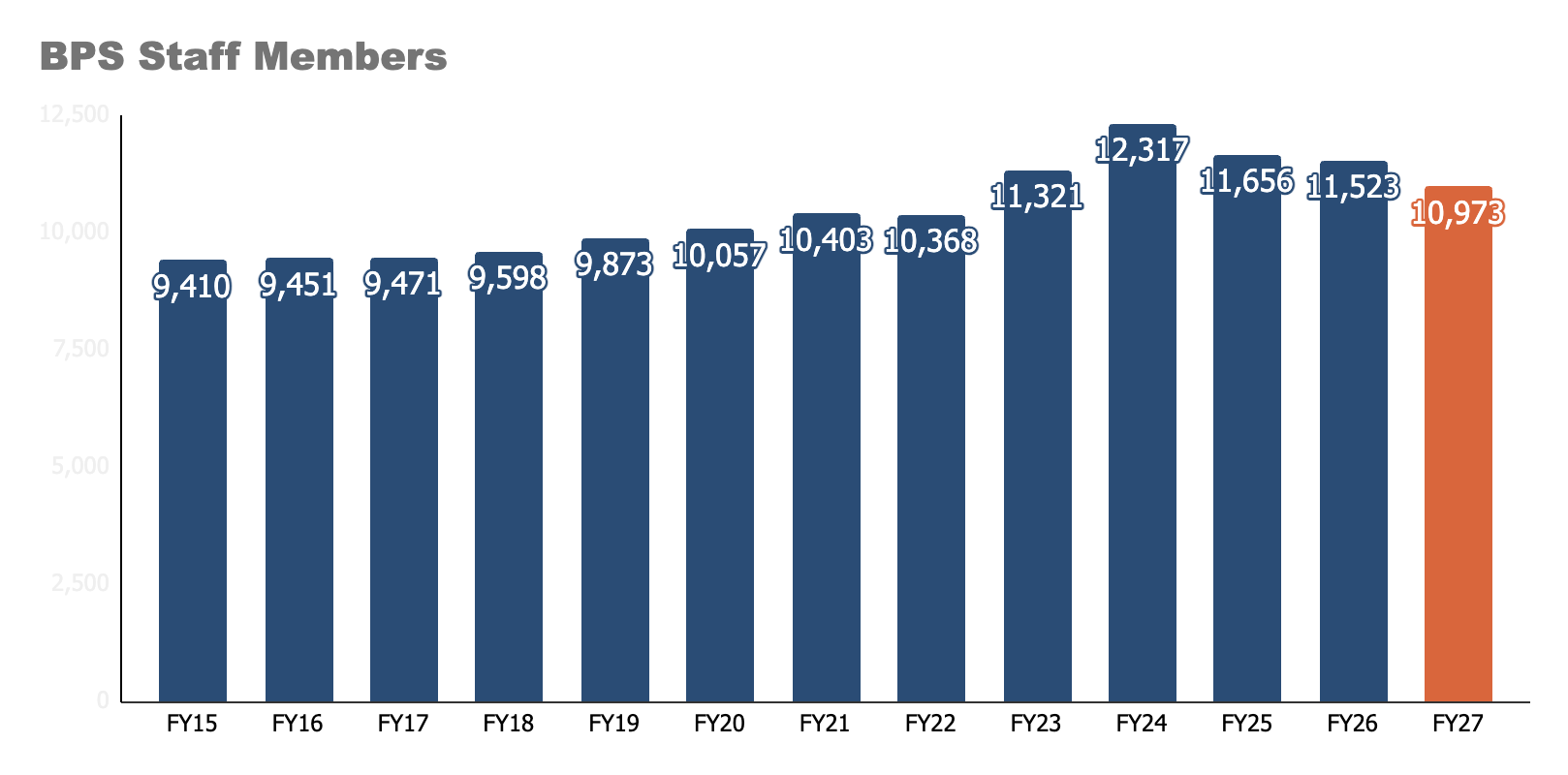
I chose the word “reduction” intentionally. The figure includes future retirees and hundreds of positions that just were never filled. But even with the ~160 positions that are actually cut, the proposed staffing level is significantly higher than 2019. There still is a big delta remaining in the tough math of more money, more staff, and fewer kids.
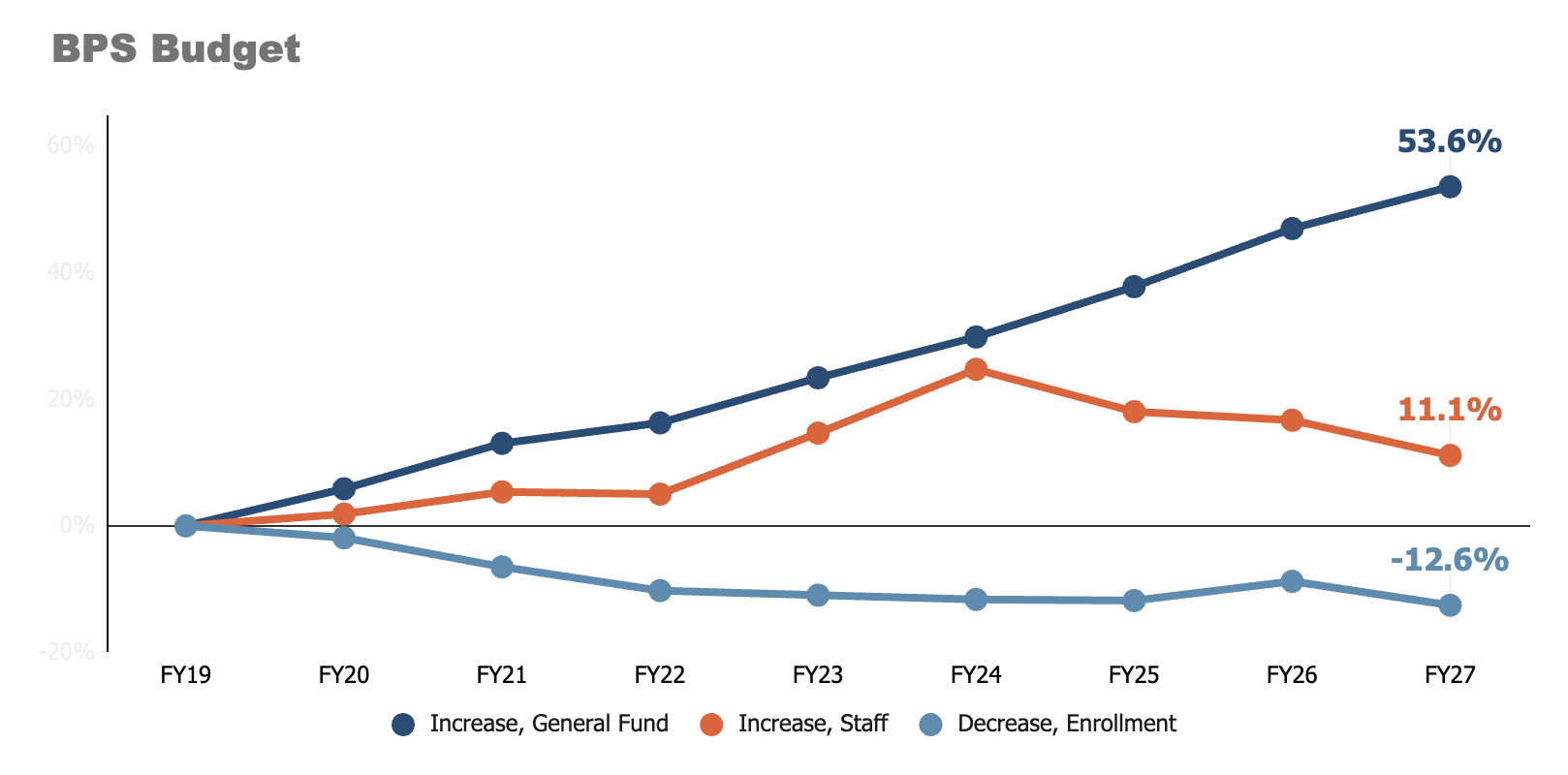
People are not losing their jobs because BPS does not have enough money.
People are losing their jobs because BPS is more expensive every year without the right number of schools, for the right number of kids, with the right number of educators, in the right places.
Until that is addressed, expect more years of larger budgets that provide less.
Schools
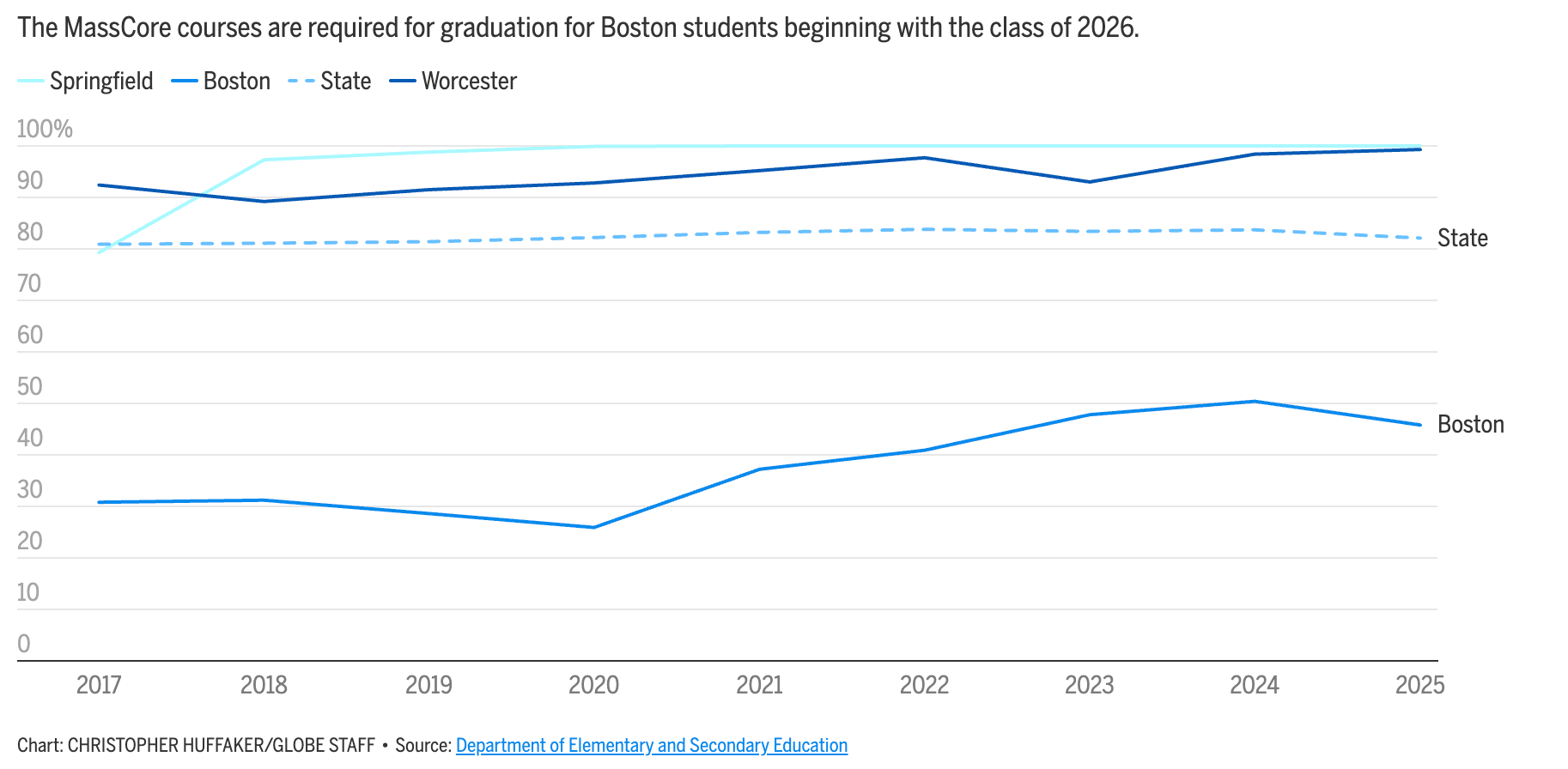
The initial budget presentation was not the only topic of Wednesday’s Boston School Committee (materials here). The district’s long, winding road to adopting MassCore - a state-recommended coursework for college and career readiness - will continue. Faced with 1 out of 3 BPS students possibly not qualifying for graduation, the requirement will be waived.
Can increased voluntary non-profit taxes plug a hole in municipal finances? “Fair share” revenue appears to be doing that at the state level for education.
BPS is not alone in its budget issues. Scan Massachusetts towns’ budgets and the phrase “bumpy” is thrown around quite a bit. On the west coast, teachers are gearing up to strike.
Boston and Massachusetts each now have executive orders that seek to limit ICE activities in schools.
While there are research and philosophical debate on whether or not snow days are bad, we can all agree the 7 days off in Prince George’s County in MD is pretty extreme.
Counterpoint on the costs of closing schools.
An alternative to school cell phone bans.
The headline says it all: edtech is profitable; it is also mostly useless.
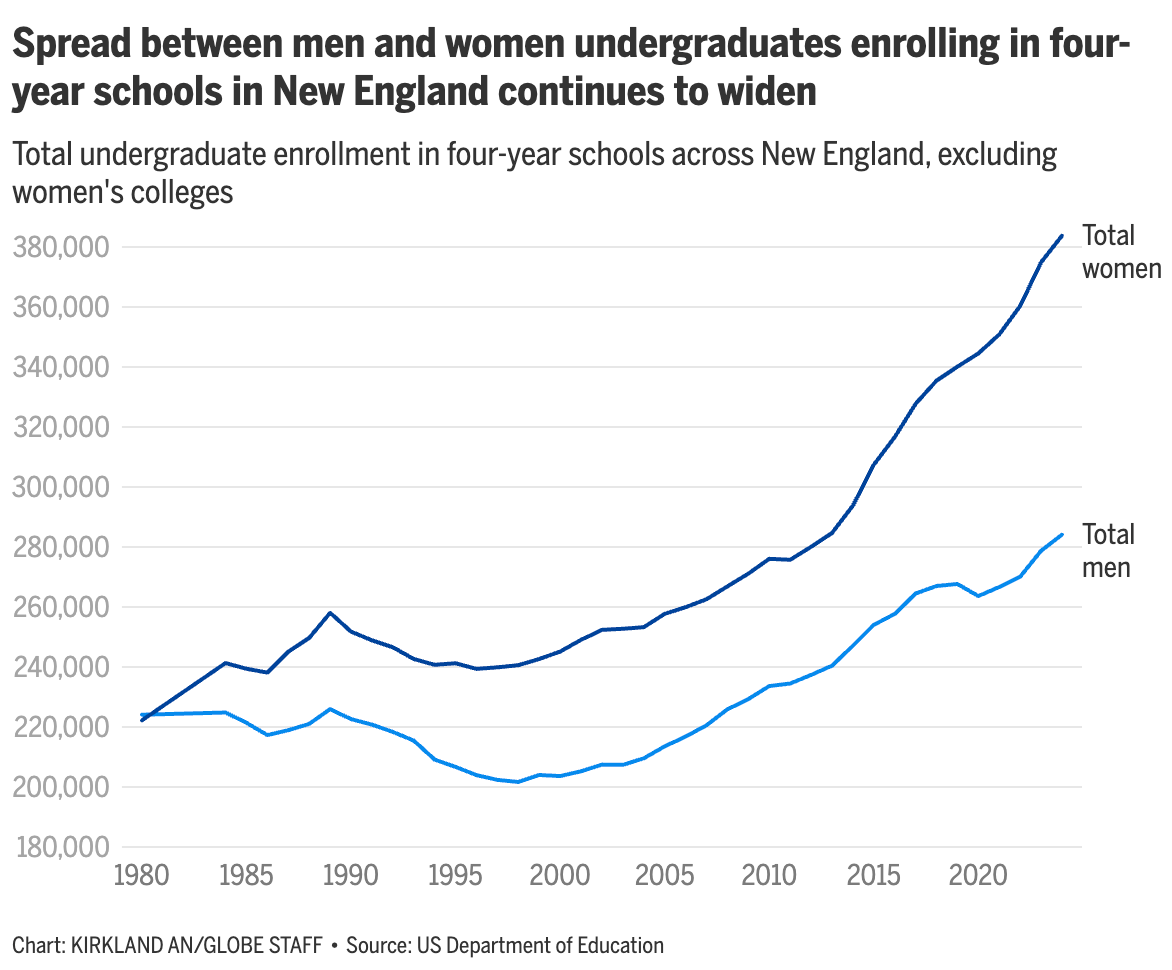
If there are fewer boys applying to and attending traditional 4-year colleges, does that then make it easier for them to get in?
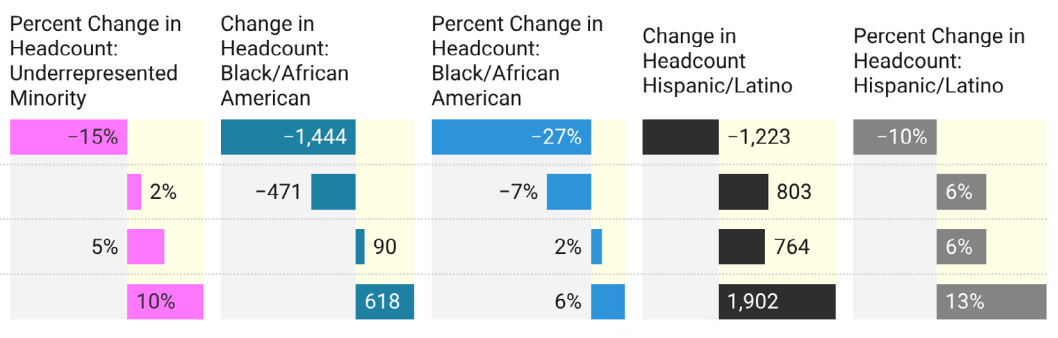
Early data indicates changes in college admission diversity policies have made it harder for Black and Latino students to enroll in selective schools.
I don’t have a graph for this, but the amount of money Trump demands from Harvard seems to be inversely related to how low his popularity is at the time.
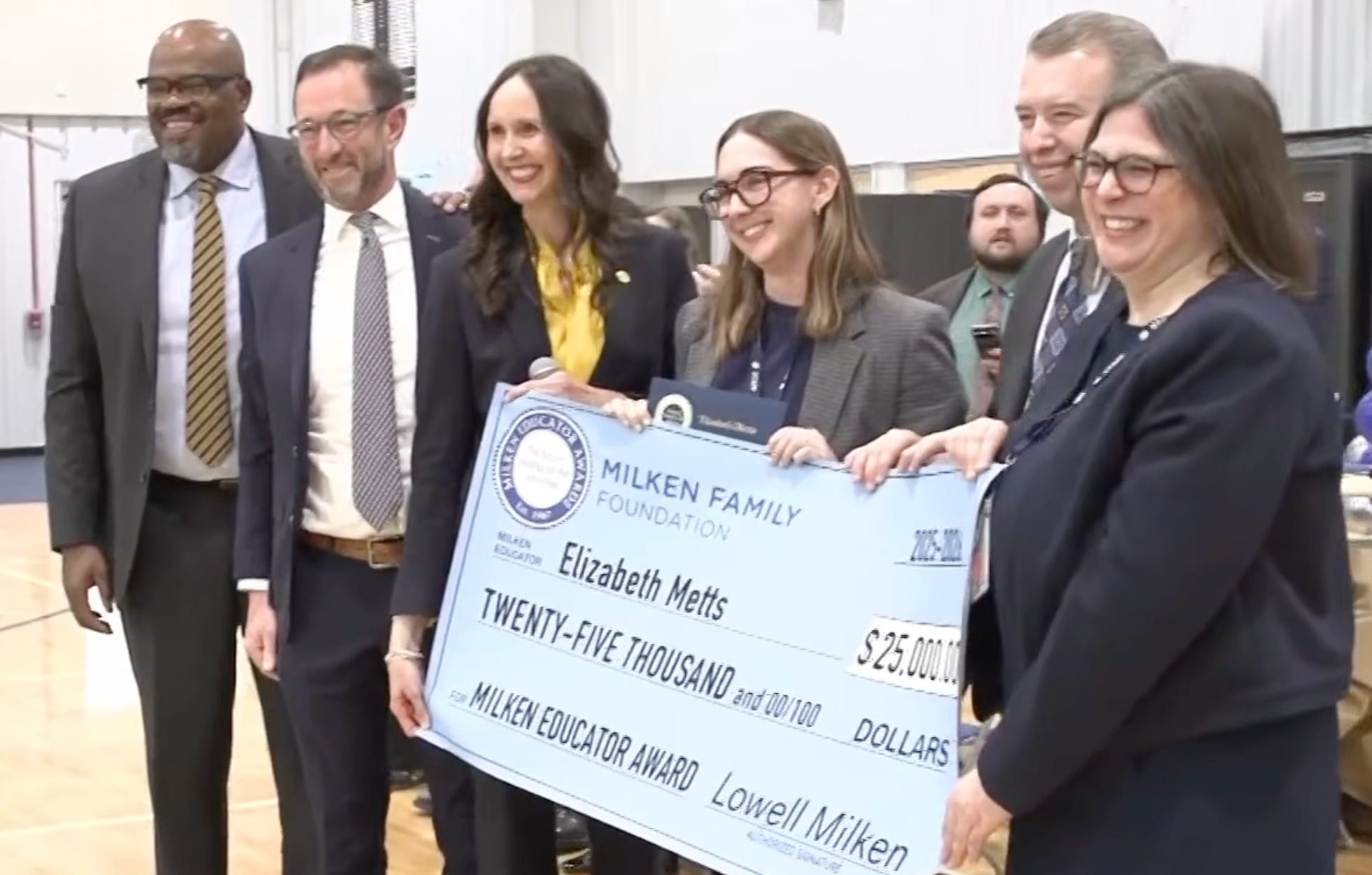
Take 53 seconds to watch Excel Academy teacher Elizabeth Metts win the annual Milken Award.