

Boston Focus, 3.6.26
Massachusetts AP results are in a league of their own

Big week of headlines congratulating Massachusetts for again leading the country on Advanced Placement (AP) tests.

As I have written before, AP tests are no joke. Even with cut scores changing, APs are a rare standardized assessment that gets buy-in from students, families, educators, school leaders, and policymakers. Made and graded by expert educators, there may be quibbles about curriculum choices or what value some schools ascribe to them, but there is no question that the tests are hard.
So, the fact that Massachusetts students led the nation and posted the highest scores ever is a big accomplishment.
I just don’t think it is fair to claim this is an accomplishment for Massachusetts.
APs are already limited as a general metric because not everyone takes them. 106 of the 390 Massachusetts districts and charter schools didn’t report any AP results last year. Fewer than a quarter of all public high school students in Massachusetts took an AP test last year.
On average, a student took two AP tests last year. Of the ~130,000 total tests taken, most came from a school serving a high needs population lower than the state average (58.8%).
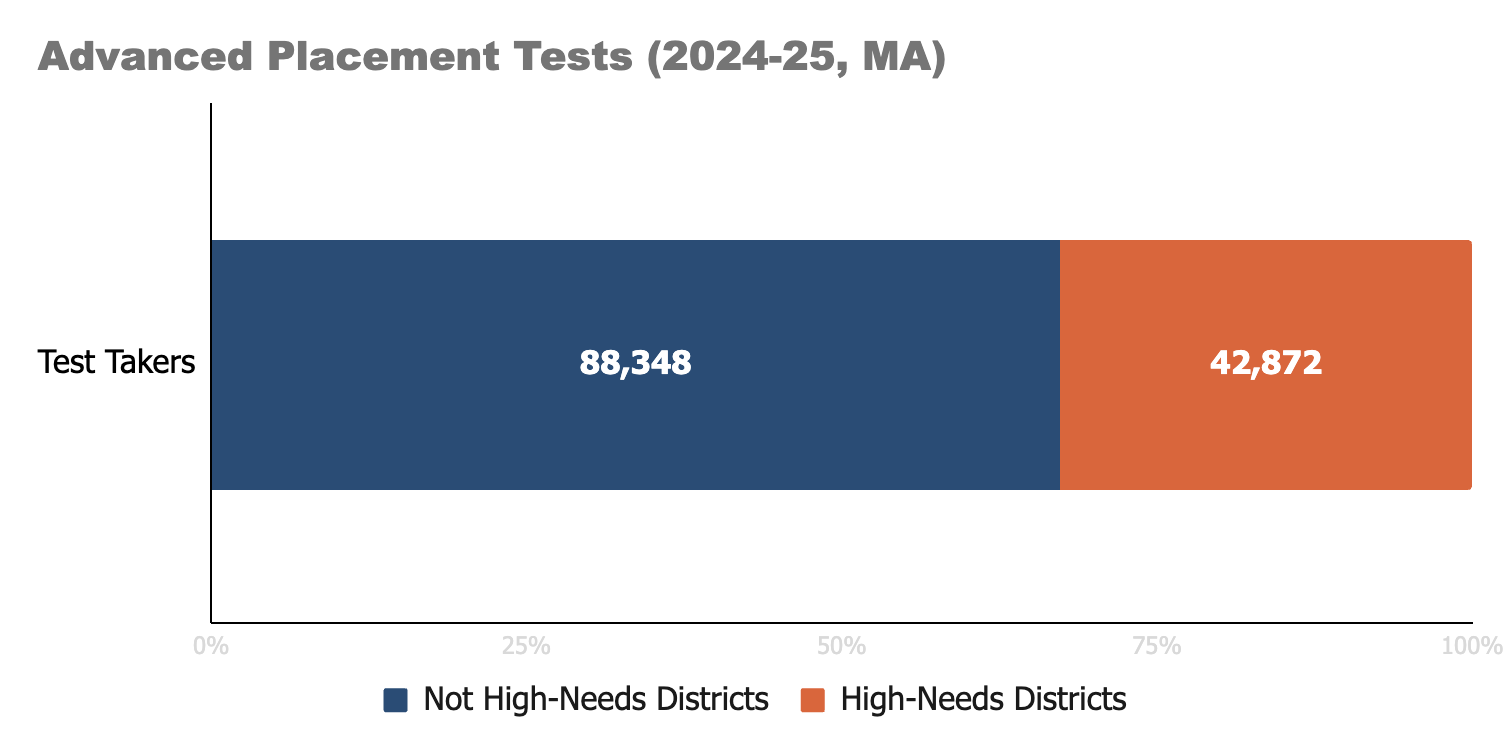
So we are starting with a small, skewed sample for participation.
Scoring skews it further. Many more kids in non high-needs school districts also pass AP exams.
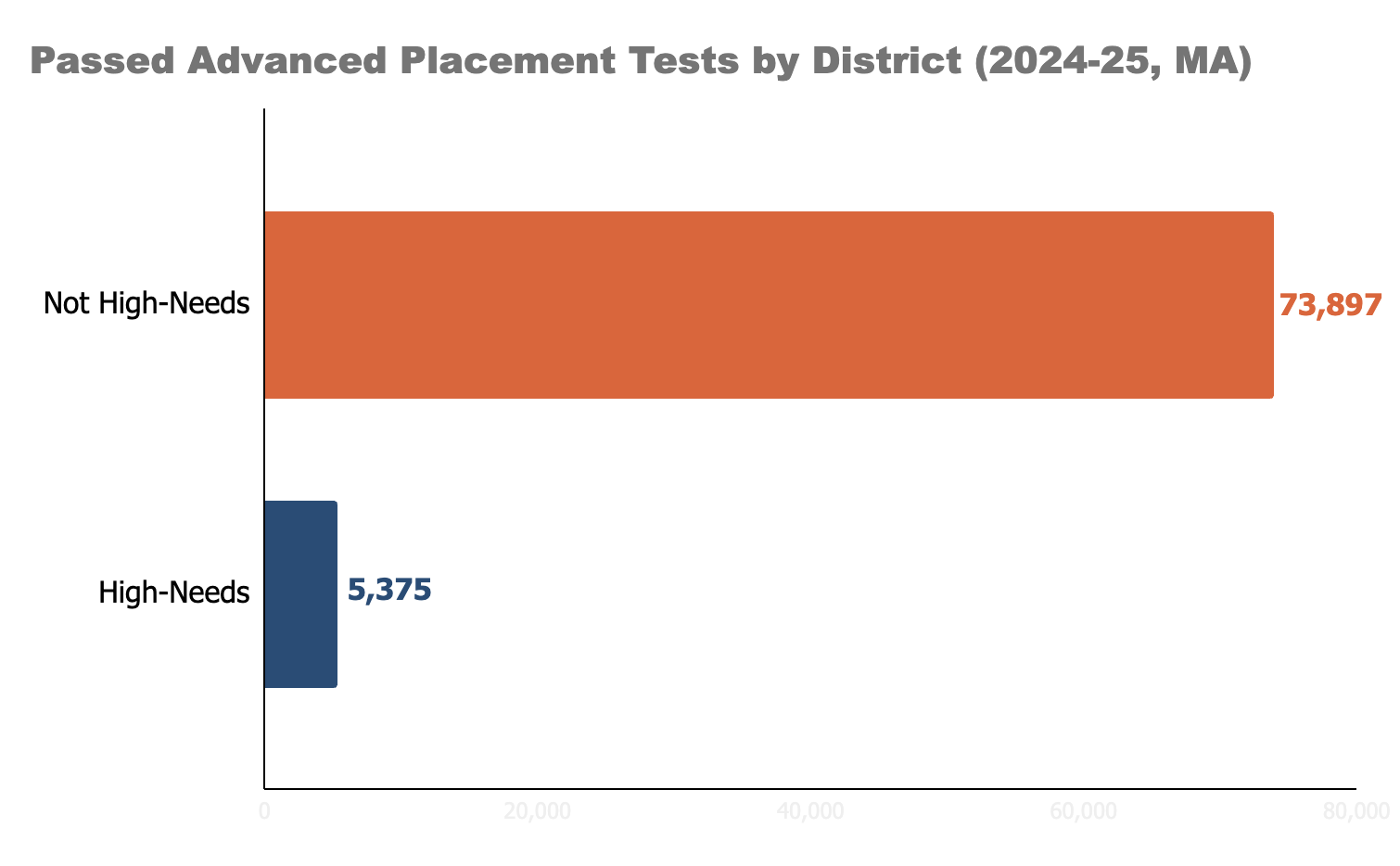
An outstanding +70% of tests passed is masking a +70 point gap.

There is one remaining, big asterisk. Boston’s exam schools are included in the high needs number, and those +4,200 passed tests account for 80% of the high needs set.
If you back out the Boston exam school students, the gap now reaches 80 points.

In a state with about 280,000 public high schools students, ~1,100 passed AP exams in non-selective, high needs schools should not prompt celebration. It should bring pause.
Pandemic recovery and the most recent NAEP results better revealed that public schools in Massachusetts have two clear tracks. These AP results are another confirming data point.
This takes nothing away from the talented educators and hardworking students who achieved at such high levels last spring. It just does nothing for the many more students who didn’t pass or even sit for an AP exam.
This week’s results are another chapter in a well-documented story: Massachusetts education is #1.
For some.
Schools
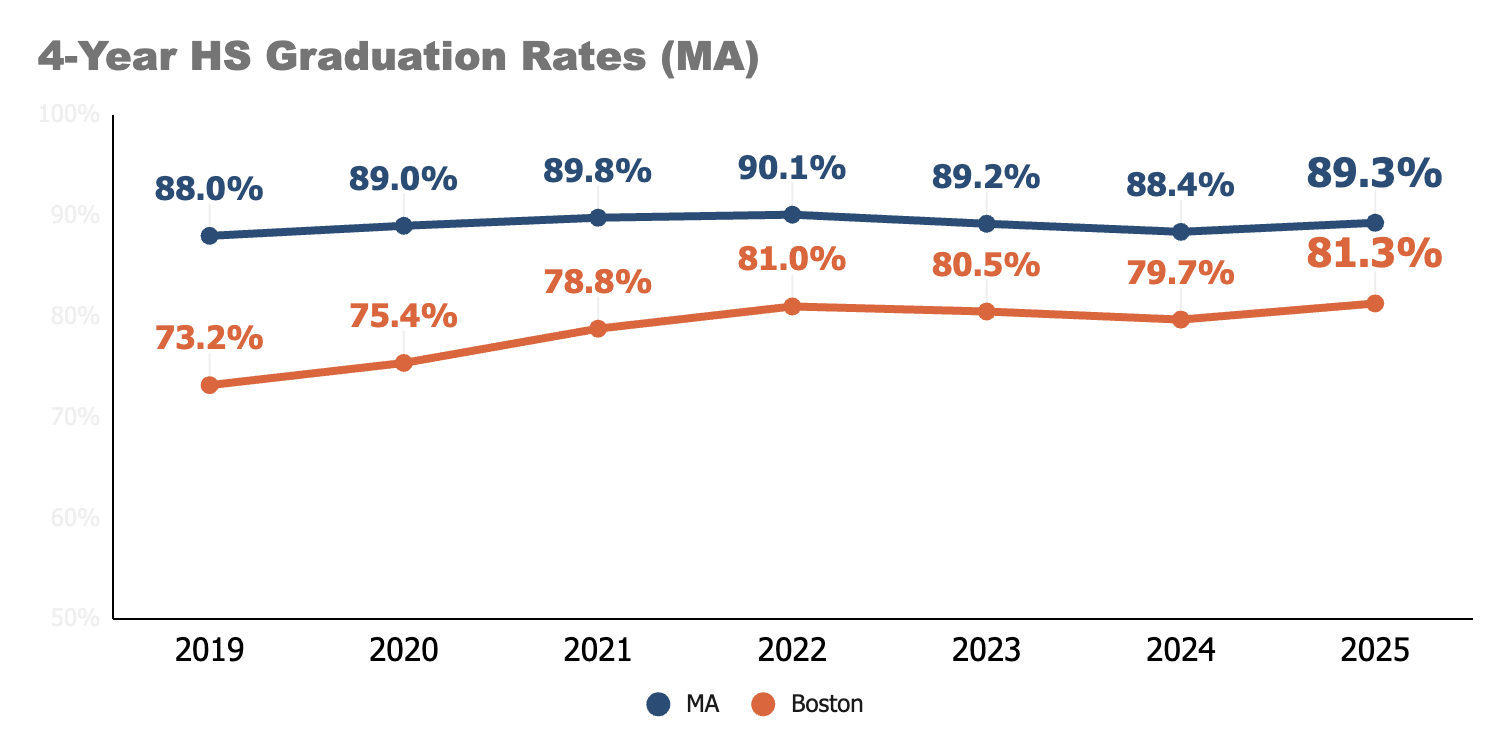
High school graduation data was updated last night. After two years of decline, Boston and MA rates rose in 2025. More to come on this.
The Boston bus driver who ran over and killed a student has been indicted.
Some interesting Boston neighborhood analysis in this Boston Globe piece.

Lots of nuggets in the hovers. West Roxbury somehow has both the youngest and oldest population in the city: more than 4 in 10 residents are in school or at retirement age. Meanwhile, ~90% of Allston is aged 19-64. Despite being one of the smallest neighborhood populations, the Seaport has nearly as many high-wage earners as all of Mattapan. Etc.
Kindergarten enrollment declines - likely due to immigration - will create budget issues not just this year, but the twelve that follow.
Have about 20 minutes in the car or on the T? Listen to this week’s Codcast and you will understand what is universal - and not universal - in PreK in Massachusetts.
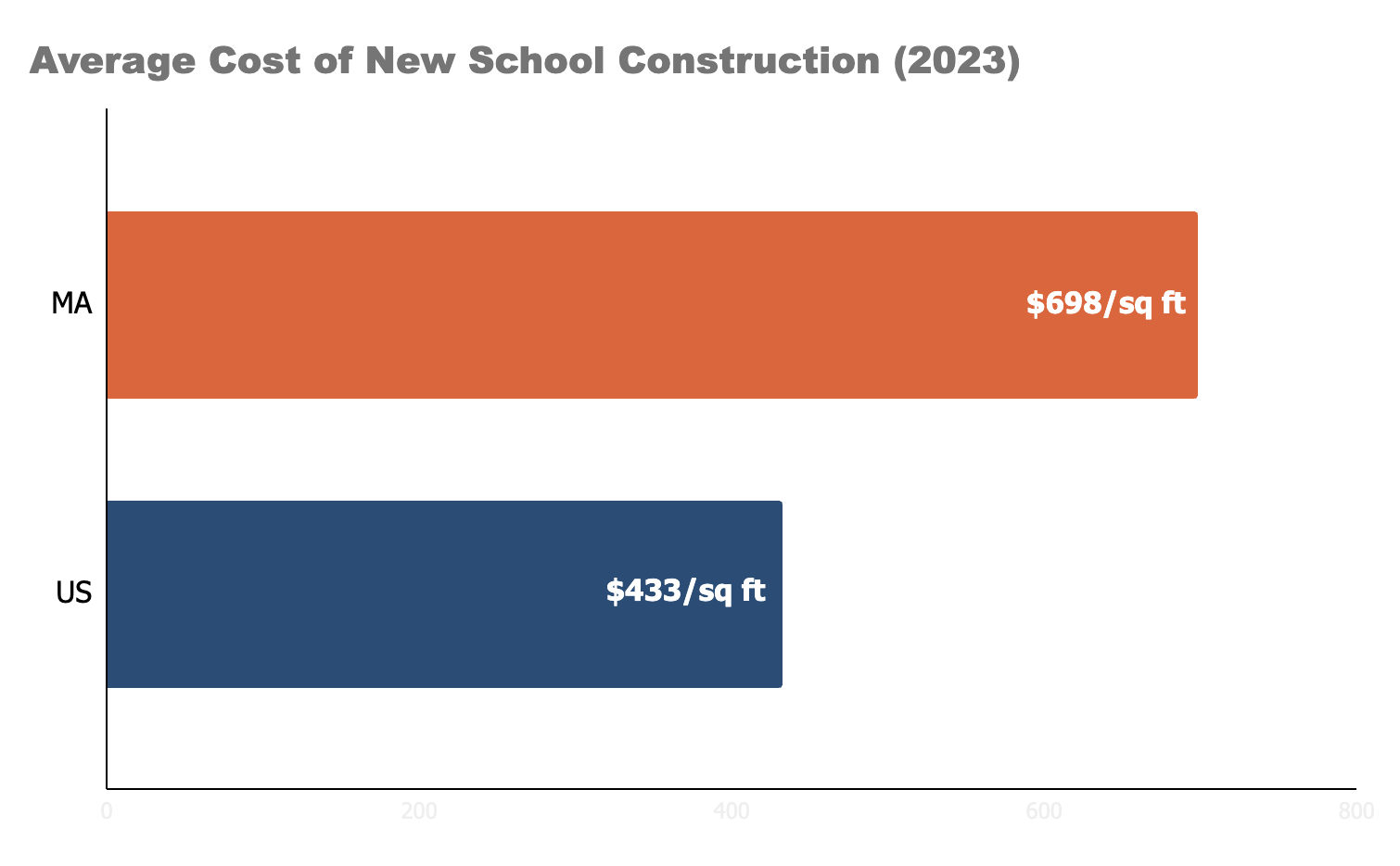
School construction has become much more expensive in the past five years.
And extra expensive in Massachusetts.
Pennsylvania Governor (and Presidential hopeful) Josh Shapiro double-downed on a bell-to-bell cell phone ban in schools. As Massachusetts considers its own policy, a reminder that Yondr pouches won’t be enough.
Tim Daly argues that even with “good” policies, we may just need to expect kids to try harder in school. What does that actually look like? For the uninitiated, here is a profile of the classroom teacher as a “warm demander.”
A deep dive into the politics of blue states opting into the new federal tax credit for private schools/out of school time. Illinois is the case study, but similar conversations are quieting happening in Massachusetts right now.
Other Matters
Perhaps rue revenue lost revenue by not offering bets on Iranian airstrikes, DraftKings is attempting to expand into prediction markets.
Or are they are expanding to cover their legal bills and losses? Yesterday, a Massachusetts Superior Court cleared the way for a class action lawsuit against DraftKings to move to trial.
As a back-up, online sports gambling companies are still pushing a bill to allow them to expand as virtual casinos (“iGaming”). A legislative deadline is 10 days out, but the proposal could appear in a later economic bill.
And the recognition that libraries serve a gathering/community function in a more pronounced way with the digitization of reading.
Interesting to see where the new public libraries have been sited in relation to density of children, particularly low in come children. Shiny beautiful new library in Allston! I don't begrudge anyone a new library building, but there should be a modicum of equity.
Uphams Corner Library branch has the dubious distinction of poorest condition in the system. The city issued a report in 1954 - yes, 1954! - that called for its renovation. Come visit if you have never been. The children's room is down a flight of stairs and then more stairs to get into the former swimming pool which now houses the children's collection. No elevator so good luck with a stroller or if handicapped. The hopeful news is that we are supposed to get a new library in Uphams Corner in the "near future". Can anyone tell us when?