Boston Focus, 5.22.26
More high school grads, but fewer undergrads?

I wanted better news this week.
New state data on college enrollment for Massachusetts public school graduates did not deliver it.
Instead, the lowest percentage…
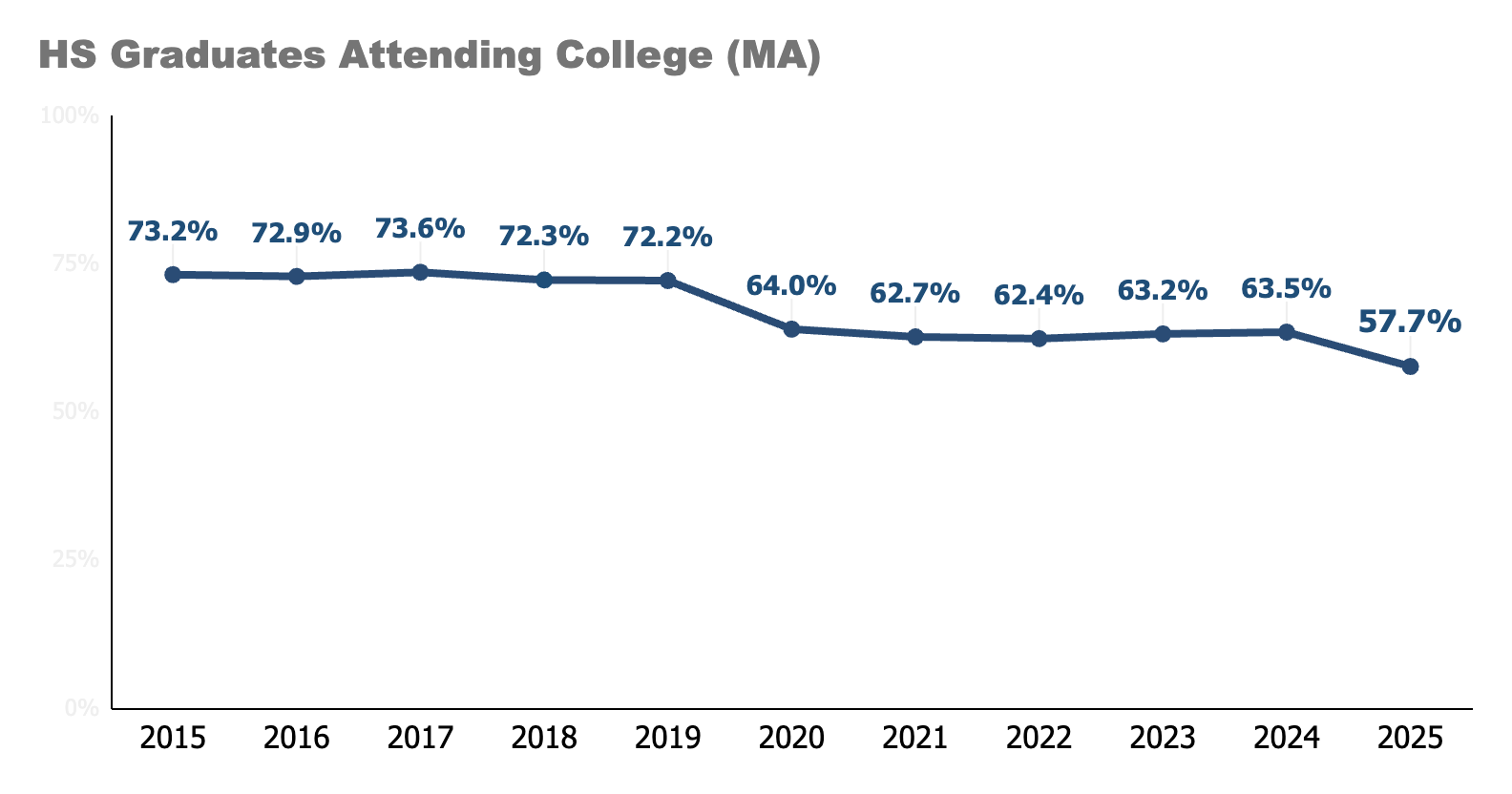
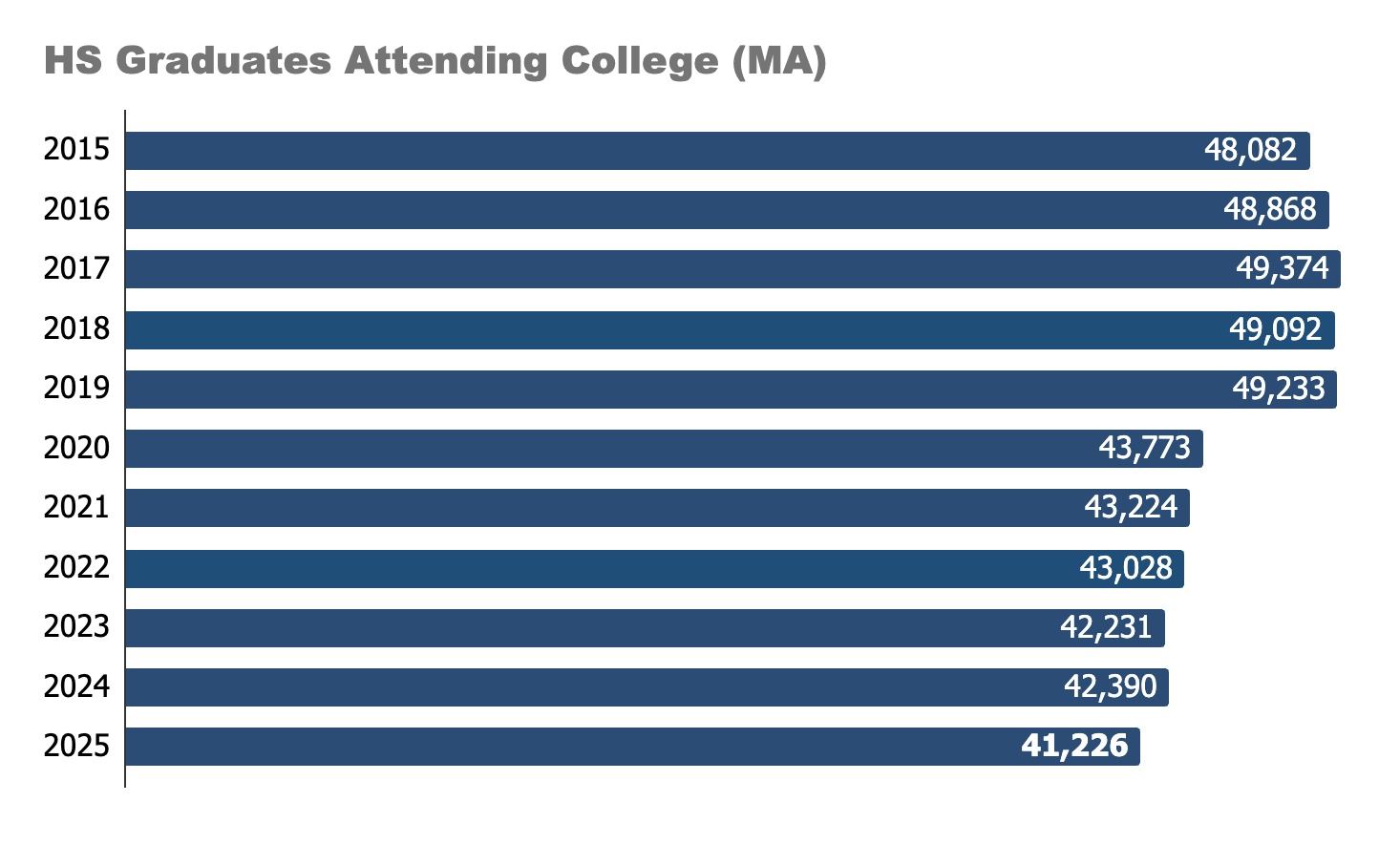
And fewest students since the data was first collected a decade ago.
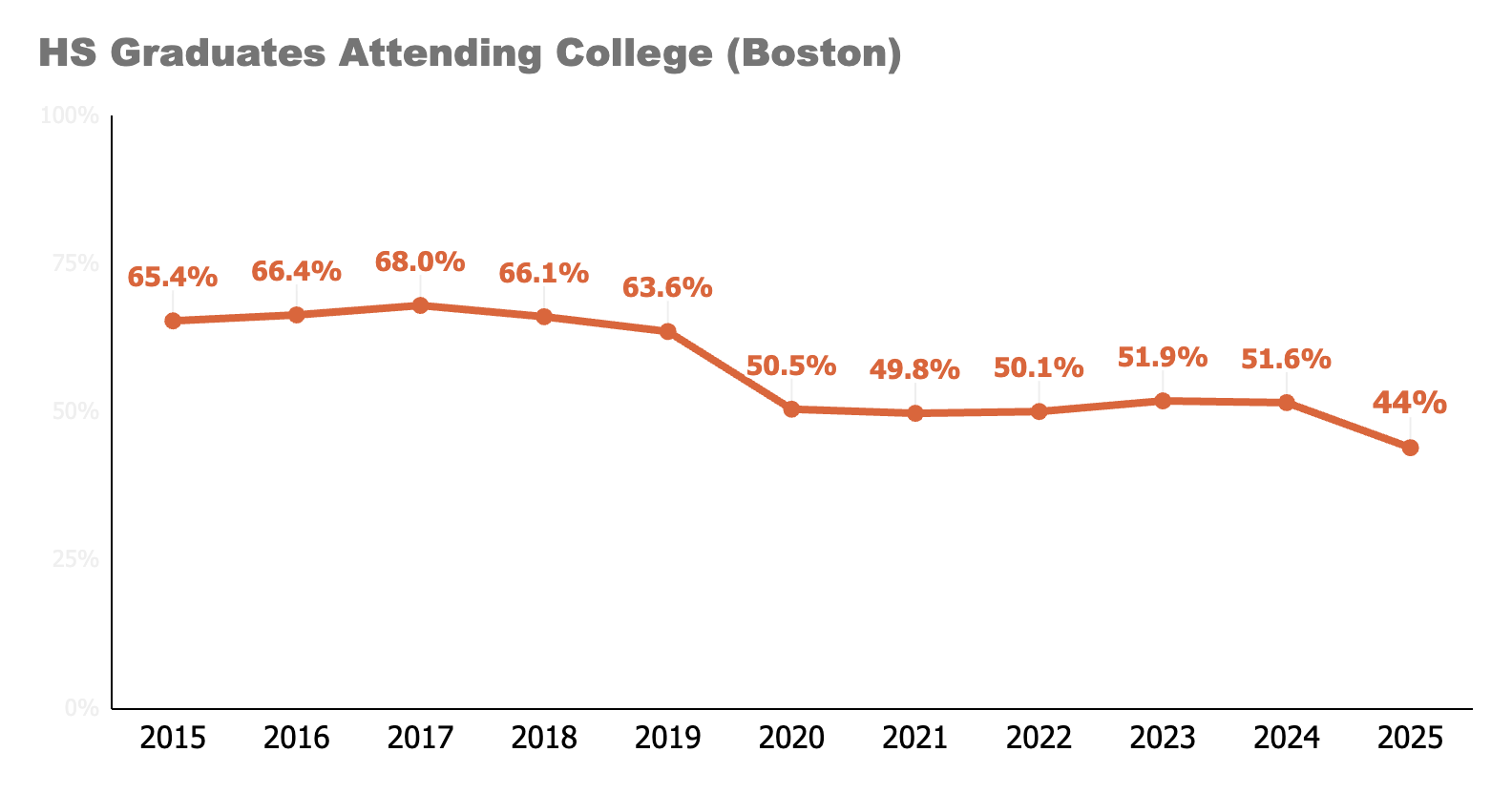
Same pattern for Boston Public Schools.
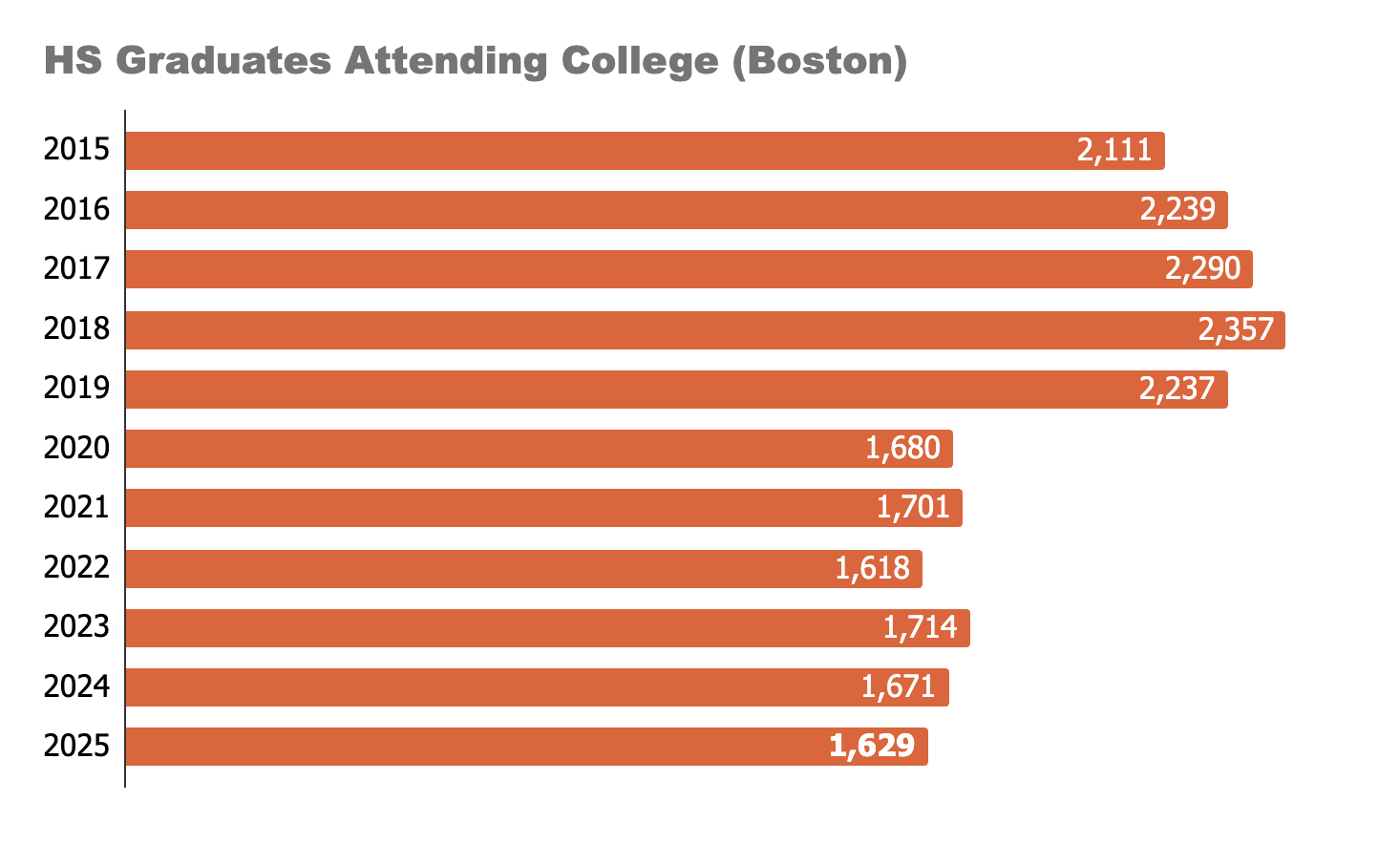
I got a lot of questions - and pushback - for my characterization of the Massachusetts Education Scorecard results. And I expect the same again.
I am ready for comments about how parents and the field have evolved to understand “college isn’t for everyone” (while noting those commenting hold Bachelor’s degrees). I am ready to hear about how high school needs to be “reimagined,” and if we just had new models and more engagement then students would do better. I am ready to hear that the higher education brand is damaged, and people are just opting out (just look at the price tags!). I am ready to hear these rates are just a function of the pandemic and/or general enrollment decline.
All fair points, none of which address the most glaring issue: while college attendance fell like a stone, high school graduation rates soared to record highs.
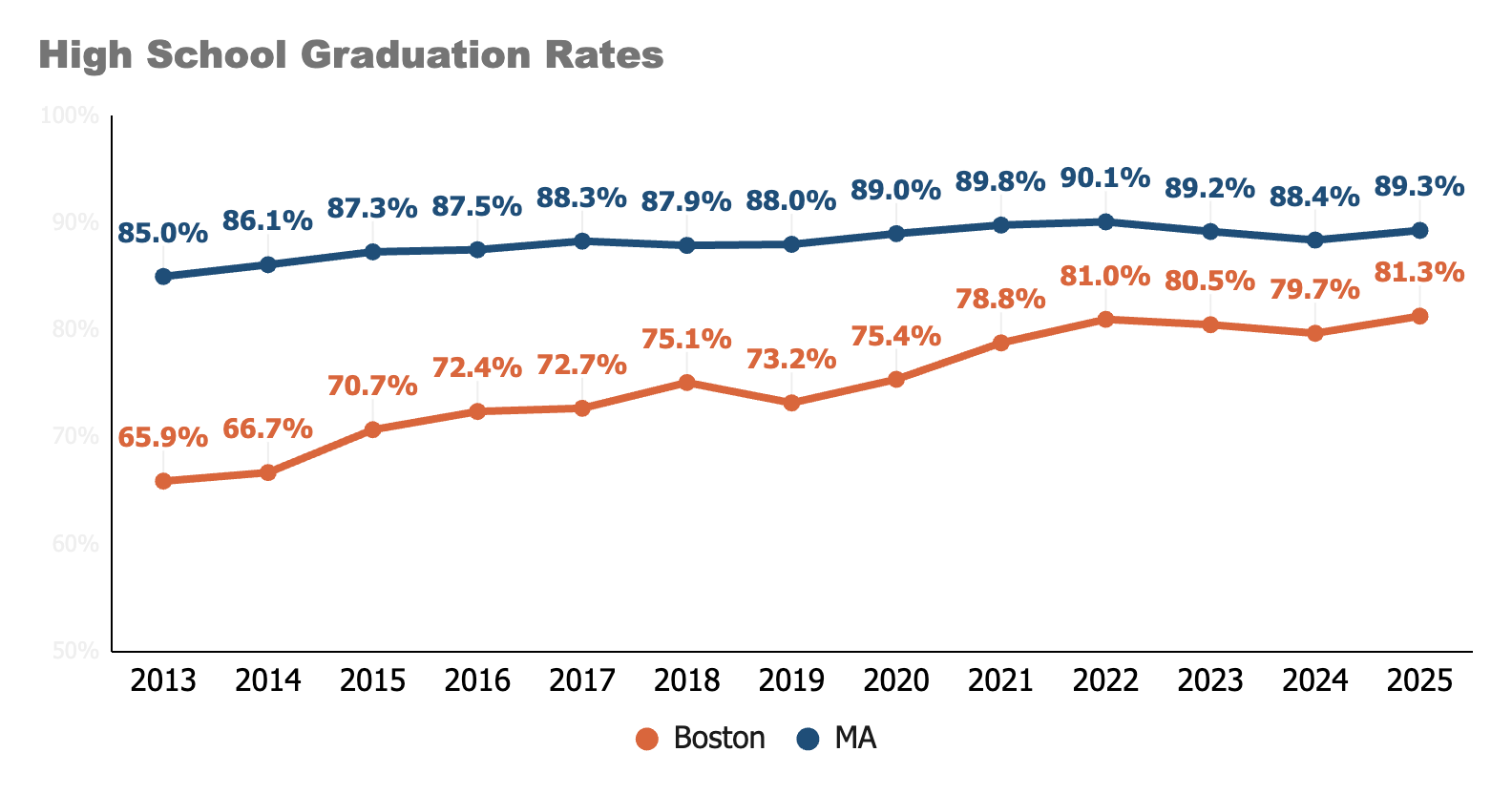
In fact, just this past year, the number of high school graduates spiked to record levels across Massachusetts (+6.8%) and in Boston (+12.5%).
It would be hard to find better evidence in support of a rigorous, uniform high school graduation standard. Without setting and holding a high bar - paired with high supports - we will see more and more high school seniors walking across stages, with fewer of them actually ready and willing to enroll in college.
It wasn’t on the docket, but the news of this week’s Board of Elementary and Secondary Education meeting was Commissioner Martinez’s remarks indicating the recommendations for new statewide graduation standards are imminent and likely would include assessments.
There are many factors that contribute to students getting to and through college. Some are not in the control of systems and schools, but many are. High school graduation standards - and real accountability around them - is one of the cases where the state has a clear lane and a compelling case to act.
Let’s hope it does.
Schools
It was really hot in Boston schools this week. This oped was equally scorching.
The Board of Elementary and Secondary Education met this week. Full materials here, summary here.
Will school cell phone legislation move on Beacon Hill? This screenshot exemplifies the mishmosh and costs of local control.
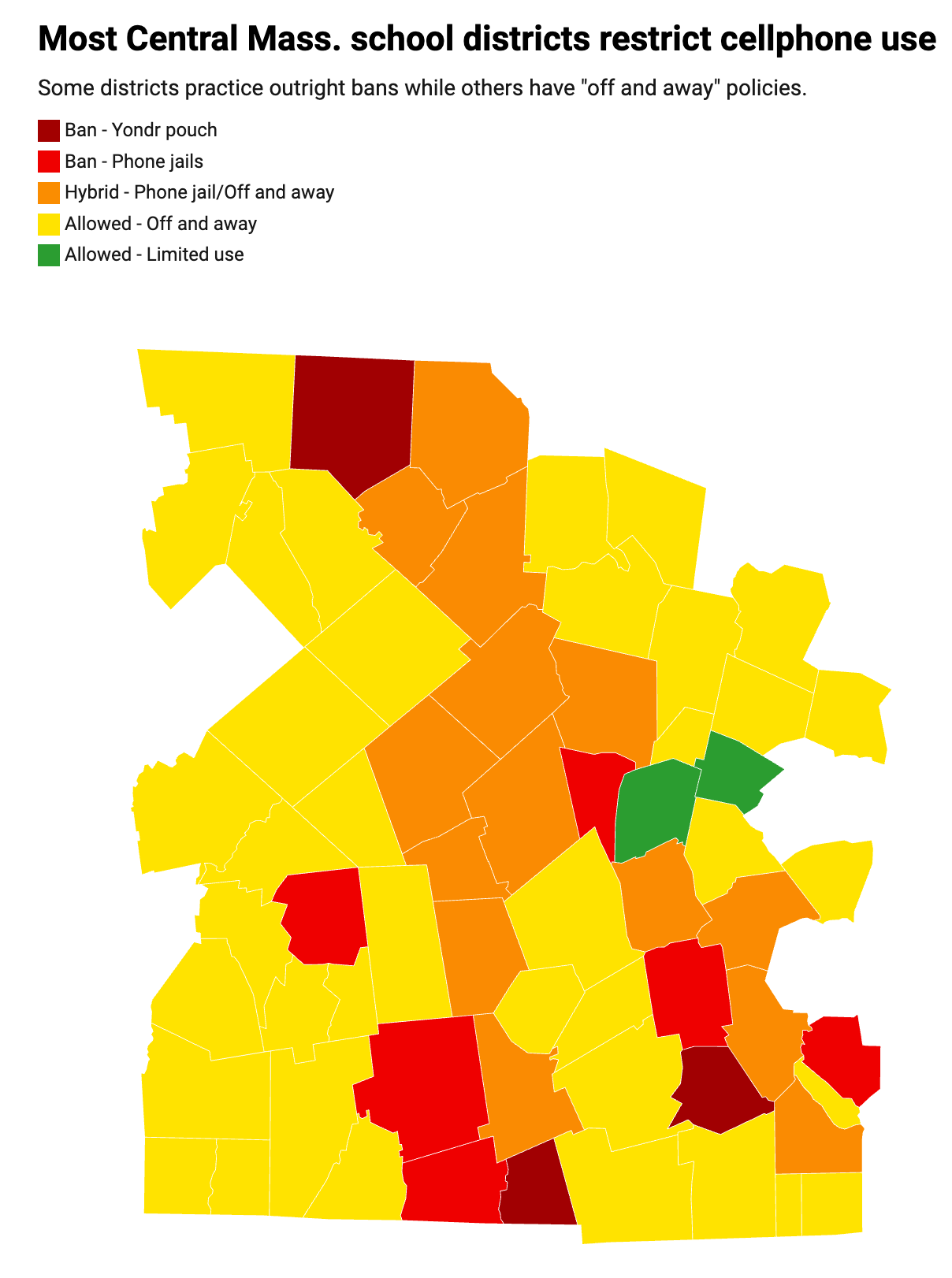
In Northborough no phones are allowed anywhere, but cross the border to Berlin and all screens are welcome?
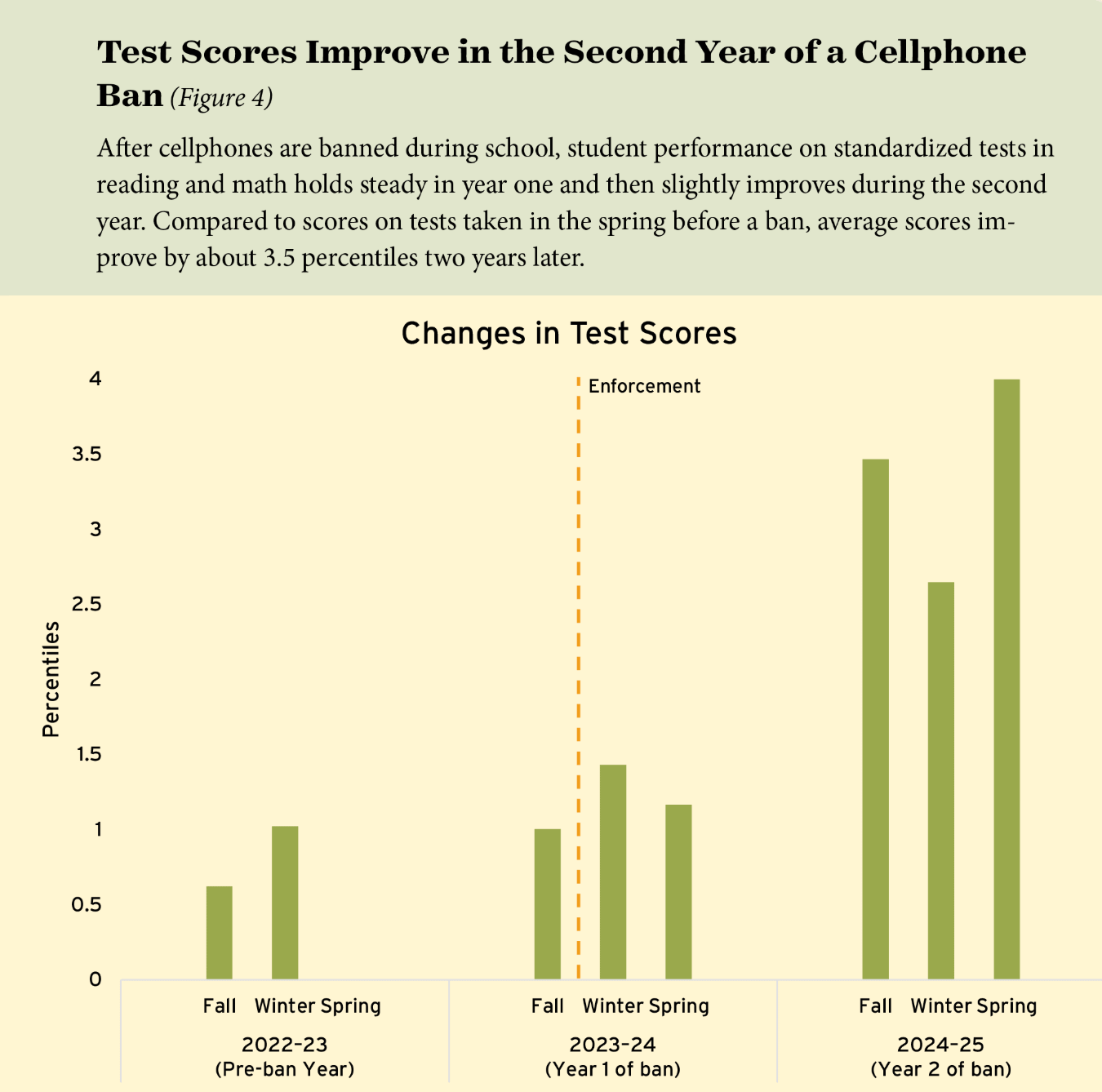
A more focused study in Florida makes stronger claims about the academic benefits of cell phone bans than recent coverage.
And what about the other pending bill on literacy instruction? Another study reveals the mishmosh and costs of local control: ⅓ of teachers report using discredited literacy instructional methods.
Not sure how far this lawsuit will go, but it is worth calling out how segregated Massachusetts schools are. +350 school districts for a state of our size is inefficient and exclusionary. As I have written before, in Massachusetts, property taxes and zoning codes are moats, masked as Toquevillean virtue.
It is true that recent enrollment decline has been driven in part by a decline of English language learners (and, as implied, immigration). But that elides the context that the rise - in number and identification - of English language learners has been boon for enrollment since that data was first published.
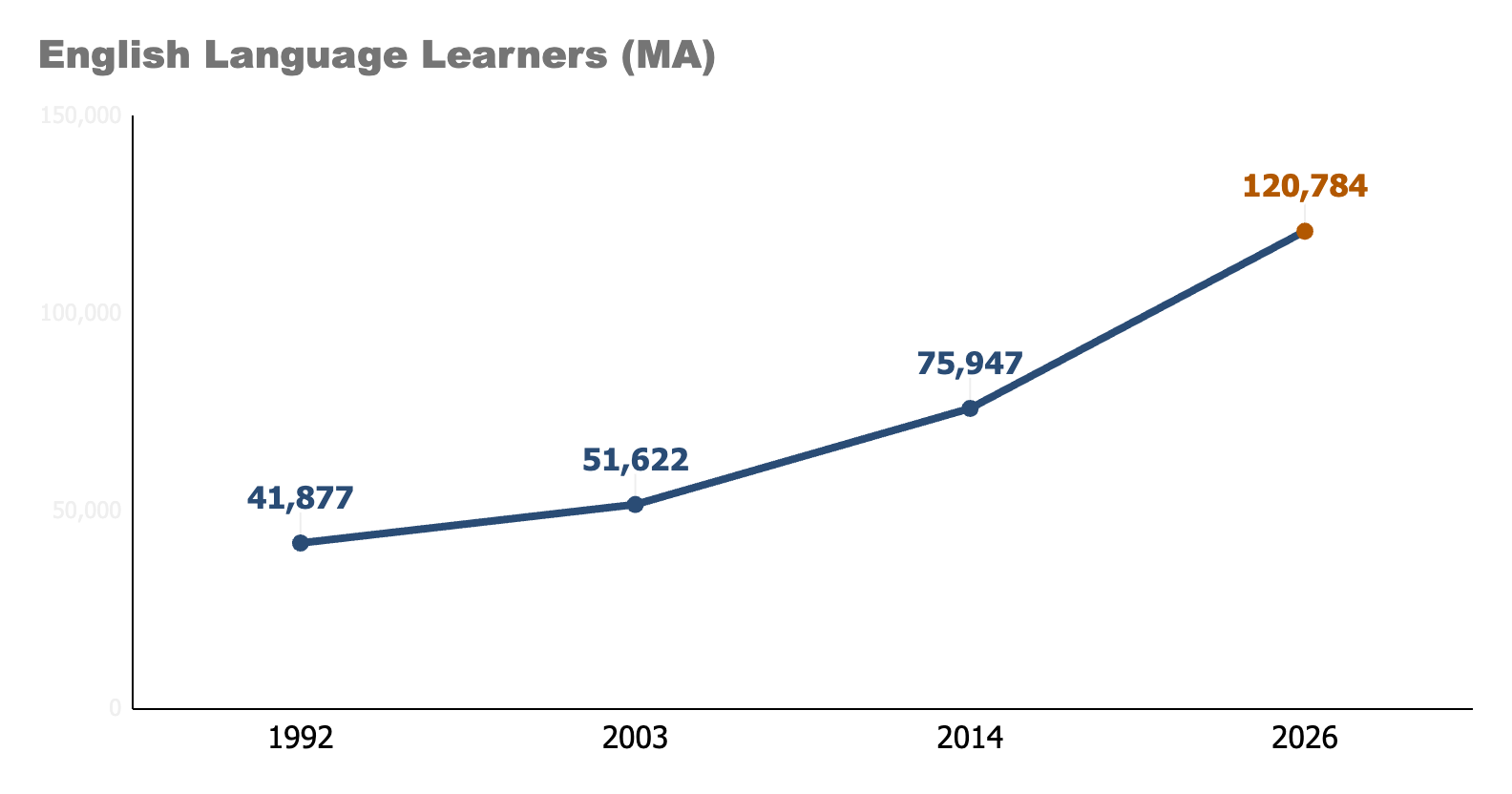
The short-term decline has short-term consequences. That is why teachers unions were highlighting staff reductions this week.
A good case study on small Massachusetts towns’ big politics when it comes to schools.
Are career-oriented schools a path to close the gender gap?
A small private school is opening in Stow, MA with a specific career focus: sports.
Ready for “beef tallow Friday?” Federal policy is now turning to school lunches.
With fewer high school graduates for the foreseeable future, there is no question higher ed is entering a phase of disruption.
Harvard tuition no longer covers the cost of A’s.
Other Matters
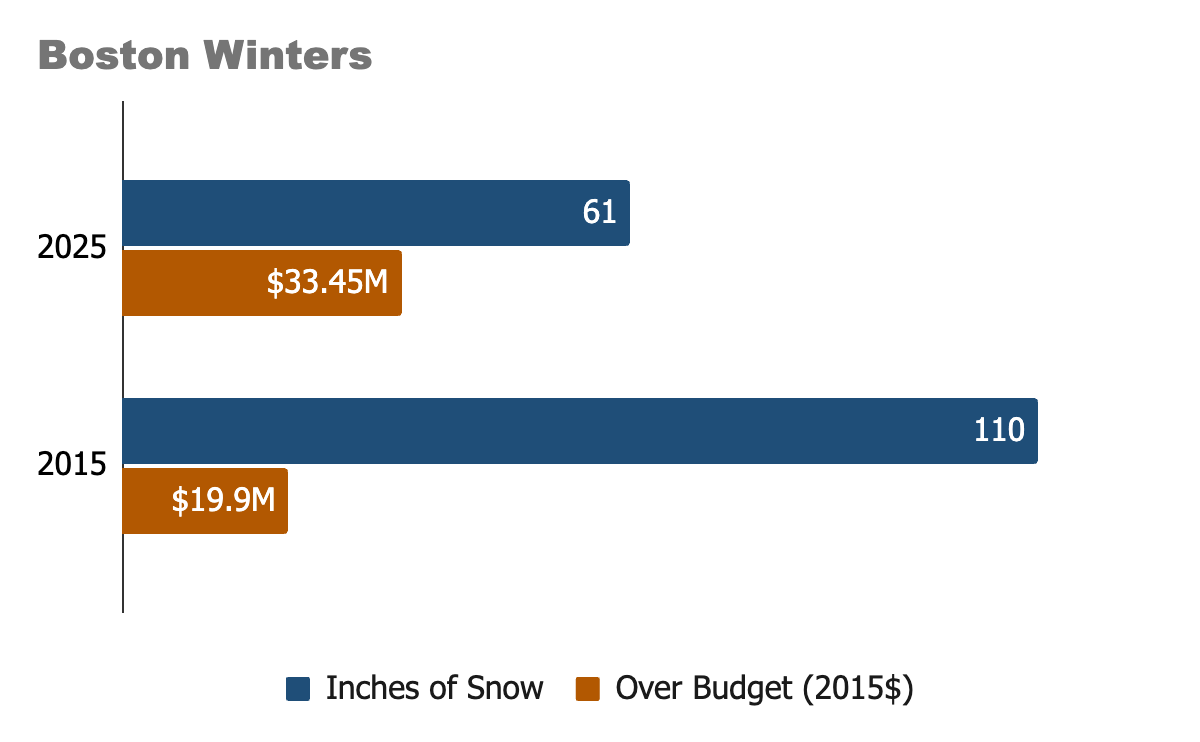
The drama over the next Boston budget is overlapping with the need to close a deficit for the current one. City reserves, it is reported, are needed to cover BPS and snow removal costs.
February was bad, but not 2015 bad and somehow more expensive, even when adjusting for inflation.
Replacing traditional public housing with mixed income housing - like what is happening now in Charlestown - may be already paying dividends: it appears to boost incomes for low-income residents.
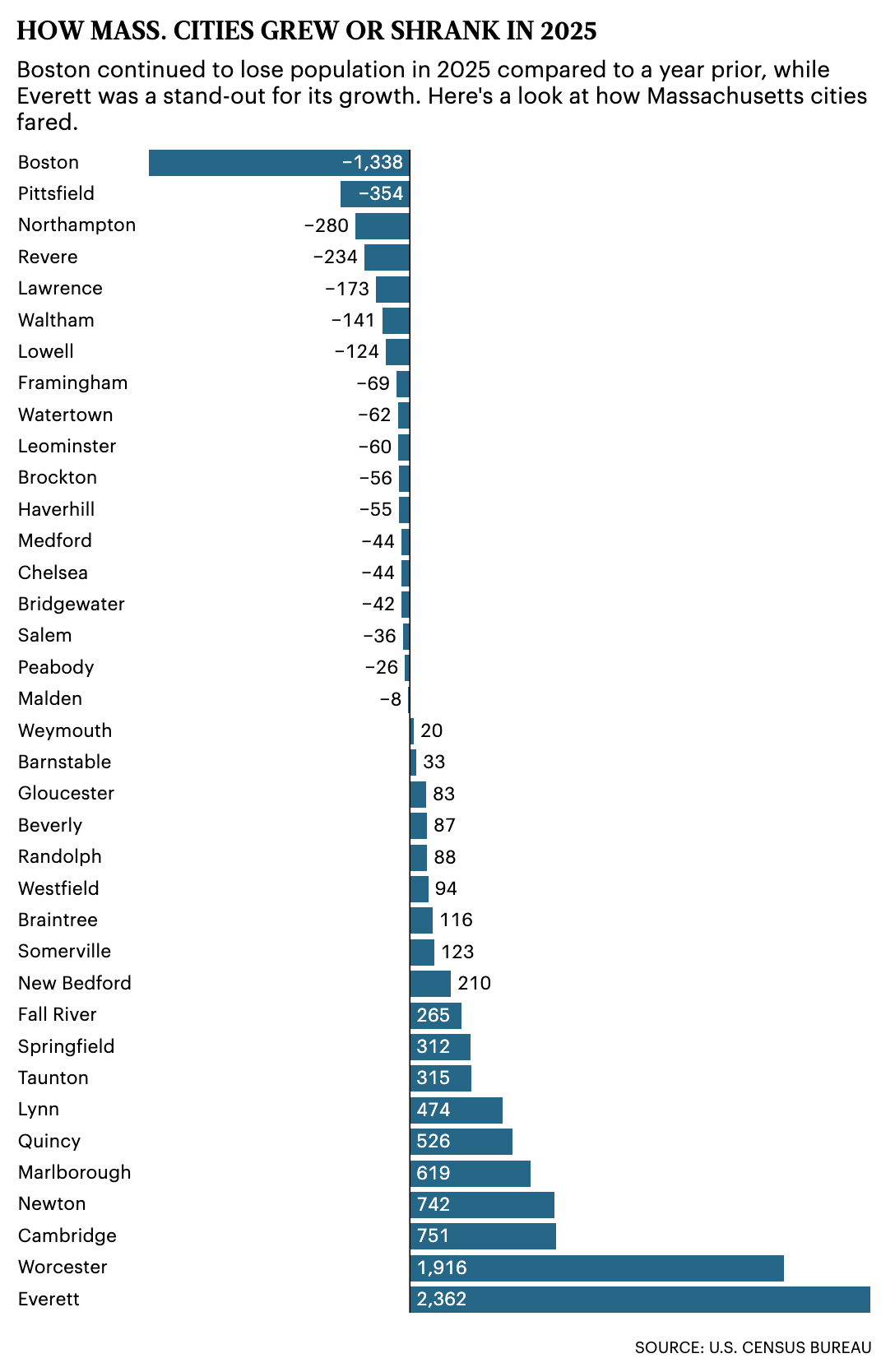
The recent rise and fall of Massachusetts cities.