

Boston Focus, 6.26.26
Thanks for reading; what's wrong with the Boston charter/antiracism oped

School is officially out today for all kids in Massachusetts. With fewer education news items and data during the summer, there will be less to share each week. You can expect shorter reads on Fridays, and at times I will devote more space to “Other Matters” (government/politics, housing, infrastructure, etc.).
This is one of the two times each year when I formally say “thanks” and ask for your support. Writing is thinking, and this platform affords me the chance to think more deeply about the topics I care about and new ones, too. It is a bonus that you read it, and I learn even more from your questions and responses. There are a lot of things - maybe too many - you could read each Friday, and I appreciate that this makes the cut.
I have seen all sorts of school work.
Public, public charter, private. Urban, rural. Big, small.
As someone who is professionally and personally agnostic about school sector, my need to rebut this oped blaming antiracism for the supposed decline of Boston charter schools is not because I am defending of a certain type of school.
It is because I am not data agnostic.
The authors spin a tale - hinging on one quote out of context and one unnamed source - about how Boston charters were great (and can be great again!) if they stopped indulging faculty and students in culture wars and started teaching cursive.
Their argument relies on one set of numbers: 10th grade MCAS results from 2019-2023, when Boston charter results declined, falling below district averages.
There are two big problems with this analysis.
Before the pandemic, there was an even bigger shock to the Massachusetts assessment system. The MCAS got harder, starting with grades 3-8 in 2018, and 10th grade in 2019.
Proficiency rates plummeted.
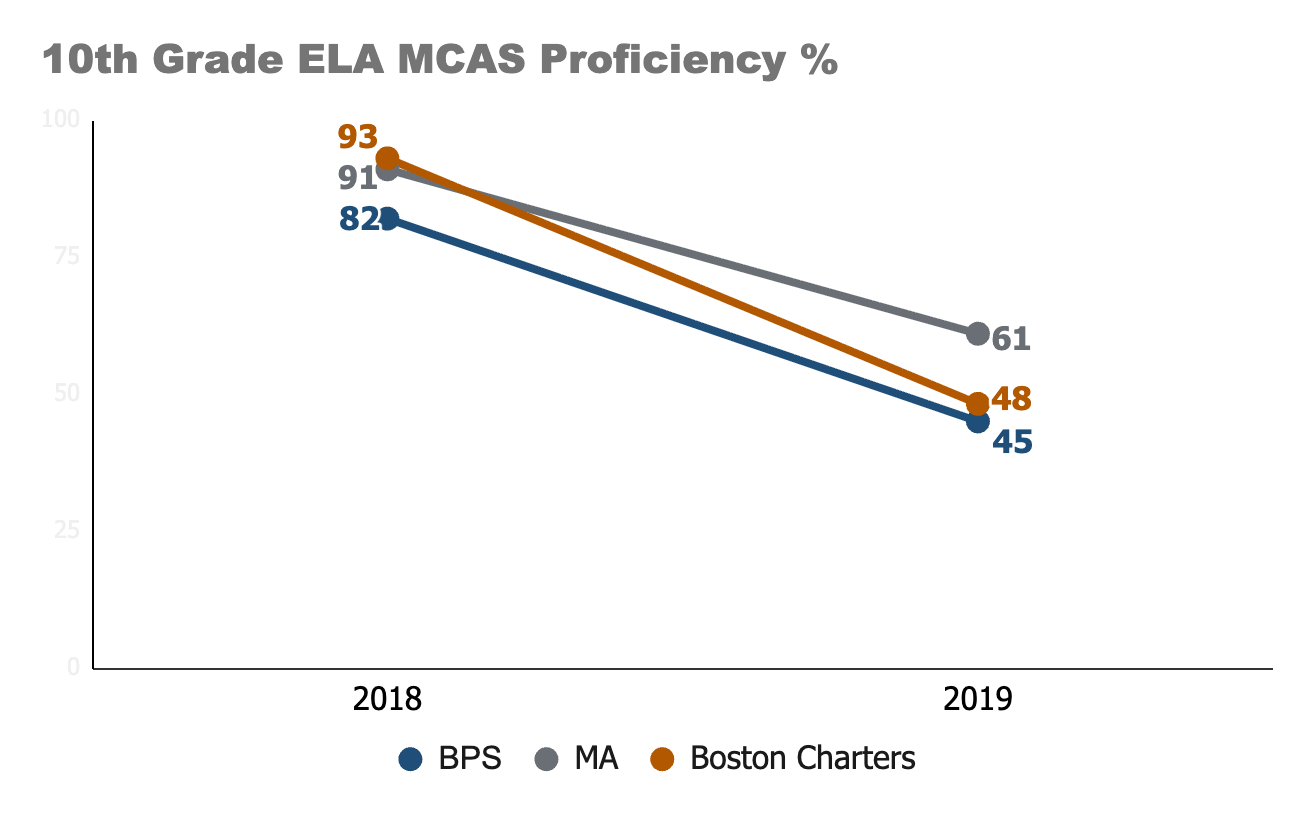
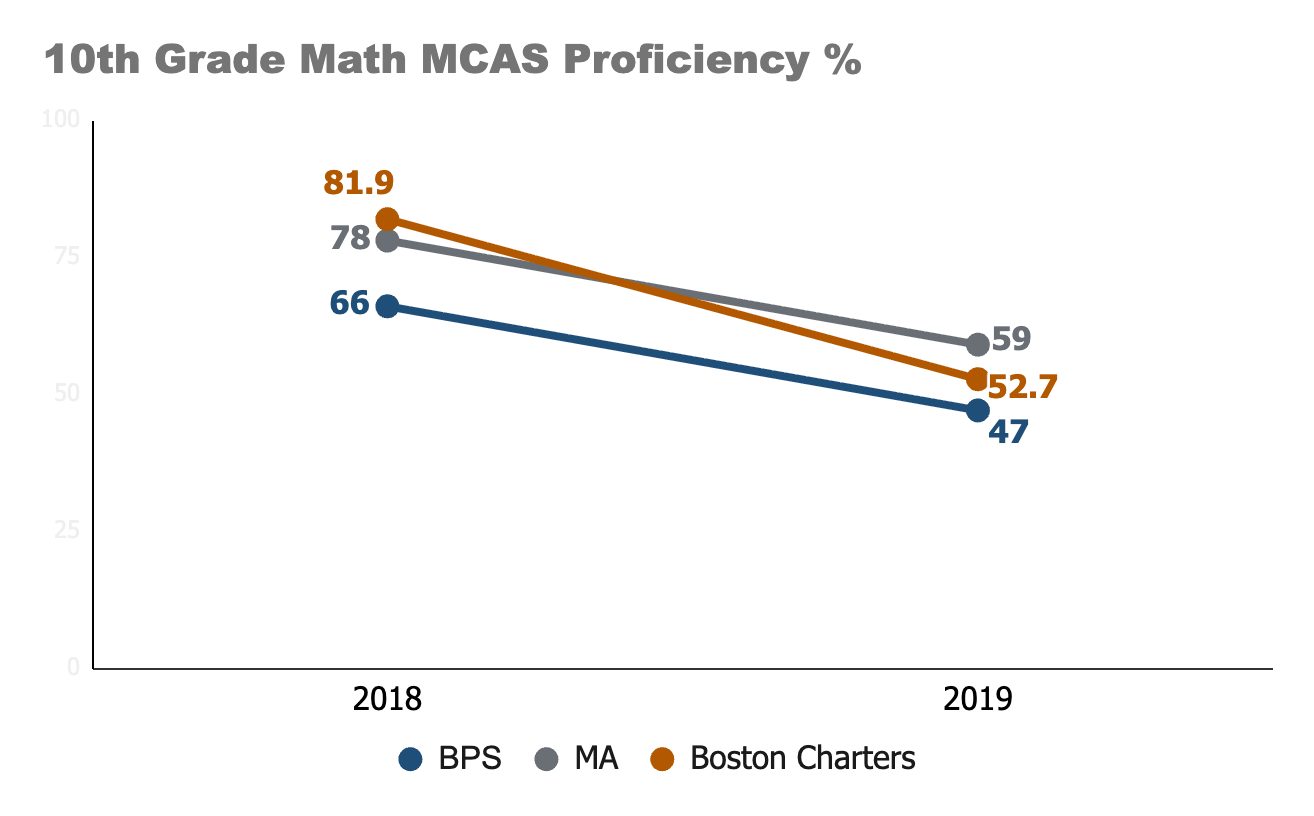
This doesn’t mean students were necessarily doing “worse.” The MCAS was changed by state leaders with the hope that higher standards and higher bars would take average student proficiency to a new level. Boston charters, like most of the state, took a big proficiency haircut.
Then, starting with resumption of the MCAS in 2021, Boston charter proficiency rates dropped further.
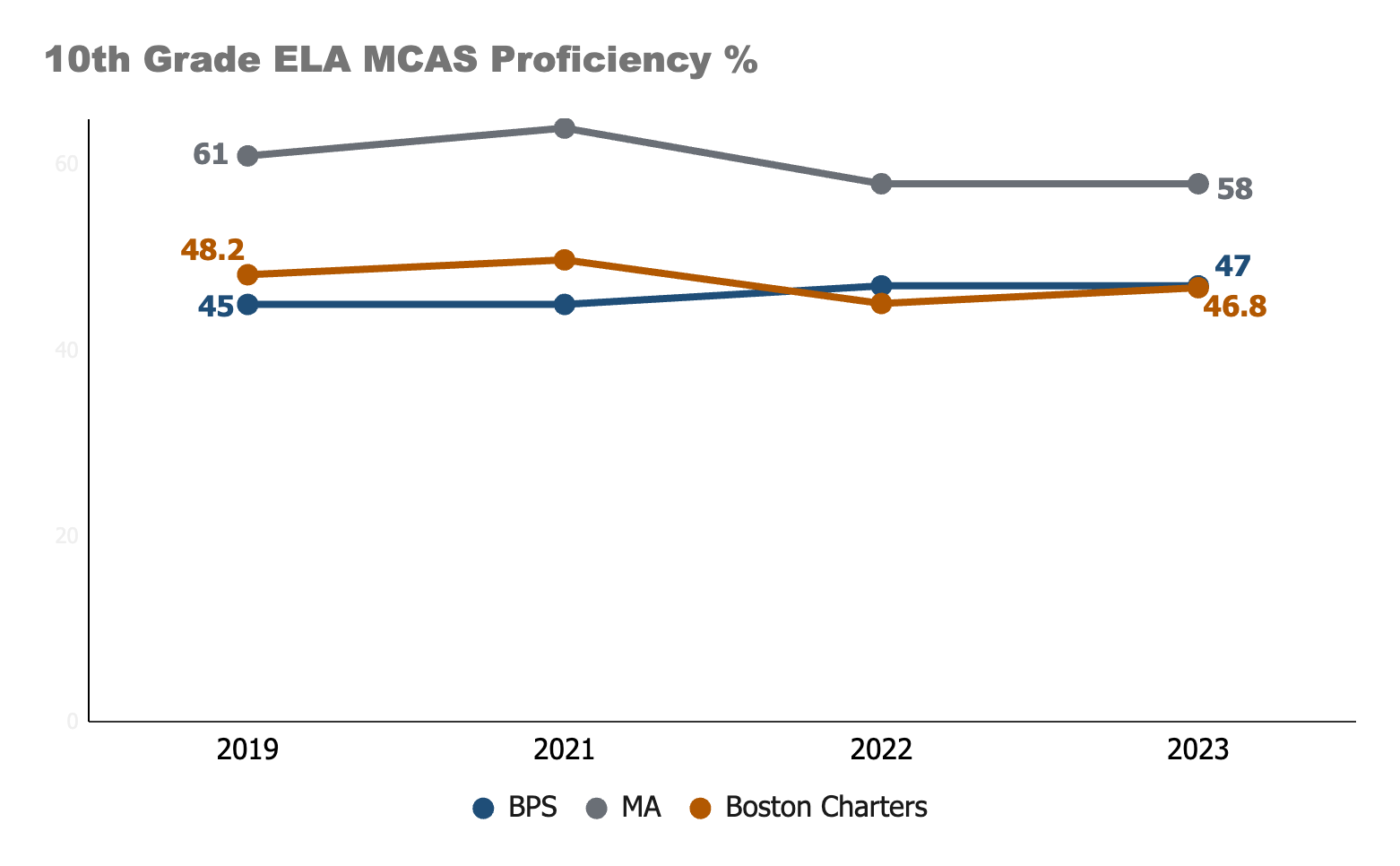
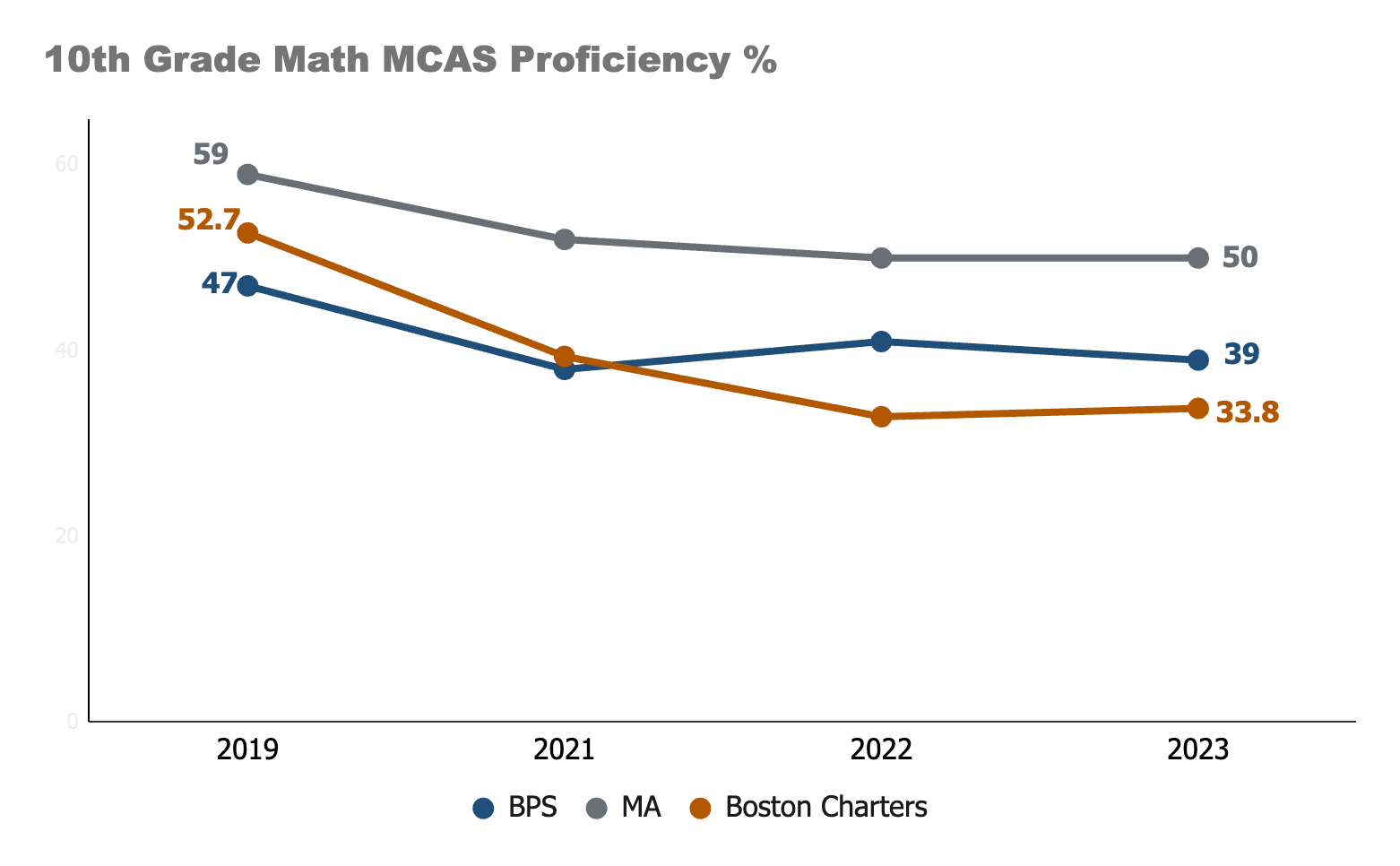
Until they didn’t. By this fall, Boston charter 10th grade MCAS performance had already rebounded, higher than BPS and again approaching the state average.
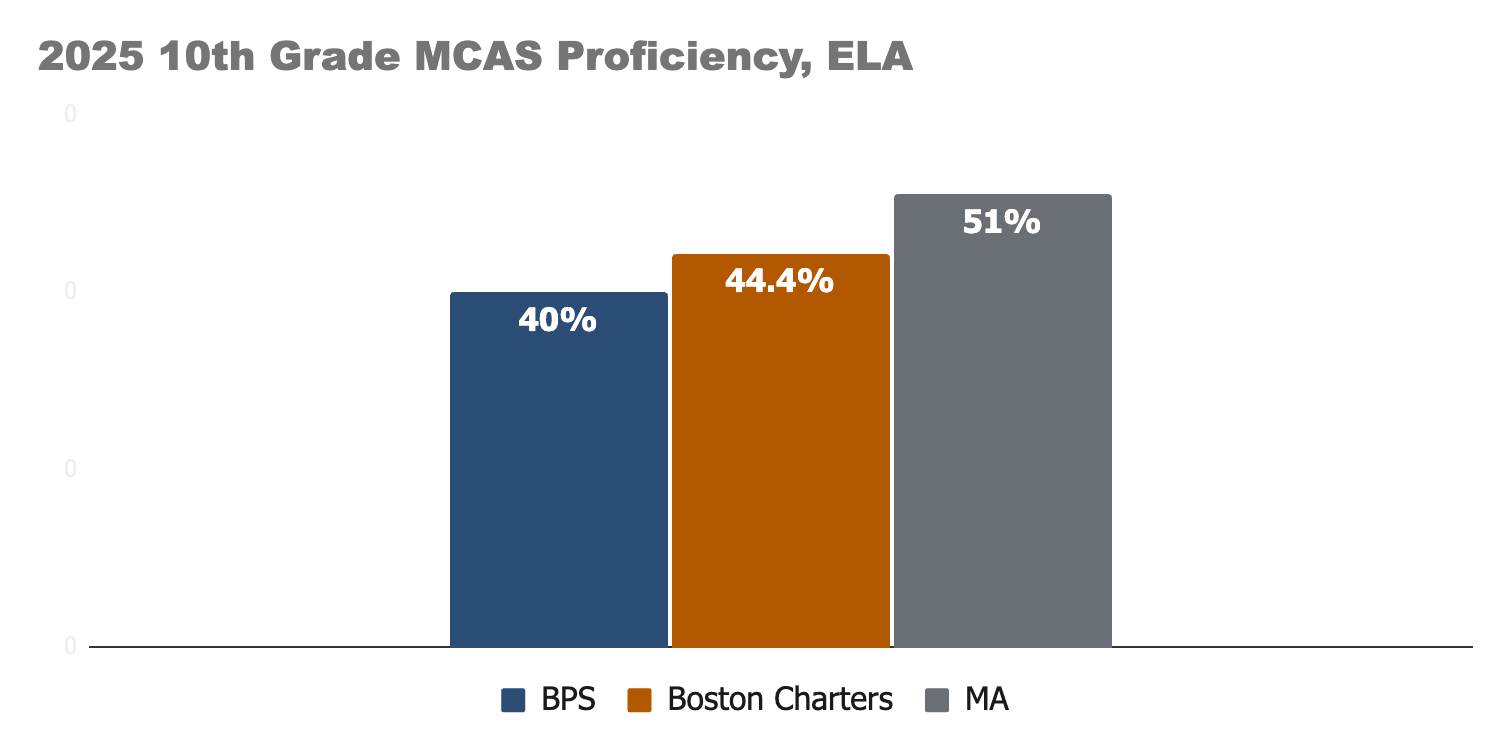
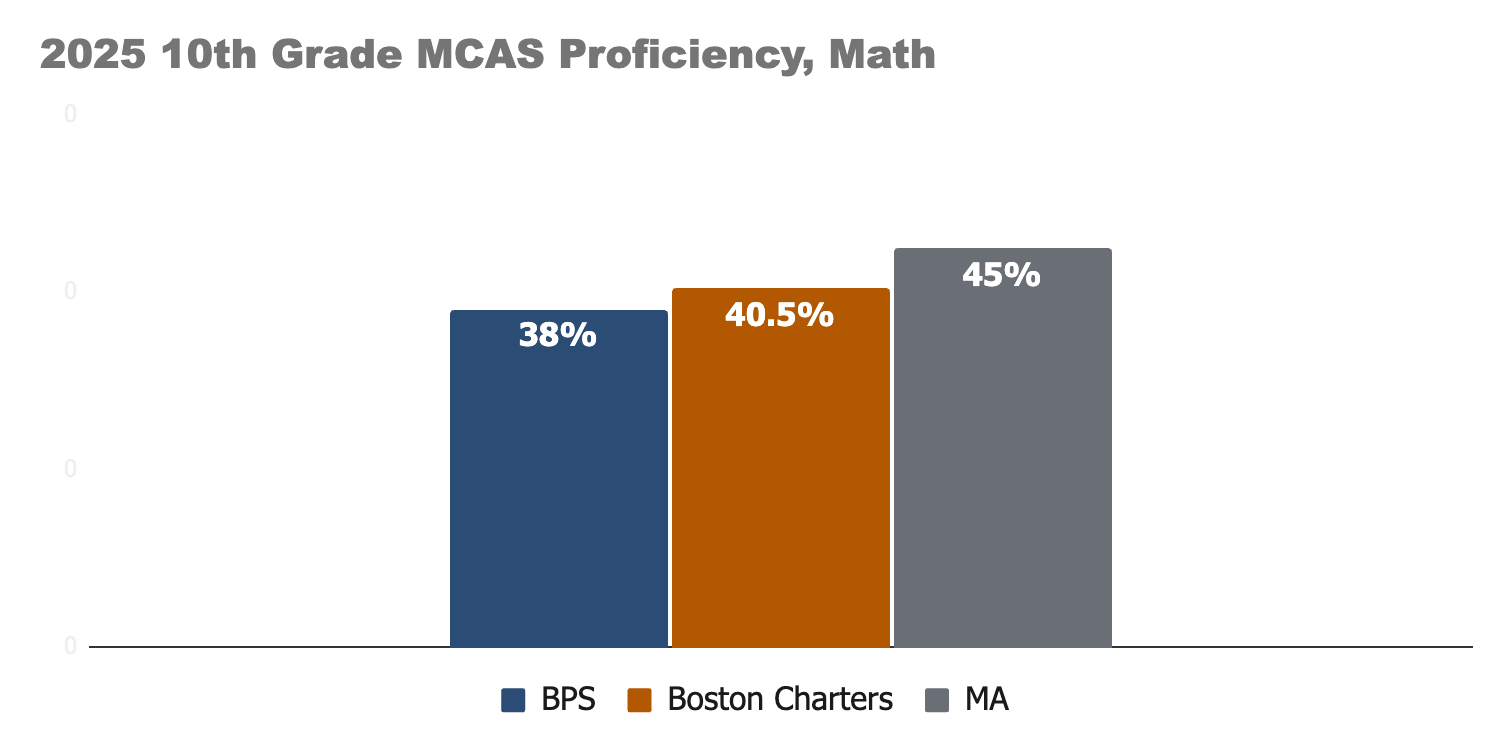
And Boston charter schools’ high school graduation rates and college matriculation rates remained very high.
This is far from “tanking,” as the authors suggest. Facts are stubborn things, and easy to exclude when you have a political worldview or you are trying to sell your book.
So aside from the new MCAS and the pandemic, what could have caused the initial declines? There are some more likely explanations.
Compared to the district and the state, Boston charters struggled to get their kids back to school. Remote learning extended longer, and Boston charters took a bigger hit in attendance and experienced more chronic absenteeism.
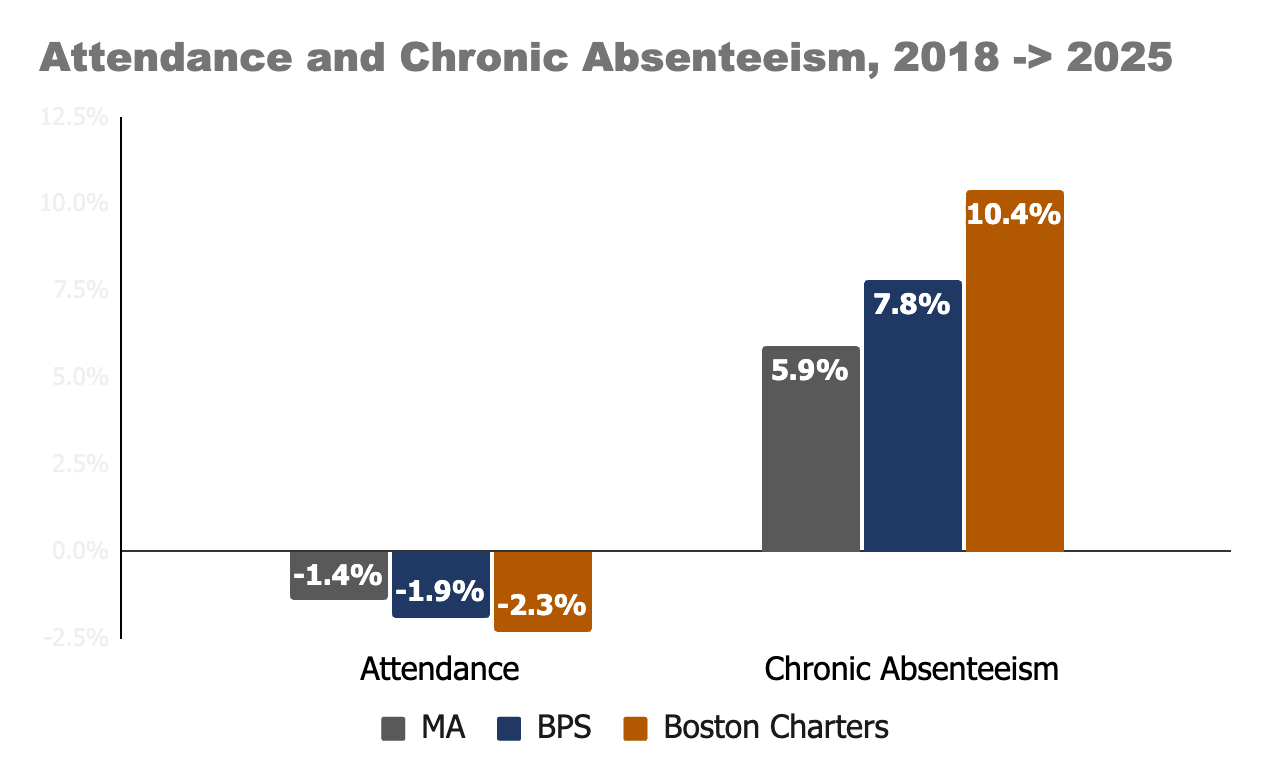
This coincided with another equally sharp change. Boston charters saw a greater increase in high-needs students and low-income students.
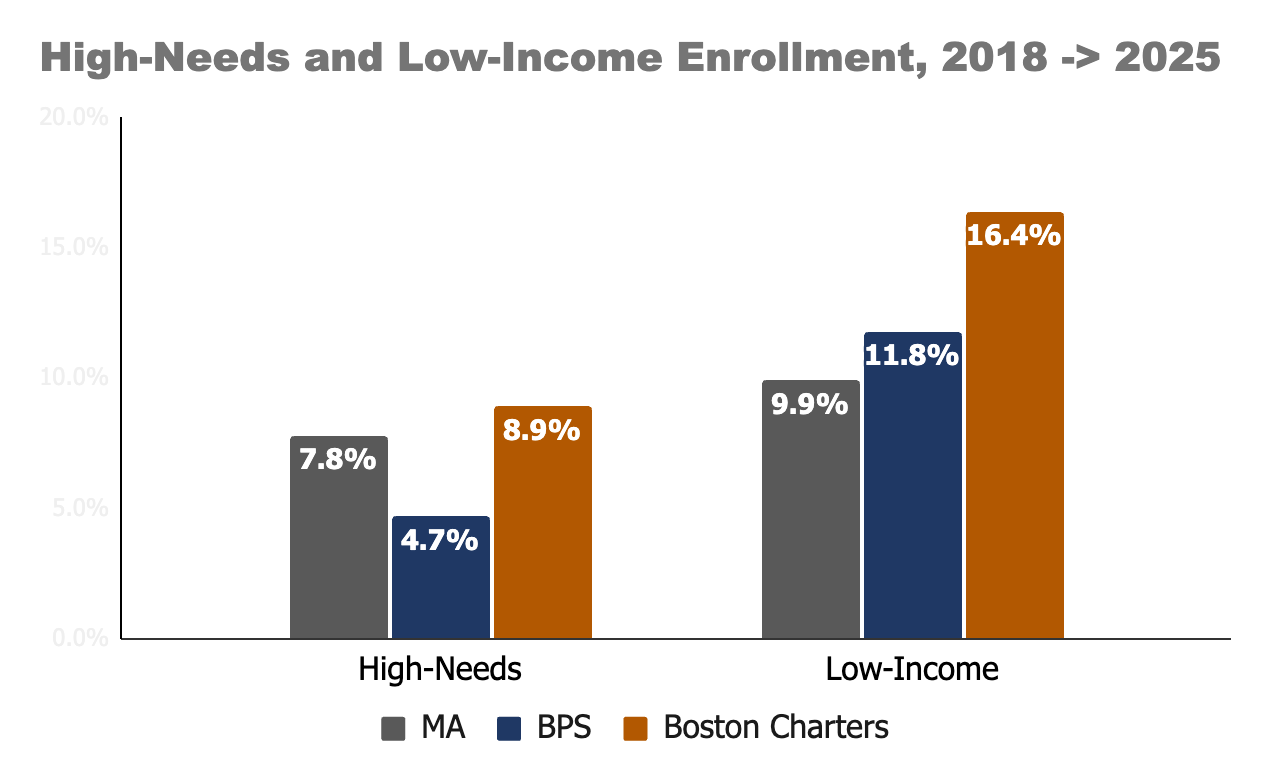
The research is pretty settled on what pandemic and post-pandemic achievement looks like for these subgroups. This and leadership changes - at least six Boston charter schools had leadership changes during this period and another two closed - probably created more challenges than wokeness gone wild.
By politicizing the term “no excuses” schools, many lost the thread that the excuses were not about the kids, but for the adults. It requires a mindset that acknowledges the very real racial and socioeconomic factors that impact student achievement, but chooses to focus on the things that schools and educators do control: your preparation, your curriculum and instruction, your time, your tutoring, and your relationships. High expectations and high support can lead to higher outcomes than most would expect.
Has this changed in the Boston charter sector? That’s hard to tell. The authors could have looked through current and past handbooks to find policy changes. Or reviewed parent and student survey data. Or looked more closely at teacher evaluations or retention data. Or visited some schools.
Instead, they asked “one experienced Boston educator.”
This approach lacks the rigor of the past they pine for.
Schools
On the same day that the Boston City Council passed a $4.9B budget (making BPS layoffs official), the city released its annual economic report. Lots of interesting data and insights, but this one jumped out: Boston’s lab space bull market is over.
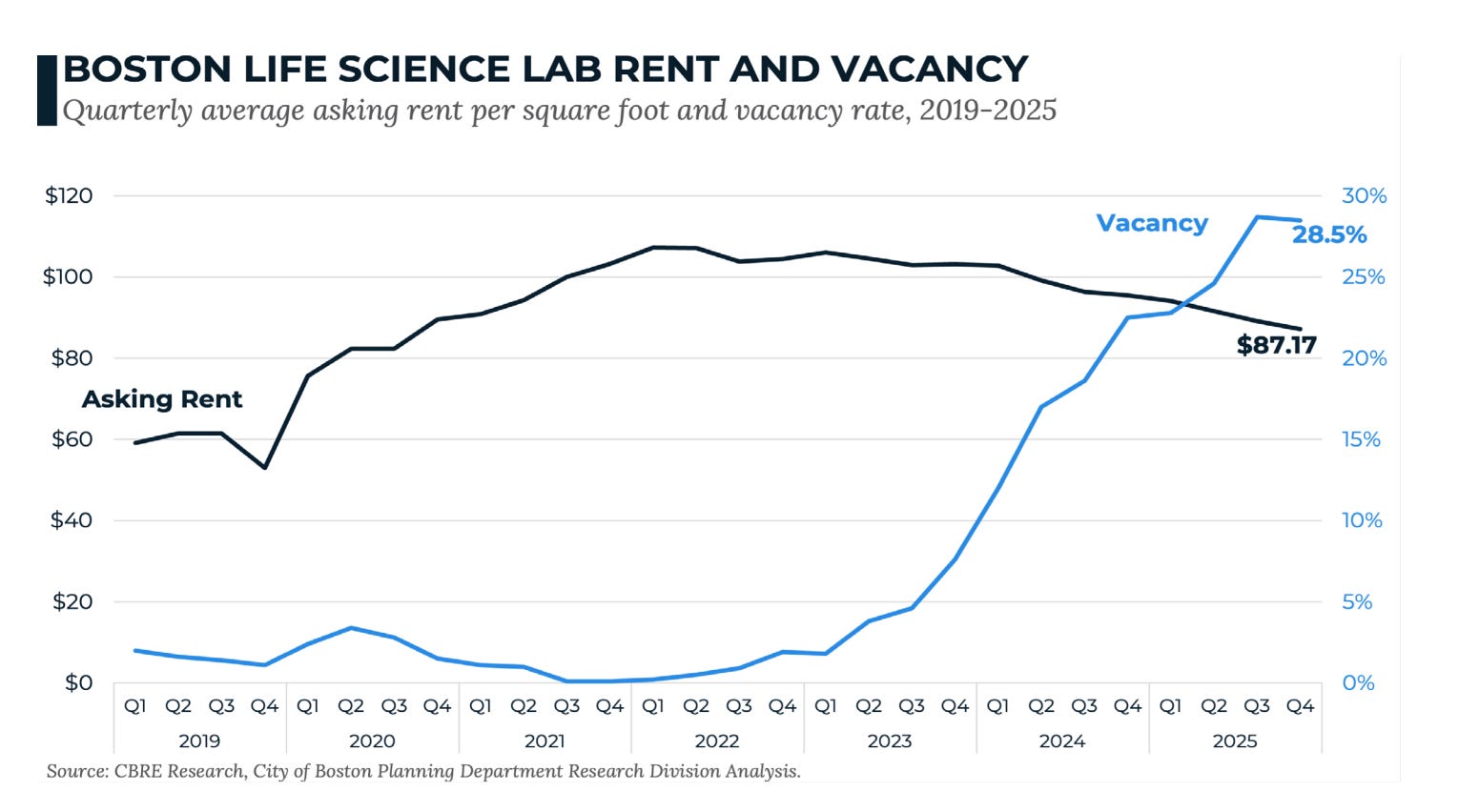
The Board of Elementary and Secondary Education met this week. Materials here, summary here. Cost and implementation of new graduation standards was a hot topic.
Absent new legislation and guidance, some MA districts are turning to disabling apps to manage cell phone use in class. It is an interesting approach to curbing distractions, with one ironic exception: a student can still make and take phone calls.
The case for Massachusetts to opt into the federal scholarship tax credit program.
There is nothing more vacuous than the genre of education policy argument that leads with standardized test scores as evidence, only to claim later they don’t matter. You can make a defensible case for either point of view; you can’t use both at the same time. It also doesn’t help when the data you are citing doesn’t actually defend your first point.
A provocative points in this Freddie DeBoer piece shout over a quieter consensus: some American schools and school systems struggle, and it requires more than technocratic fixes to change that.
The same week LA banned screens in classrooms until second grade, its superintendent resigned in response to an FBI investigation into a shady ed tech contract. Even Toy Story has joined the tech backlash.
A state pilot will expand small/in-home early childcare programs.
In this longer story on UVM, an interesting data tidbit: a greater reliance on out-of-state enrollment.
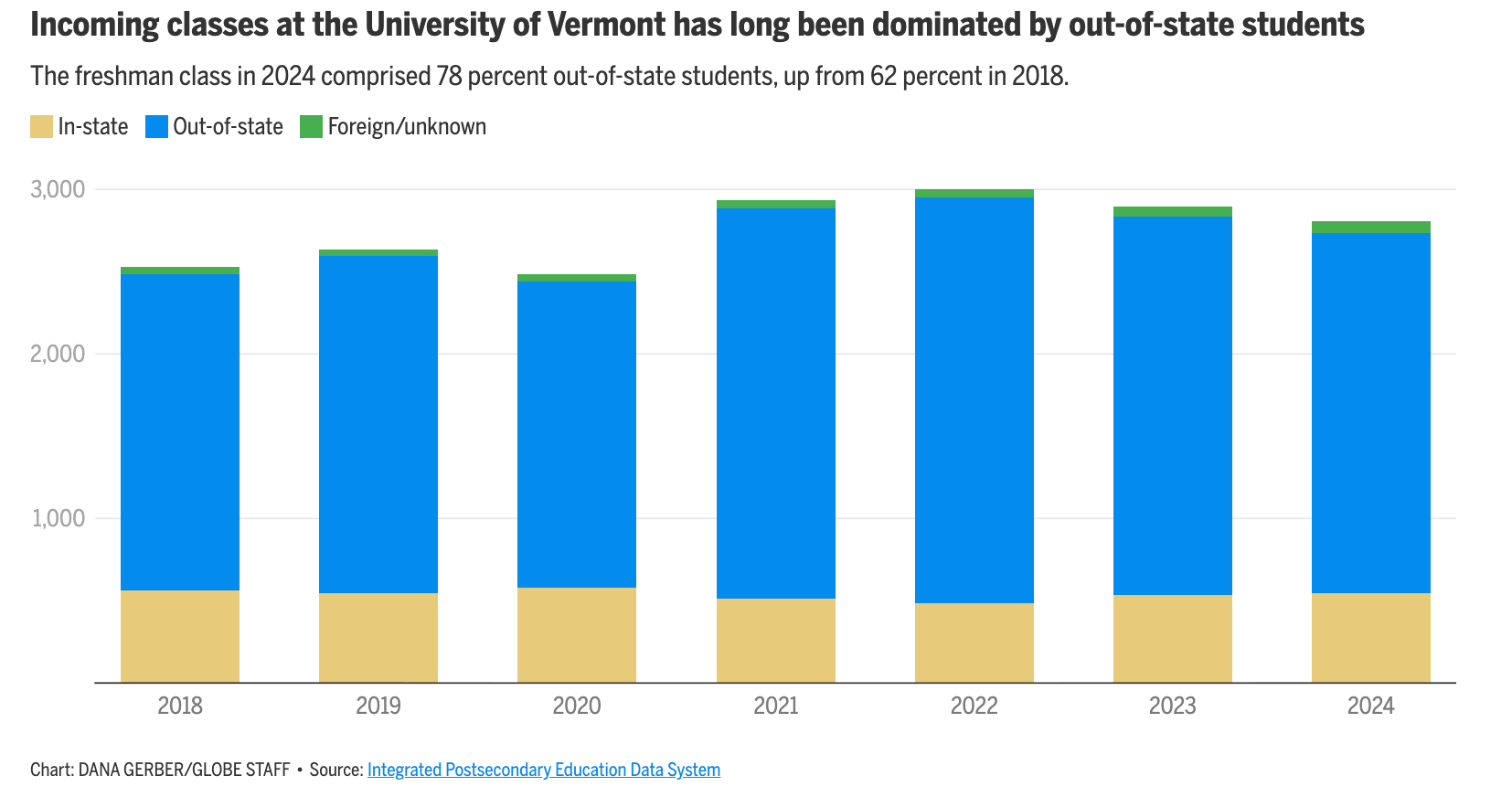
With declining child populations in all six New England states, I would expect to see more of this.
Other Matters
Divine intervention and a missing phrase sank two consequential potential ballot questions (rent control and an income tax cut, respectively), blocked by SJC rulings this week. Here is a good summary of what happened and what questions remain on the ballot.
On Wednesday, the Massachusetts Gaming Commission briefed the Legislature on prediction markets (scams, essentially) and iGaming (online casinos, essentially). The latter died this spring in the Legislature, and the research summarizes the potential policy implications and potential harms of if adopted in the future.
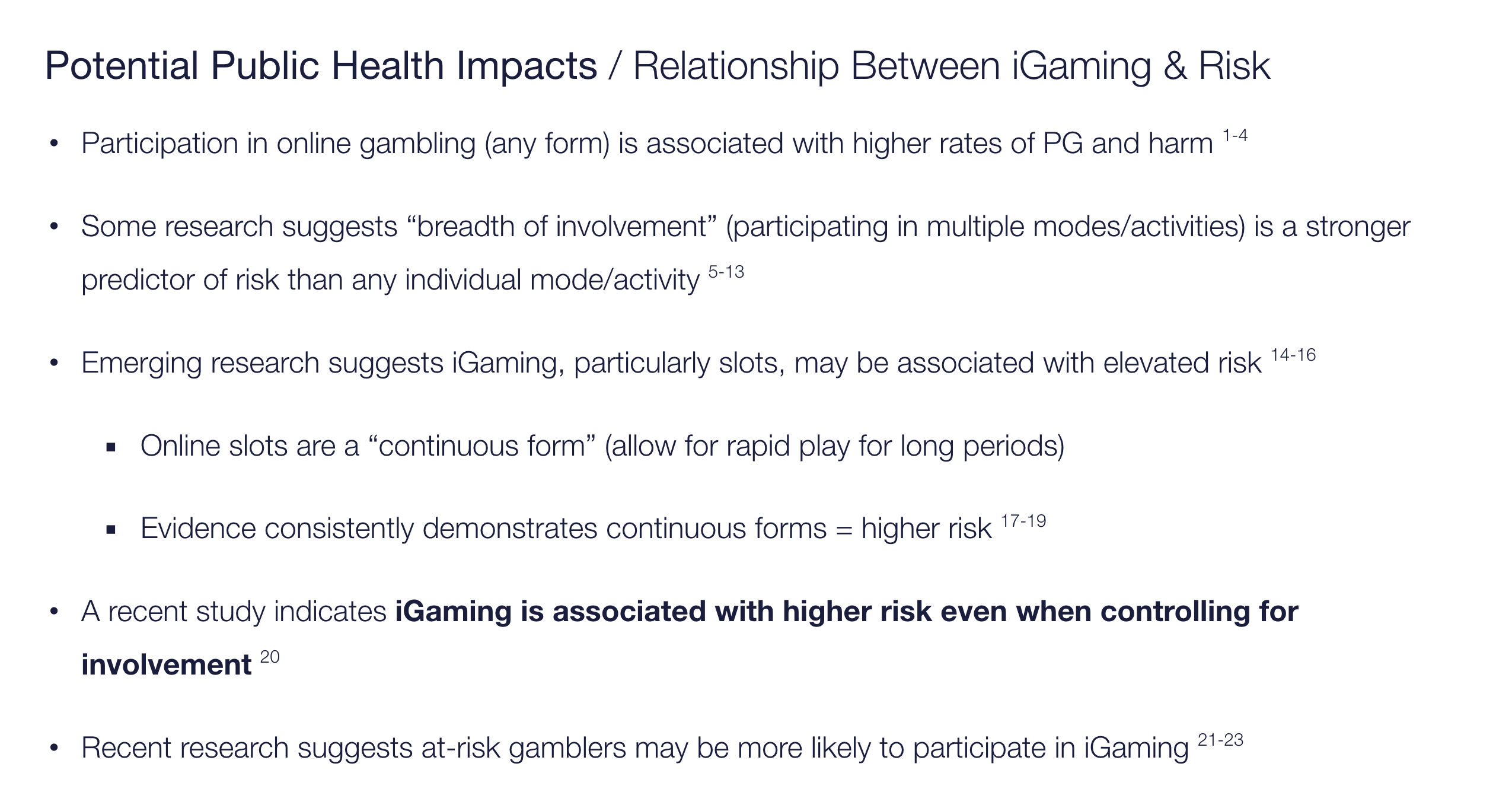
Given these potential costs, should we be even considering iGaming? Only 1 in 4 MA voters think so.